Fadnavis’ big moment: Is it endgame for the Thackeray clan?
This Capital Beat episode analyses BMC and Maharashtra civic poll results, focusing on the Mahayuti’s overall victory

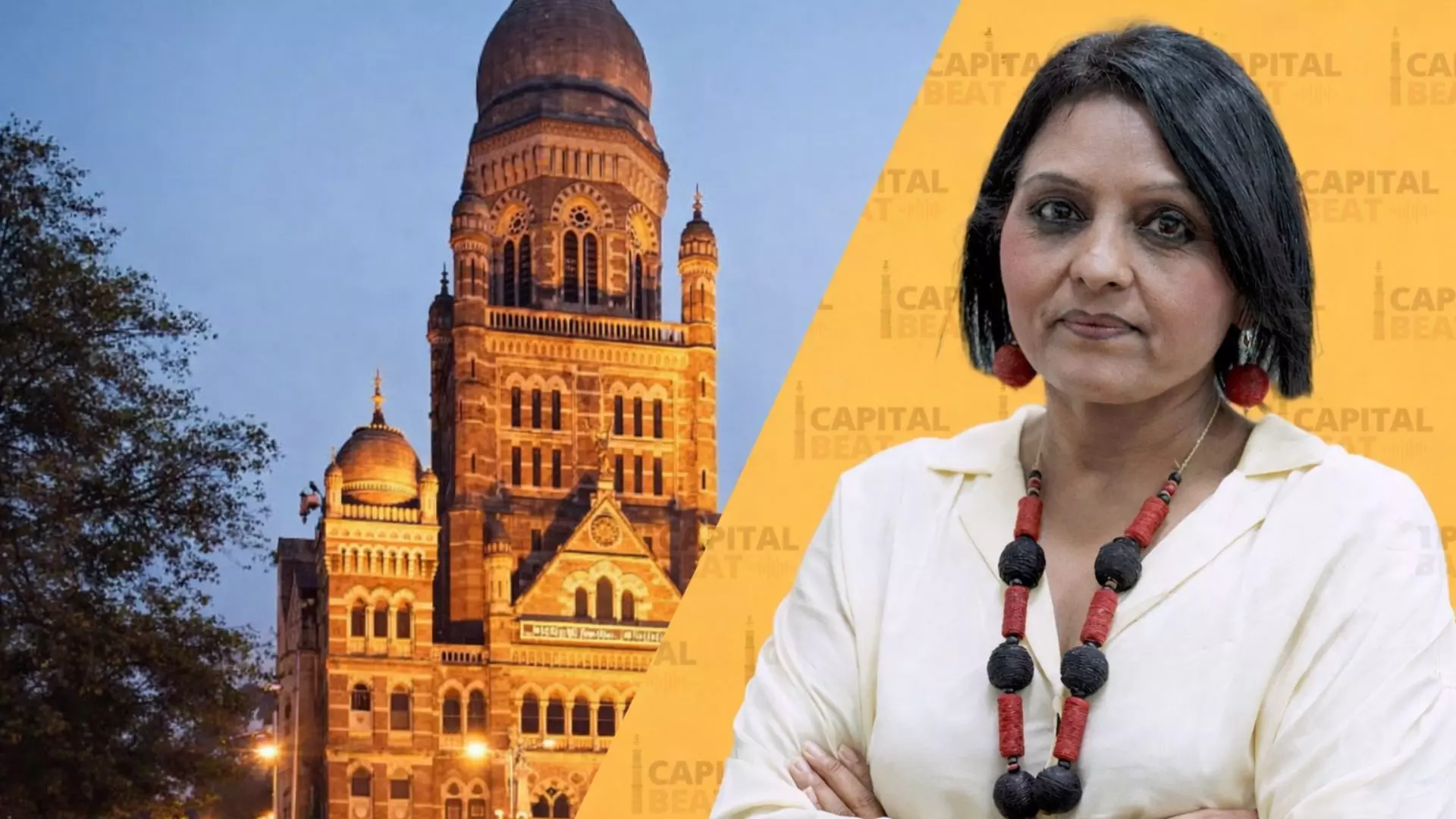
The Capital Beat episode focused on the Brihan Mumbai Municipal Corporation elections, with panellists Pushparaj Deshpande, author and policy expert, and Sanjay Kapoor, editor, Hard News, discussing early trends, political implications, and the shifting balance of power across Maharashtra’s municipal bodies. The discussion centred on the Mahayuti alliance’s victory, the end of Shiv Sena’s long dominance in Mumbai, and the challenges facing the opposition as results continued to come in.
Counting delays and scale of the civic exercise
Pushparaj Deshpande noted that the scale of the counting process itself explained the delay in declaring final results. “At one point there were 23 counting centres, each counting two wards, which meant 46 wards were being counted at a time,” he said, adding that issues related to postal ballots and machines not being read had slowed the process.
The BMC election was described as politically significant due to the corporation’s financial and demographic weight. Deshpande stated that the BMC’s budget alone exceeded that of several other municipal corporations combined, underlining why Mumbai remained the centrepiece of the civic battle.
Also Read: Why Thackeray and Pawar strongholds crumbled in Maharashtra local body polls
He pointed out that Mumbai, Pune, Thane, and Navi Mumbai together represented a large share of Maharashtra’s urban population, with Mumbai alone accounting for an estimated population of 12 to 15 million. “In a way, nearly 40 percent of Maharashtra was voting in these elections,” he said.
End of Shiv Sena’s long BMC dominance
A major theme of the discussion was the end of Shiv Sena’s 25-year dominance over the Brihan Mumbai Municipal Corporation. Deshpande stated that the results marked the conclusion of a political era in Mumbai civic politics.
“The 25-year rule of Shiv Sena over the BMC is now over,” he said, noting that the BJP and the Eknath Shinde-led Shiv Sena were emerging as the dominant combine.
Performance of parties across Maharashtra
The discussion expanded beyond Mumbai to the broader civic landscape in Maharashtra. Deshpande observed that outside Mumbai, particularly in Thane, Kalyan, Navi Mumbai, and other MMR regions, the BJP and its allies were registering decisive leads.
“In municipalities outside Mumbai, especially in the MMR region, there is a hands-down victory for the BJP and the BJP–Shiv Sena alliance,” he said. Similar trends were noted in Nagpur, reinforcing the scale of the Mahayuti’s performance.
Also Read: BMC election: Did Marathi manoos gamble backfire for Thackerays?
However, the opposition was not entirely absent from the results. Congress secured wins in a few municipal corporations, including Latur, though Deshpande emphasised that these were smaller cities in terms of population and economic power.
Opposition gains and first-time breakthroughs
Sanjay Kapoor highlighted that for newer political formations, the elections marked significant first-time gains. He stated that parties representing marginalised communities had managed to open their accounts in several semi-rural and urban centres where they previously had no presence.
He stressed that many candidates fielded belonged to communities that had rarely been represented in mainstream municipal politics, calling the outcome an encouraging signal for emerging political voices in Maharashtra.
Alliance challenges in Mumbai
The Congress–Vanchit Bahujan Aghadi understanding in Mumbai was discussed as a late but significant political experiment. Kapoor said that while the alliance had been discussed for years, its implementation came too close to the election.
“This alliance was always discussed, but it happened a little too late,” he said, adding that despite strong public response during campaigning, the conversion of that support into votes required deeper examination.
He pointed to uneven vote transfers within the alliance, noting that while some vote consolidation benefited Congress, the reverse did not always materialise in Mumbai wards.
BJP’s performance versus projections
Both panellists addressed the gap between projections and actual trends for the BJP in Mumbai. Kapoor stated that while the BJP-led alliance was ahead, it had not matched the sweeping victory that was projected.
“I was expecting the BJP to cross 150 seats, but it seems they may be restricted to around 120 or 125,” he said, adding that the party was still dependent on its alliance partner to remain in power in Mumbai.
He also noted that Shiv Sena (UBT) had performed better than many expectations, retaining a substantial number of seats despite organisational and resource constraints.
AIMIM factor and vote fragmentation
The role of AIMIM in fragmenting votes was discussed as a significant factor affecting opposition performance. Kapoor said that the presence of AIMIM had dented the Congress vote in several places, including Mumbai.
“For the BJP, AIMIM has worked as a blessing in disguise in many areas,” he said, while clarifying that this did not imply formal alignment but had clear electoral consequences.
The discussion noted that vote fragmentation altered outcomes in closely contested wards and affected alliance arithmetic across urban centres.
Rise of Devendra Fadnavis
A central focus of the episode was the political rise of Devendra Fadnavis. Deshpande stated that the civic poll results had elevated Fadnavis from a state-level leader to a figure with national stature.
“Mumbai was a work of political craftsmanship,” he said, referring to Fadnavis’s role in campaign strategy, candidate selection, and sustained statewide outreach.
Kapoor added that Fadnavis’s transformation from a Nagpur-centric leader to a pan-Maharashtra figure within a decade marked a significant political trajectory. “That makes him the undisputed BJP leader in Maharashtra,” he said.The content above has been transcribed from video using a fine-tuned AI model. To ensure accuracy, quality, and editorial integrity, we employ a Human-In-The-Loop (HITL) process. While AI assists in creating the initial draft, our experienced editorial team carefully reviews, edits, and refines the content before publication. At The Federal, we combine the efficiency of AI with the expertise of human editors to deliver reliable and insightful journalism.