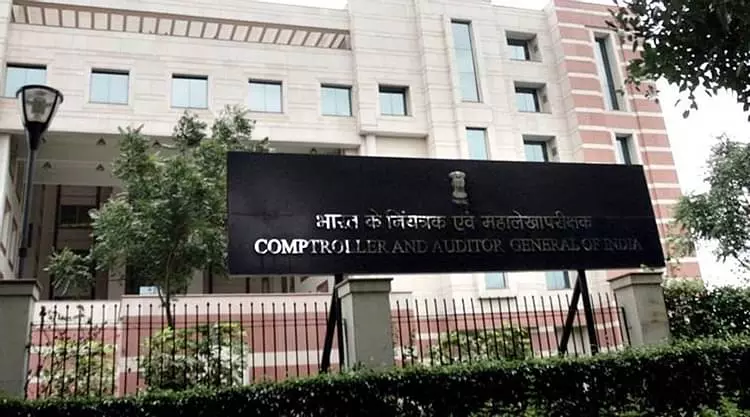
CAG reports put spotlight on governance gaps in PM Modi’s flagship schemes
Recent CAG reports point to cost overruns, data irregularities, weak oversight, and delayed implementation across major welfare and infrastructure programmes

While the Comptroller and Auditor General (CAG) remains a constitutionally strong institution that produces critical reports, evidence of reduced output, delayed tabling, and inadequate staffing has led to arguments that its impact and effectiveness have been weakened in recent years.
Nonetheless, as the country’s supreme audit institution, the CAG has recently subjected several of Prime Minister Narendra Modi's flagship programmes to intensive audits, uncovering significant procedural and financial irregularities. These reports, tabled in Parliament, have highlighted weaknesses in oversight, data integrity, and implementation, raising concerns about the efficacy of major, high-budget welfare and development projects.
Also read | Skill India exposed as a non-starter in CAG audit of Rs 10,000-cr spend
The CAG, as a constitutional body, regularly audits these centrally sponsored schemes to ensure accountability in the use of public funds.
Among the most prestigious of such flagship programmes under the CAG’s lens is the government’s Make in India initiative, where auditors have highlighted significant challenges in enhancing manufacturing capacity and efficiency.
Key findings indicate weaknesses in procurement and contract management, inefficient project execution, and gaps in regulatory compliance. Reports have noted substantial outstanding dues in specific sectors and inadequate monitoring, leading to project delays.
Make in India: Audit findings and red flags
Inefficient project management: In sectors such as science and environment (for example, the Board of Radiation and Isotope Technology—BRIT), the CAG identified during 2022–23 that failures in proper project monitoring led to both time and cost overruns.
Operational and financial lapses: Specific audits showed that industrial units under government bodies (such as BRIT) failed to manage tax liabilities on time, resulting in liabilities exceeding ₹62 crore in penalties and interest.
Outstanding dues and revenue recovery: In a report on scientific departments, the CAG highlighted that one entity had outstanding dues of over ₹152 crore as of September 2024, indicating lapses in payment recovery.
Weaknesses in compliance and internal controls: The CAG’s audit of Union government departments identified weaknesses in procurement processes, contract management, and overall internal controls.
Suggesting improvements, the CAG proposed strengthening compliance verification mechanisms, improving internal audit coverage, and enhancing monitoring of project implementation to avoid cost overruns.
Among the other key programmes flagged recently by the CAG are the Pradhan Mantri Kaushal Vikas Yojana (PMKVY), Bharatmala Pariyojana, Ayushman Bharat, the Regional Connectivity Scheme (UDAN), PM Ujjwala Yojana (PMUY), and the Swadesh Darshan Scheme (Tourism), among others.
Key findings from recent CAG audits
Pradhan Mantri Kaushal Vikas Yojana (PMKVY): A December 2025 audit found massive irregularities, including 94.53% of beneficiary records containing invalid or blank bank account details (such as “11111111111”). The report also highlighted fake enrolments, identical photographs being used for multiple beneficiaries, training centres shown as active despite being shut, and certification of candidates by ineligible employers. It noted the lack of objective assessment of market demand for specific job roles and poor alignment of training efforts, with the overall placement rate at just 41%. The audit further found that candidates were enrolled in skill training by ignoring prescribed age, education, and work-experience criteria. It also flagged delays in the release and non-utilisation of funds under the state component, as well as incorrect estimation and delays in the transfer of central component funds amounting to ₹222.63 crore.
Also read | Bihar yet to submit utilisation certificates for Rs 70,877 crore: CAG report
Bharatmala Pariyojana: The CAG flagged serious anomalies in the implementation of Phase I, including violations of tendering processes, projects awarded to bidders on the basis of falsified documents, and massive cost overruns, particularly in Delhi’s Dwarka Expressway project, where civil construction costs escalated to ₹250 crore per km against the approved ₹18 crore per km.
Ayushman Bharat (AB-PMJAY): The audit revealed significant loopholes, including the registration of thousands of beneficiaries under a single invalid mobile number and payments made in the names of patients already recorded as deceased. Audit findings showed that over 7.49 lakh beneficiaries were linked to a single mobile number, and claims were settled for treatments in the names of deceased patients.
Regional Connectivity Scheme (UDAN): The CAG reported that many routes under the scheme failed to commence operations despite significant expenditure, and that the scheme suffered from poor planning and non-utilisation of funds. As of March 2023, only 7% of awarded routes were able to sustain operations beyond the initial three-year concession period.
PM Ujjwala Yojana (PMUY): A previous audit flagged the diversion of domestic LPG cylinders for commercial use and suspicious refill patterns, such as single beneficiaries availing up to 41 refills in a single month.
Swadesh Darshan Scheme (Tourism): The Ministry of Tourism was found to have sanctioned projects exceeding ₹4,000 crore without the required Cabinet approval and without conducting necessary feasibility studies. The auditor noted that projects were implemented without proper feasibility assessments, leading to poor site selection.
CAG scrutiny sparks wider debate
Some other CAG findings have put government programmes under scrutiny, with results that are far from encouraging. These include the diversion of National Social Assistance Programme (NSAP) funds, meant for pensions, towards publicity for unrelated schemes.
Also read | Cough syrup deaths: CAG report already flagged regulatory lapses in TN last year
Former civil servant and MP Jawahar Sircar said: “This was bound to happen. Most of these programmes have been devised by advertising agencies or borrowed from foreign slogans. They are top-down, and the results are on expected lines.”
The role of the usually alert CAG has become a subject of significant debate among legal experts, former civil servants, and political analysts. While the institution retains its constitutional independence, critics point to specific trends and structural limitations that they argue have diminished its effectiveness.
They note, for instance, that the number of audit reports on the Union government tabled in Parliament has dropped sharply. On average, only 22 reports were tabled annually between 2019 and 2023, compared to about 40 reports per year between 2014 and 2018.