CJP will keep trying, but can’t solve all problems: Abhijeet Dipke | Interview
CJP founder talks about rising expectations from outfit after Dharmendra Pradhan’s ouster, its upcoming listening tour and need for more pressure groups to bring socio-political reforms

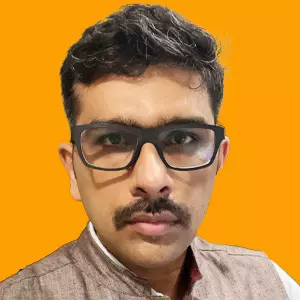
"No one should expect one organisation to solve every problem in the country. What we can promise is that we will keep trying honestly and stay true to the cause," says CJP founder Abhijeet Dipke, outlining the organisation's roadmap after the protest that culminated in former Union Education Minister Dharmendra Pradhan's resignation.
With expectations mounting after the movement's success, questions are now being asked about the CJP's future, its organisational structure and its long-term vision. The Federal in an exclusive interview spoke to Abhijeet Dipke, founder and president of the CJP, about the next phase of the movement, plans for expansion, reforms, and the challenges of sustaining a citizens' pressure group.
How is your health now after the protest?
I am still recovering. There is still a lot of weakness in my body and because of that I have to regularly take IVs (intravenous drip) every morning and in the evening. That is why you can see this bandage. Many people are trying to come and meet me from different parts of the country. For that also I need to have my energy. So, I am just pushing myself through the IVs for now. That's the update about my health.
The expectations from CJP have risen after Dharmendra Pradhan’s resignation. What comes next?
Even we did not expect that the resignation might actually happen. I remember a reporter calling me on the eve of the resignation and asking whether I thought it would happen. I told them I didn't think so. If it was supposed to happen, it would have happened by then. People laughed at us and asked us why we were still sitting there. I said I didn't know whether the resignation would happen or not, but our job was to fight. Our job was to try, and the people were with us. We were not going to leave the battlefield on our own. If they wanted us removed, they would have to arrest us.
Also read: CJP's Dipke dares 'emperor' to reveal degree after BJP targets his education funding
The very next morning, the resignation came and we were shocked. We couldn't believe they had actually removed him.
I would like to give the credit for this victory first to the young people of India, especially Gen Z. After that, I would like to credit Sonam Wangchuk. By putting his own life at risk, he awakened this nation like never before.
With that victory comes great responsibility, and with that responsibility come great expectations. We are going to have a meeting beginning August 5 in Sambhaji Nagar. We will review the Jantar Mantar protest, understand what we learned from it and how we can do better in the future.
Along with that, we will discuss how to expand our organisation across India because we have received tremendous support from people throughout the country. Our first priority is to build the organisation in every state.
Also read: Damage control, not course correction: Decoding Modi's response to CJP protests
We will also discuss the roadmap ahead, but that will happen only after consulting not just our team members but also young people across India. We will organise online conventions and travel to different states to hold public meetings.
People should not expect everything from one person or one organisation. What happened after July 20 was perhaps the most beautiful example of collective action. India needs more aware and responsible citizens.
More than speaking, these meetings will be about listening. The biggest complaint I heard from young people while sitting at Jantar Mantar was that nobody is ready to listen to them or even engage with them. Everyone is dismissive of them.
We don't want to repeat that mistake. We should not take decisions on our own. We should consult people. Practically, it won't be possible to listen to everyone, but we will try to consult as many people as possible."
You are planning a nationwide listening tour. What is the purpose of these consultations?
This is something I have repeatedly told people. If I claim that I have solutions to everything, I would be lying. If I tell you that every issue we take up or every movement we launch from now on will succeed, I would again be lying.
People should not expect everything from one person or one organisation. What happened after July 20 was perhaps the most beautiful example of collective action. India needs more aware and responsible citizens.
Also read: CJP announces nationwide ‘listening tour’ after NEET protest success
What CJP can do is work honestly and try to solve as many problems as possible. But can we solve every problem in the country? No, nobody can.
That is why we will consult different people and different organisations. If needed, we will collaborate with them. It would be completely wrong to assume that an organisation formed just two months ago can solve everything.
Going forward, CJP will focus much more on reforms. If needed, we will also seek resignations when there is no other option. But reforms are where our focus will be. Not just political or policy reforms, we also want social reforms.
What we can definitely assure people is that we will keep trying. We will remain true to the cause and stay honest with the people because that is what is needed if you want public support.
Will the focus now shift from resignations to long-term reforms?
Of course. Going forward, CJP will focus much more on reforms. If needed, we will also seek resignations when there is no other option.
But reforms are where our focus will be. Not just political or policy reforms, we also want social reforms.
India has witnessed many political reforms, but what we now need is a social reform that brings back values like secularism, unity, brotherhood and fraternity. Over the last 10 to 12 years, society has become heavily polarised. Personally, I feel we have become less empathetic and more insensitive. We need more sensitive citizens, more empathetic citizens and more compassionate citizens.
You say India needs deep reforms. Isn't there a risk that CJP could eventually become the very thing it is fighting against?
Of course. I certainly agree with that. I think the biggest challenge for the CJP is not bringing change or introducing reforms. The biggest challenge, just like for any other organisation, is to ensure that we do not become the very thing we are fighting against. We do realise that. That is why we will try to stay true to the cause as much as possible.
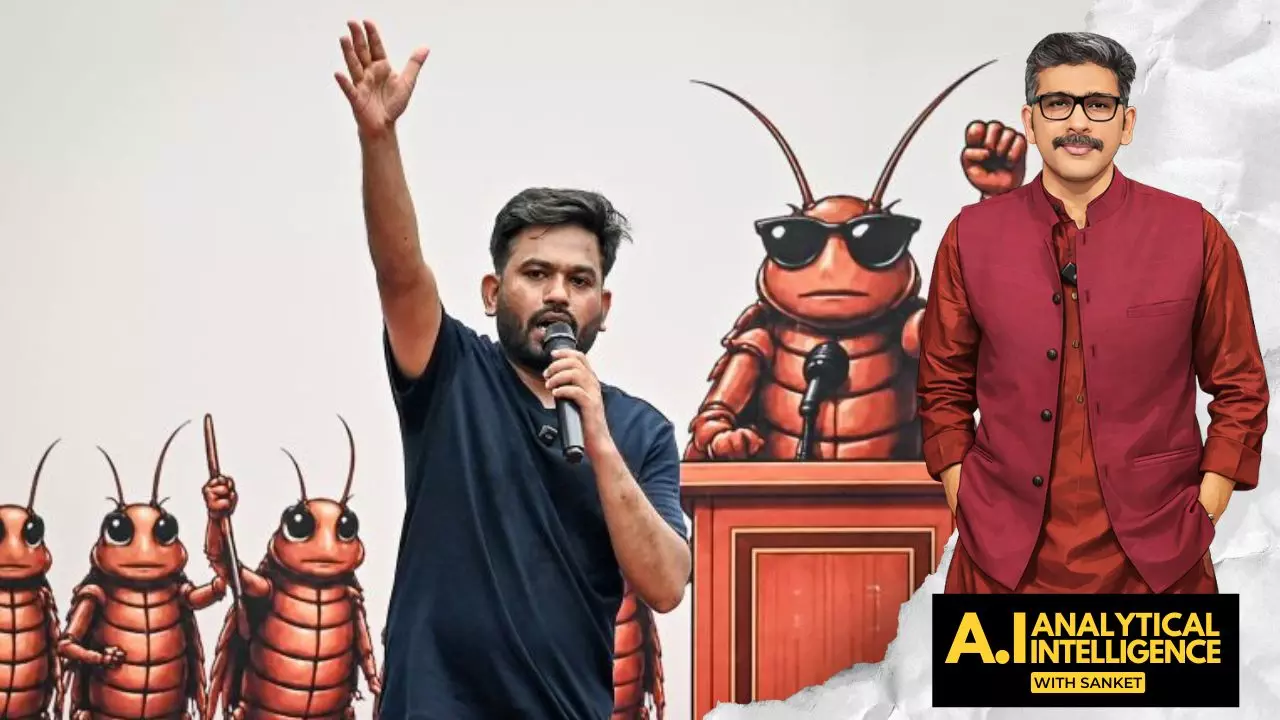
Also read: Abhijeet Dipke, Saurav Das, Ashutosh Ranka: Who are these ‘cockroaches’ who took on govt?
I also want to say that, after five years, we ourselves may become outdated. There may be another organisation like the CJP. There may be new leaders like Abhijeet, Sourav, Vaishnavi, Ratna Aprin, Ashu or Deepak Baliyan. That is exactly how things should happen.
In an evolving democracy, nobody should claim entitlement by saying that only they can solve every problem or that only they have the right to struggle on an issue or speak about it.
I believe India needs as many organisations and public pressure groups as possible, and as many young faces as possible. They do not necessarily have to come from the CJP or be associated with the CJP.
There is already speculation about your political ambitions. If CJP remains a pressure group, how do you see its future?
So many reporters are asking me the same question. I tell them, 'Boss, it has only been two months. What are you expecting from us?'
If possible, the people who have joined this organisation may one day form their own pressure groups. Other people can also create similar organisations. That would be a good thing for India and for democracy.
Also read: ‘Don’t make me a hero, country ruined by making one person a hero’: Dipke after Pradhan quits
The problem in our society is that we have a tendency to look for saviours. We place all our hopes and expectations on one person or one organisation and expect them to solve everything through some magical power. That is neither humanly nor practically possible. If anyone tells you they can solve every problem, they are lying. That is why we believe there should be many organisations like the CJP.
How will you sustain such a movement financially?
Of course, we have thought about that. We are going to adopt a crowdfunding model. We will ask people to support us financially through online contributions. We are currently in the process of setting that up, and it should be ready within a week or two. It will be a crowd-funded model where we listen to people, offer suggestions and work alongside other pressure groups. That is how we see the CJP today.
Does the rest of the organisation agree to this vision?
Of course they do. If tomorrow they change their mind, they are free to tell us. Ultimately, whatever the majority of the core team decides is what we will follow.
Is the protest over, or does the movement continue?
No, it is not over. It will continue for a very long time because the victims' families are yet to receive compensation. We are telling the government that it is better to release the compensation as soon as possible. If they don't, we will have to protest again.
PM referred to some people as 'badmash bachche' (naughty children) for using abusive language. But we also know there were some 'badmash bachche' in the Delhi Police and RAF. I am yet to see action against them.
When it comes to paying ₹1 crore in compensation to victims' families, the government suddenly remembers rules and procedures. But when governments are toppled overnight or MLAs are allegedly purchased with thousands of crores, nobody seems to remember those rules. Only when compensation has to be paid to victims' families the rules suddenly become important.
Will the August 5 meeting decide a timeline for fresh protests if the government's assurances are not fulfilled?
We will discuss that at the meeting and announce our decision only after that. The timeline will definitely be part of the agenda.
Will alleged police excesses also be discussed during the meeting?
Yes, we want to take that issue forward because the government has to take responsibility. Using abusive language is not a criminal offence. Whether it is morally or ethically wrong is a different debate. Personally, I do not endorse abusive language. But that does not mean you unleash the entire state machinery against a 15-year-old girl. She is just a child. Sit with her, explain that such language is not appropriate in public life, and she will understand.
Also read: CJP protest aimed to subvert democracy while using its privileges: RSS leader
Who hasn't made mistakes as a teenager? Why do you need to send the entire state machinery after her? The Prime Minister referred to some people as 'badmash bachche' (naughty children) for using abusive language. Nobody supports abusive language. But we also know there were some 'badmash bachche' in the Delhi Police and the Rapid Action Force. I am yet to see action against them.
Perhaps the Prime Minister forgot to mention Yogi Adityanath, Ramesh Bidhuri and T Raja Singh while talking about these notorious people. Yogi Adityanath had abused an ANI cameraperson. T Raja Singh abused people during a public meeting.
I believe the Prime Minister should first apologise to students for the brutal lathi charge on July 28, when male police officers allegedly assaulted girls as young as 12 years old, tore their clothes, grabbed them by the neck and used lathis on their private parts. He should apologise for that first before speaking about forgiveness.