








CJP’s Parliament march: From clashes to talks with ministers, key developments
From police action and detentions to meetings with Union ministers and Parliament disruptions, here's everything that happened during the CJP's march towards Parliament

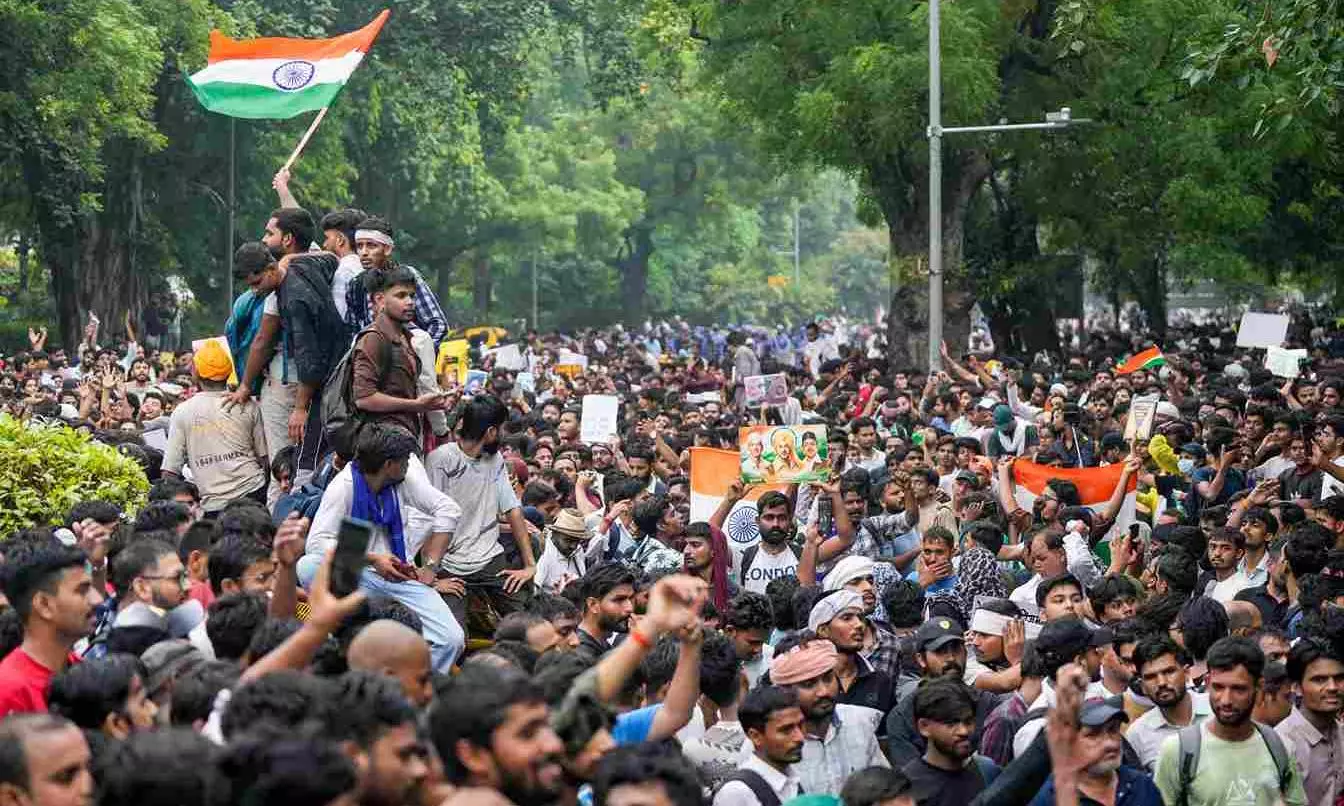
The Cockroach Janta Party's march to Parliament dominated developments in the national capital on Monday (July 20), as protesters attempted to reach Parliament amid heavy security, police action and mounting political pressure over the alleged NEET paper leak. Here are the key developments:
• Thousands join CJP's ‘Chalo Sansad’ march: Students, parents and senior citizens from across the country gathered in Delhi and marched from Jantar Mantar towards Parliament despite heavy rain and tight security.
Also read | ‘Is this not our country’: What CJP protesters said as they defied police crackdown
• Police use tear gas and lathicharge to stop protesters: Delhi police blocked multiple routes with barricades and used tear gas and baton charges after protesters attempted to breach security cordons. Several protesters and police personnel were injured, and internet services were suspended in parts of central Delhi.
• Protesters refuse to back down despite crackdown: Demonstrators repeatedly regrouped after being pushed back, climbed barricades, took alternate routes and continued raising slogans, while alleging excessive use of force by the police.
• Opposition protests disrupt Lok Sabha: Protests over the alleged NEET paper leak and Ram temple donation theft forced multiple adjournments, leading to the House being adjourned for the day on the opening day of the Monsoon Session.
• CJP march coincides with Parliament protests: As CJP supporters attempted to march to Parliament demanding Union Education Minister Dharmendra Pradhan's resignation over the alleged NEET paper leak, Opposition MPs raised the issue inside the House.
• Police detain protesters across central Delhi: Several demonstrators were taken into custody from locations including Jantar Mantar, Mandi House, Patel Chowk, Janpath and Parliament Street to prevent them from marching towards Parliament.
• Detainees shifted to different locations: Police moved those detained to various parts of the capital to stop them from regrouping, with officials saying they would be released after warnings and verification of their antecedents.
• Security remains on high alert: Multiple layers of barricades, heavy deployment of Delhi Police and paramilitary personnel, intensified vehicle checks and on-ground monitoring by senior officers were put in place across the New Delhi.
• Abhijeet Dipke ends hunger strike: CJP founder Abhijeet Dipke ended his hunger strike at Jantar Mantar following an appeal from activist Sonam Wangchuk and later joined the party's march towards Parliament amid heightened security in the national capital.
• Confusion surrounds Dipke’s detention: The CJP initially claimed that founder Abhijeet Dipke had been detained by the police during the protest, but later clarified that he had neither been arrested nor detained, creating confusion over his status. Delhi police also denied reports circulating on social media claiming that Dipke had been detained, terming them “entirely false”.
Also read | Cockroach party protest: What are CJP supporters' demands and what Dipke said
• Pradhan meets Amit Shah: Union Education Minister Dharmendra Pradhan met Union Home Minister Amit Shah, as thousands tried to march to Parliament as part of the CJP’s protest call to demand the former’s resignation over alleged examination irregularities. Officials said Pradhan met Shah at his office in the Parliament House complex. It was not immediately known what transpired in the meeting.
• Metro closures trigger commuter chaos: The closure of five Delhi Metro stations over security concerns left hundreds of commuters stranded, sparked protests inside stations and disrupted the movement of CJP supporters heading towards Jantar Mantar and Parliament.
• CJP meets JP Nadda over demands: CJP spokesperson Saurav Das said he and Ashutosh Ranka met Union Minister JP Nadda to press for Union Education Minister Dharmendra Pradhan’s resignation, adding that while the demands were conveyed, no commitment had been made. Das said he was assured that there would be no further police crackdown in and around Jantar Mantar, though there were no reports yet of police action stopping.
• CJP places three key demands before Nadda: During talks with Union Minister JP Nadda, CJP representatives demanded that Sonam Wangchuk be allowed to leave Safdarjung Hospital and return to Jantar Mantar to address supporters, sought the resignation of Union Education Minister Dharmendra Pradhan, and called for ₹1 crore compensation for the families of NEET aspirants who allegedly died by suicide following the exam paper leak.
• Nadda confirms talks with CJP: Union Minister JP Nadda said discussions with CJP representatives Saurav Das and Ashutosh Ranka began after the protesters proposed talks with the government. He said the delegation submitted a written petition and appealed to protesters to end their sit-in and help restore normalcy.
Also read | Dharmendra Pradhan meets Amit Shah as NEET protest reaches Parliament
• Police clear Jantar Mantar, protests continue elsewhere: After using tear gas and lathicharge to disperse protesters at around 4 pm, police cleared Jantar Mantar. However, CJP supporters regrouped and continued demonstrations at multiple locations across central Delhi, with several attempting to bypass barricades and march towards Parliament. The security forces also fired tear gas shells at Raisina road near Parliament to disperse crowd.
• Delhi police deny assault allegations: Delhi police dismissed as false CJP claims that Sonam Wangchuk's wife Geetanjali Angmo was assaulted and that dozens of protesters, including a 12-year-old girl, were seriously injured during the 'Chalo Sansad' protest, urging people not to share misleading information.
(With inputs from The Federal Desh)