








Congress attacks Modi’s foreign policy, says Pakistan gaining influence
Jairam Ramesh says Pakistan has gained regional and global influence while China’s deepening presence in Islamabad’s strategic apparatus poses a threat to India

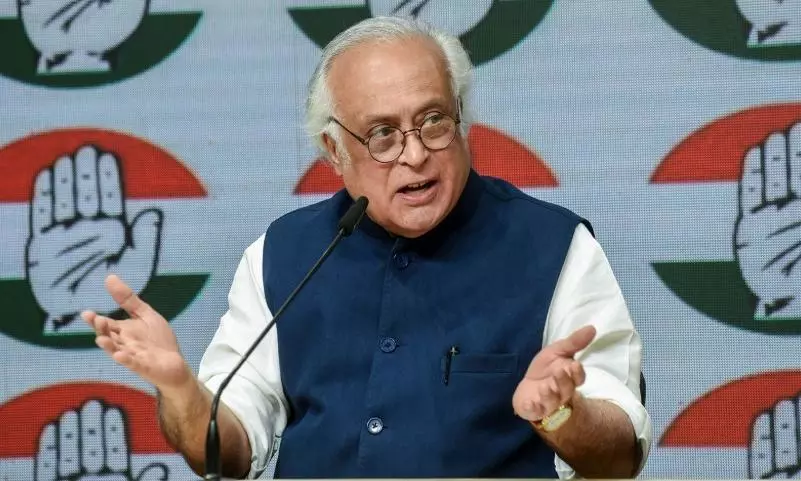
The Congress on Monday (June 15) launched a fresh attack on the Modi government's foreign policy, arguing that Pakistan has emerged with enhanced regional and international clout at a time when China has become increasingly embedded in Islamabad's strategic and security architecture.
Congress general secretary Jairam Ramesh said these developments pose a serious geopolitical challenge for India and warrant careful attention. He also welcomed reports that the United States and Iran are set to sign an agreement in Geneva on June 19 to end hostilities in West Asia, while noting that the full details of the proposed deal are yet to be officially announced.
Also read: Modi’s Nordic outreach: Reactive foreign policy than bold strategy? | Interview
"There is universal hope that the two countries (as also Israel) will abide by the accord — even though it is of an interim nature — and that the accord will lead to a more permanent normalization," Ramesh posted on X.
Economic concerns
While the unrestricted re-opening of the Strait of Hormuz will certainly bring great relief to India, it does not mean the structural problems the economy faces will soon be surmounted, Jairam Ramesh said.
"These concerns clearly predate the current war in West Asia that began just two days after Prime Minister Modi's visit to Israel. The rupee had been under considerable pressure for over a year and the gap between the demand and supply of dollars had been growing. Rates of private investment — a most crucial determinant of GDP growth- have been tepid for many years," Ramesh said.
"This is the result of sluggish growth in demand that, in turn, is the outcome of stagnation in real wages over the past decade; Modi Government's failure to check the dumping of imports from China that has resulted in a record trade deficit and endangered growth of job-generating MSMEs in particular; overall investment climate vitiated by unchecked powers given to tax authorities and investigative agencies," he said.
Questions over foreign policy
Pakistan, which India had successfully isolated after its orchestration of the terror attacks in Mumbai in November 2008, now seems to have acquired a new regional and global influence, the Congress leader claimed.
"This, coupled with China's deep embedding in Pakistan's strategic apparatus, poses a formidable geo-political challenge for India's foreign policy," Ramesh said.
Also read: Modi’s ‘Melody moment': Is foreign policy being reduced to viral moments?
"It is too much to expect Mr. Modi to rethink his blind devotion and unconditional support to Israel. But humanitarian considerations and long-standing commitments apart, our national interest demands greater balance than Mr. Modi has shown," he said.
US-Iran peace deal
Ramesh's remarks came after Pakistan Prime Minister Shehbaz Sharif announced that a peace deal between the US and Iran has been reached, and it will be officially signed off in a ceremony in Switzerland on June 19.
In a post on X in the early hours of Monday, Sharif said, "Following intensive talks, we are pleased to announce that the Peace Deal between the United States of America and the Islamic Republic of Iran has been REACHED." He added that both sides have declared the "immediate and permanent termination of military operations on all fronts, including in Lebanon.
Also read: Pakistan says US, Iran may sign deal in 24 hrs; what’s in the ‘Islamabad Agreement’?
The official signing ceremony will be on June 19 in Switzerland, he said.
Sharif thanked the US and Iran for their commitment to finding a diplomatic solution to the conflict. He also extended sincere appreciation to "our brothers in this mediation effort, the great leadership of the State of Qatar", for their support in reaching this agreement.
US-Iran conflict
The US and Israel launched attacks on Iran on February 28 that saw Tehran lose several of its top leadership, including the Supreme Leader Ayatollah Ali Khamenei, Secretary of the Supreme National Security Council Ali Larijani, Islamic Revolutionary Guard Corps Commander Mohammad Pakpour, Defence Minister Aziz Nasirzadeh, among others.
Khamenei's son, Mojtaba, is now the supreme leader, but has not been seen in public since the war began.
(With agency inputs)