








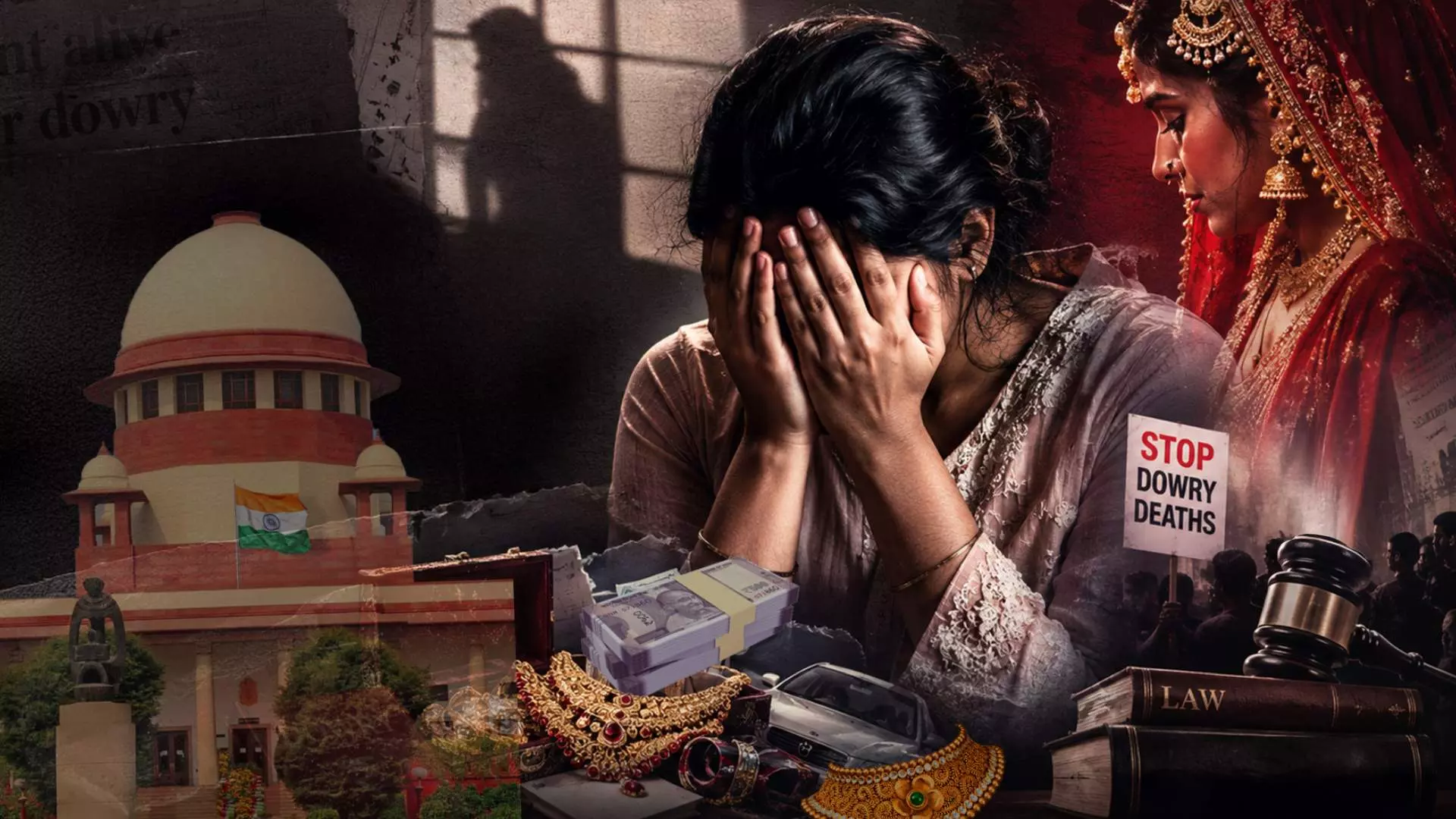
Watch | Deepika to Twisha, why dowry deaths persist despite strict laws
Delhi leads metro dowry death cases in 2024 while Bengaluru tops complaints under Dowry Act; recent cases and SC remarks highlight enforcement gaps and concern

India continues to witness disturbing cases of dowry-related violence despite stringent laws and growing awareness campaigns. According to the National Crime Records Bureau (NCRB), Delhi recorded the highest number of dowry death cases among India’s metropolitan cities in 2024 for the fifth consecutive year, while Bengaluru reported the highest number of cases under the Dowry Prohibition Act.
The NCRB data showed that the national capital reported 109 cases of dowry deaths in 2024. Bengaluru, meanwhile, recorded 878 cases under the Dowry Prohibition Act, accounting for nearly 87 per cent of all dowry-related complaints reported across metro cities.
Also read | After Twisha Sharma, another suspected dowry death rocks Noida
The issue has once again come under the spotlight after the Supreme Court flagged Uttar Pradesh, Bihar and Karnataka as states where dowry deaths remain deeply worrying despite stricter laws and rising education levels among women.
SC for strict scrutiny
The observations came during a recent dowry death case from Ghaziabad in Uttar Pradesh. The Supreme Court cancelled the bail granted to an accused husband and called for stricter scrutiny in dowry death cases.
Even as the court made those remarks, two recent deaths involving women from Uttar Pradesh once again drew national attention to the issue. In Bhopal, 33-year-old Twisha Sharma, originally from Noida, was found hanging in her matrimonial home in Katara Hills on May 12. Police said she had met her husband through a dating app in 2024 and married him in December 2025.
Recent cases
According to reports, Twisha had allegedly told a friend in chats that she felt trapped in the marriage. Her family accused her lawyer husband and mother-in-law of dowry harassment. The mother-in-law is a retired judge.
Police formed a Special Investigation Team to probe allegations of dowry harassment and assault. While the AIIMS Bhopal post-mortem report stated that Twisha died by hanging, injury marks were also reportedly found on her body. Her family demanded a second autopsy and refused to perform the last rites pending further investigation.
Just days later, on May 17, 24-year-old Deepika allegedly jumped to death from the roof of her house in the Ecotech 3 area of Greater Noida.
Dowry demands
Police said Deepika had been married for around 14 months and was allegedly harassed over dowry demands that included a Toyota Fortuner and Rs 50 lakh.
Deepika’s father claimed the wedding had cost nearly Rs 1 crore. After her death, police reportedly found injury marks on her body and arrested her husband Hrithik and father-in-law Manoj based on a complaint filed by her father.
These two recent cases underscore how dowry-related violence cuts across cities, classes and professions.
Anti-dowry laws
India’s anti-dowry laws remain strict on paper. Under Section 80 of the Bharatiya Nyaya Sanhita, a dowry death case is registered if a woman dies under unnatural circumstances within seven years of marriage and there is evidence of dowry harassment shortly before her death.
Also read | India records 20 dowry deaths a day; Nikki Bhati only the latest
The offence carries a minimum punishment of seven years in prison and may extend to life imprisonment. The Dowry Prohibition Act also makes giving, taking or demanding dowry a punishable offence.
Social pressure
Despite laws, arrests and awareness campaigns, dowry-related crimes continue to surface year after year across the country.
Investigators and women’s rights activists have repeatedly pointed to prolonged domestic abuse, pressure from in-laws and the continued social acceptance of dowry demands as major reasons behind such crimes.
The content above has been transcribed from video using a fine-tuned AI model. To ensure accuracy, quality, and editorial integrity, we employ a Human-In-The-Loop (HITL) process. While AI assists in creating the initial draft, our experienced editorial team carefully reviews, edits, and refines the content before publication. At The Federal, we combine the efficiency of AI with the expertise of human editors to deliver reliable and insightful journalism.


