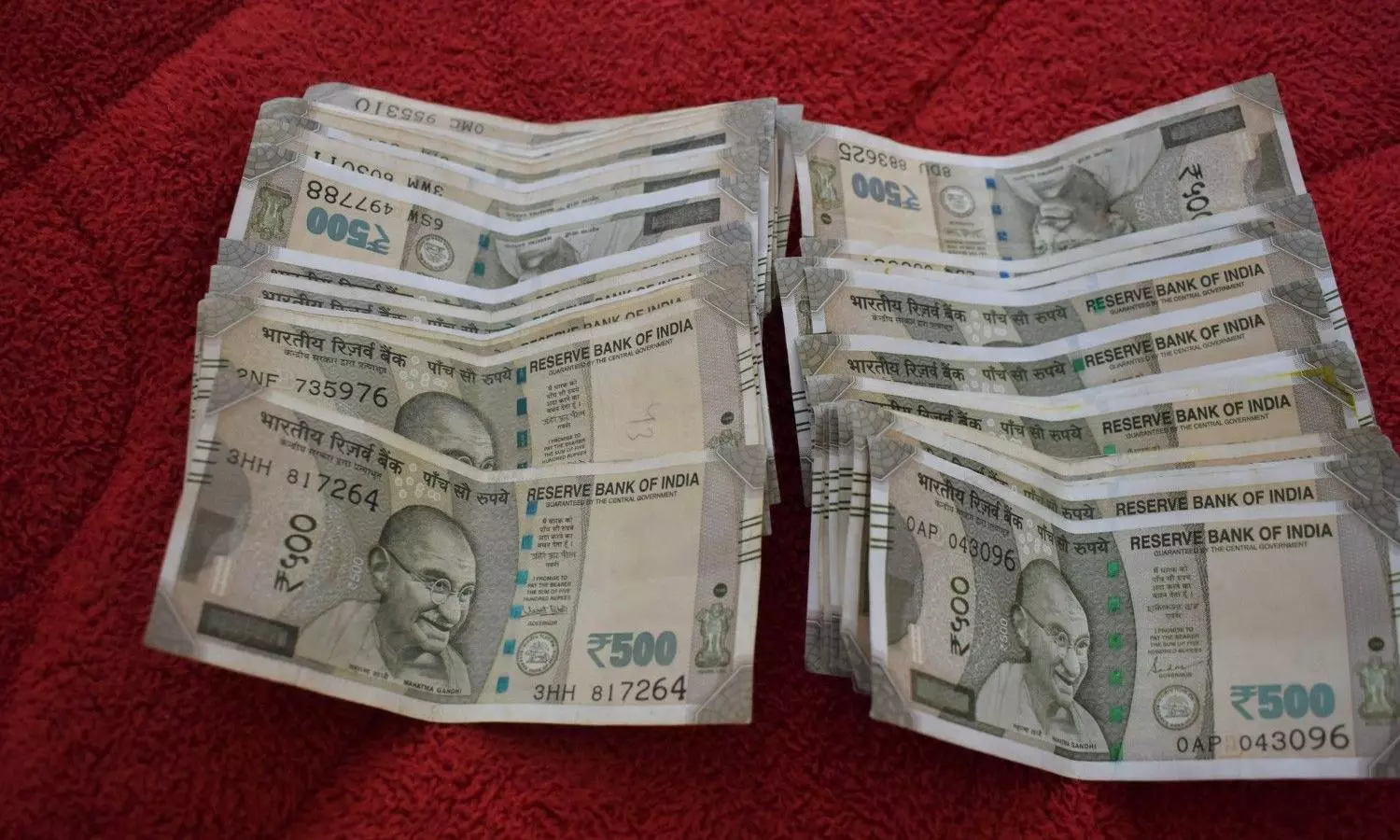
India worried as fake currency routes reopen after Bangladesh regime change
Counterfeit Indian currency smuggled via Bangladesh has historically been treated by Indian agencies as a national security concern, not merely an economic crime

The resurgence of smuggling and circulation of high-quality Fake Indian Currency Notes (FICN) through the India-Bangladesh border has emerged as the most visible direct security fallout of the August 2024 regime change in Dhaka so far.
Recent seizure data from the police and the Border Security Force (BSF) underscores the scale of the problem.
More than Rs 50 lakh worth fake notes seized
In December alone, Malda district police in West Bengal recovered counterfeit Indian currency worth around Rs 50 lakh from border areas and arrested four individuals. In a separate operation in the district’s Bakhrabad area, police seized an additional Rs 8 lakh in fake Rs 500 notes this month.
Also read: Let Hasina stay in India, but she can't run politics from here
Another Rs 16 lakh was seized recently by the BSF in Murshidabad district.
Similar seizures have been reported across West Bengal, Assam, Tripura, and even Delhi.
Malda superintendent of police Abhijit Bandyopadhyay admitted before the media that there has been a significant spike in the smuggling.
Earlier in June, when the Delhi Police made its first seizure of FICN this year, it found that all the counterfeit Rs 500-denomination notes, with a total face value of Rs 4 lakh, had been smuggled from Bangladesh.
The recovery in Delhi indicated a renewed activation of nationwide counterfeit currency smuggling networks.
Task force non-functional
Security officials say all these seizures represent only a fraction of the total volume of FICN being smuggled across the border.
Also read: Nepal lifts decade-long ban on high-value Indian currency notes
The renewed flow is being linked directly to a breakdown in institutional cooperation between the two countries after August 2024.
Under Sheikh Hasina’s Awami League government, India and Bangladesh had established a joint task force on fake currency and terror financing, enabling real-time intelligence sharing and coordinated action against cross-border networks.
That task force, Indian officials say, has effectively become dormant since the change of regime in Dhaka.
Since the change of government in Dhaka that joint task force is almost non-functional, according to Indian security officials familiar with the matter.
Regular coordination meetings have ceased, intelligence exchanges have slowed, and joint operations along the border have declined.
“The difference on the ground is visible. The institutional memory and personal-level coordination built over years has been lost,” said a BSF official, speaking on condition of anonymity.
Also read: Why unrest in Bangladesh matters to India | Talking Sense With Srini
“Counterfeit currency networks are quick to exploit such gaps. When cooperation was active, large consignments were intercepted before they crossed. Now we are again seeing currency reach local handlers,” he added.
Counterfeit Indian currency smuggled via Bangladesh has historically been treated by Indian agencies as a national security concern, not merely an economic crime.
Complex policy dilemma for India
Prior to the creation of the joint task force, high-quality fake notes were a major source of funding for organised criminal syndicates and, in some cases, terror-linked networks operating inside India.
While Indian agencies have not publicly established direct terror links in the latest seizures, officials caution that counterfeit currency remains a low-cost, high-impact tool capable of destabilising local economies and financing other illegal activities.
The quality of the seized notes has also raised concern.
Officers involved in recent operations say many of the fake Rs 500 notes can pass routine scrutiny, making them particularly dangerous in rural and semi-urban markets where cash usage remains high.
Complex dilemma
Indian officials say steps are being taken to strengthen domestic coordination among the BSF, National Investigation Agency (NIA), state police and intelligence units.
For New Delhi, the situation presents a complex policy dilemma.
Strengthening domestic enforcement along the border may curb some flows, but officials privately acknowledge that without revived cooperation from Dhaka, the problem is unlikely to be fully contained.