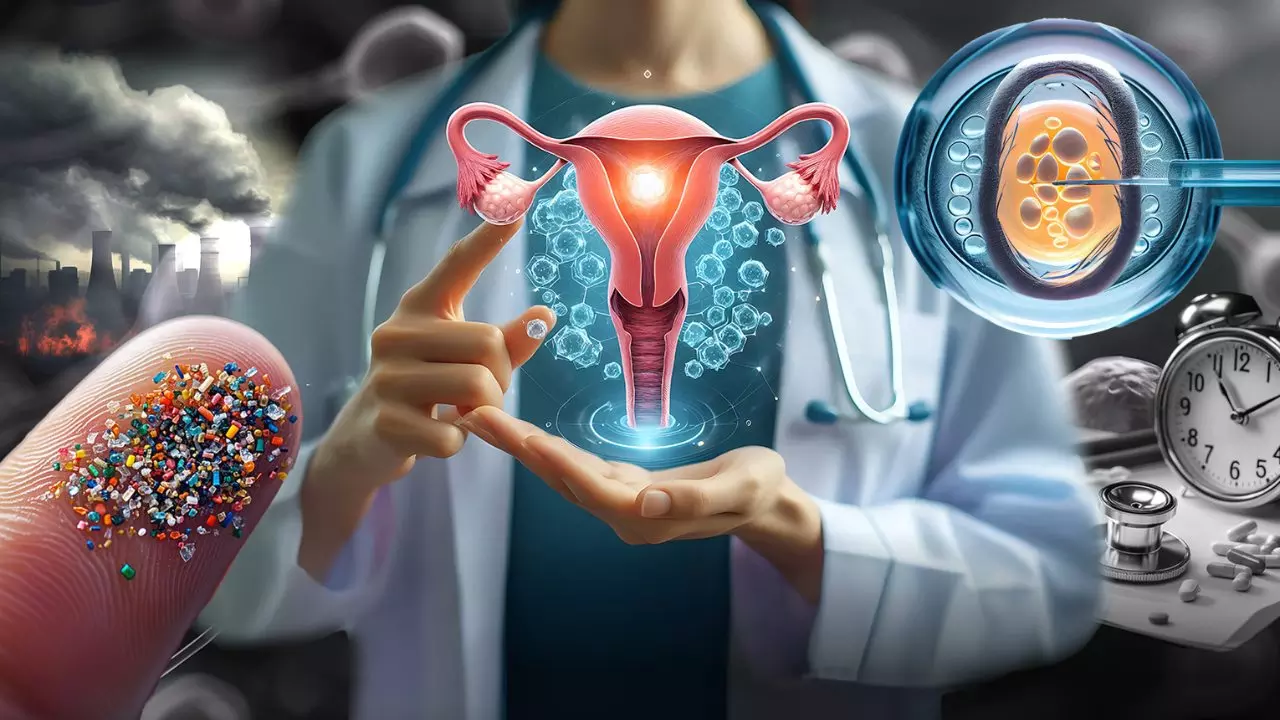
Doctors highlight how obesity and stress impact reproductive health while AI-driven IVF technologies improve success rates for 27 million couples in India
Infertility in India: Lifestyle risks, IVF advances and path forward
One in six Indian couples face infertility as lifestyle, environmental risks rise. Can lifestyle changes work, or is advanced IVF real solution? Doctors weigh in

Infertility now affects nearly one in six couples of reproductive age, with urban India reporting higher prevalence due to rapidly changing lifestyles.
Experts say a mix of lifestyle factors and environmental exposure is disrupting reproductive health, even as assisted reproductive technologies evolve.
An estimated 27 million couples in India are currently grappling with infertility. The key question facing many is whether infertility is reversible through lifestyle changes, and whether advancements in IVF have made treatment more effective and affordable.
In this episode of Second Opinion, fertility specialists examine the causes behind rising infertility, the role of lifestyle correction, and how newer IVF technologies are reshaping outcomes for couples seeking parenthood.
Lifestyle factors
Infertility rates are rising globally, with experts attributing 40 to 50 per cent of cases to lifestyle-related causes. Hormonal disruption, reduced sperm count and quality, impaired ovulation, and lower natural conception rates have all been linked to modern habits. These factors also reduce IVF success rates in both men and women.
Doctors identify obesity, sedentary behaviour, smoking, alcohol consumption, poor diet, chronic stress, and exposure to environmental toxins such as microplastics and pollutants as major contributors. Artificial reproductive methods often require long-term commitment and come with varying success rates.
Also read: TN govt plans to start Siddha fertility clinic, doctors question efficacy
Highlighting everyday habits, Dr P M Gopinath, Director of Reproductive Medicine at Kauvery Hospital, says, “If you look at the lifestyle, there are lot of things like increase in junk foods, delayed eating, no proper exercise, smoking and alcohol. All of them attribute to infertility issues.”
Environmental stress
Beyond diet and habits, experts warn about environmental exposure. Plastics and pollutants act as gonadotoxins, affecting both male and female fertility by increasing oxidative stress and hormonal imbalance.
Dr Gopinath explains that stress compounds the problem, saying that chronic psychological pressure further disrupts hormonal balance and reproductive function. Experts emphasise that lifestyle correction is not optional but foundational to fertility treatment.
“You have to change your lifestyle, get into active practice in order to conceive or at least get a better success rate in assisted reproductive technologies like IVF and IUI,” he says.
Treatment basics
Doctors underline that fertility treatment begins with lifestyle modification. Avoiding gonadotoxic substances, improving diet, exercising regularly, and managing stress form the base of any medical intervention.
Dr Madhupriya, Clinical Director and Fertility Specialist at Nova IVF Fertility, describes lifestyle management as the “sheet anchor” of infertility treatment. She cautions against expecting technology alone to deliver results without basic behavioural changes.
“Do not expect AI to bring better results without altering basic changes,” she notes, adding that balanced nutrition, regular exercise, quitting smoking, limiting alcohol, and stress management through yoga or mindfulness can improve fertility markers within months.
IVF progress
India has seen significant progress in IVF outcomes over the past decade. For women under 35, average IVF success rates now range between 45 and 60 per cent per cycle, driven by better laboratory standards and technology integration.
Also read: Watch | Mothers can be a reason for male infertility. Science says so
AI-assisted embryo selection, time-lapse imaging, advanced laboratories, and techniques such as intracytoplasmic sperm injection have improved precision and outcomes. Automation and data analysis help clinicians identify viable embryos more objectively.
Dr Anuradha, Fertility Specialist at Prashanth Hospitals, explains that technology now extends to sperm analysis and safety protocols. “We are using radio frequency identification systems to avoid mix-ups of sperm and embryos,” she says.
Lab automation
Once a gamete or embryo is identified, it is tagged and tracked throughout the IVF process to ensure accuracy and prevent errors. Automated databases in embryology and andrology labs allow clinics to manage high patient volumes while maintaining consistency.
AI tools assist in record-keeping, image analysis, and assessing the quality and quantity of sperm, eggs, and embryos. Experts say this level of data management would be nearly impossible manually in busy clinics.
These advancements have also reduced the physical and emotional burden of IVF through milder stimulation protocols, making treatment less demanding for patients.
Limits of technology
Despite technological gains, experts caution that IVF cannot undo genetic damage or long-term toxin exposure. IVF enhances egg and sperm performance but does not alter underlying genetic material.
Dr Madhupriya explains that obesity-related insulin resistance disrupts estrogen and testosterone balance, leading to anovulation and reduced natural conception. Microplastics further increase oxidative stress and androgen levels, worsening fertility outcomes.
Also read: Endometriosis affects 1 in 10 women; diagnosis delays worsen pain, outcomes
“IVF is not something we are giving from the outside,” she says. “Your egg quality and sperm quality remain the same. We can improve quality, not genetic material already affected by toxins or lifestyle.”
Combined approach
Experts agree that IVF alone does not guarantee success. Even with advanced treatment, success rates range between 60 and 70 per cent and depend heavily on lifestyle correction.
“If you change your lifestyle habits, you can improve your success ratio for IVF,” Dr Madhupriya says, adding that medication, higher-end medicines, and quality clinical care work best when combined with lifestyle changes.
As infertility rises alongside environmental and lifestyle challenges, specialists emphasise awareness, early intervention, and informed decision-making.
Informed choices
Doctors urge couples to consult fertility specialists before choosing treatment. Assessing lifestyle factors, setting realistic goals, and exploring personalised options can significantly influence outcomes.
Experts conclude that lifestyle tweaks and modern fertility care are not competing paths but complementary ones. Together, they offer a more effective and sustainable route to parenthood for many couples.
The content above has been transcribed from video using a fine-tuned AI model. To ensure accuracy, quality, and editorial integrity, we employ a Human-In-The-Loop (HITL) process. While AI assists in creating the initial draft, our experienced editorial team carefully reviews, edits, and refines the content before publication. At The Federal, we combine the efficiency of AI with the expertise of human editors to deliver reliable and insightful journalism.