








War of words in Rajya Sabha as Nadda tears into Nehru over ‘Vande Mataram’
As Rajya Sabha debate on the national song's 150th year intensifies, Congress's Jairam Ramesh says the PM is exposed for 'lies' and distorting history

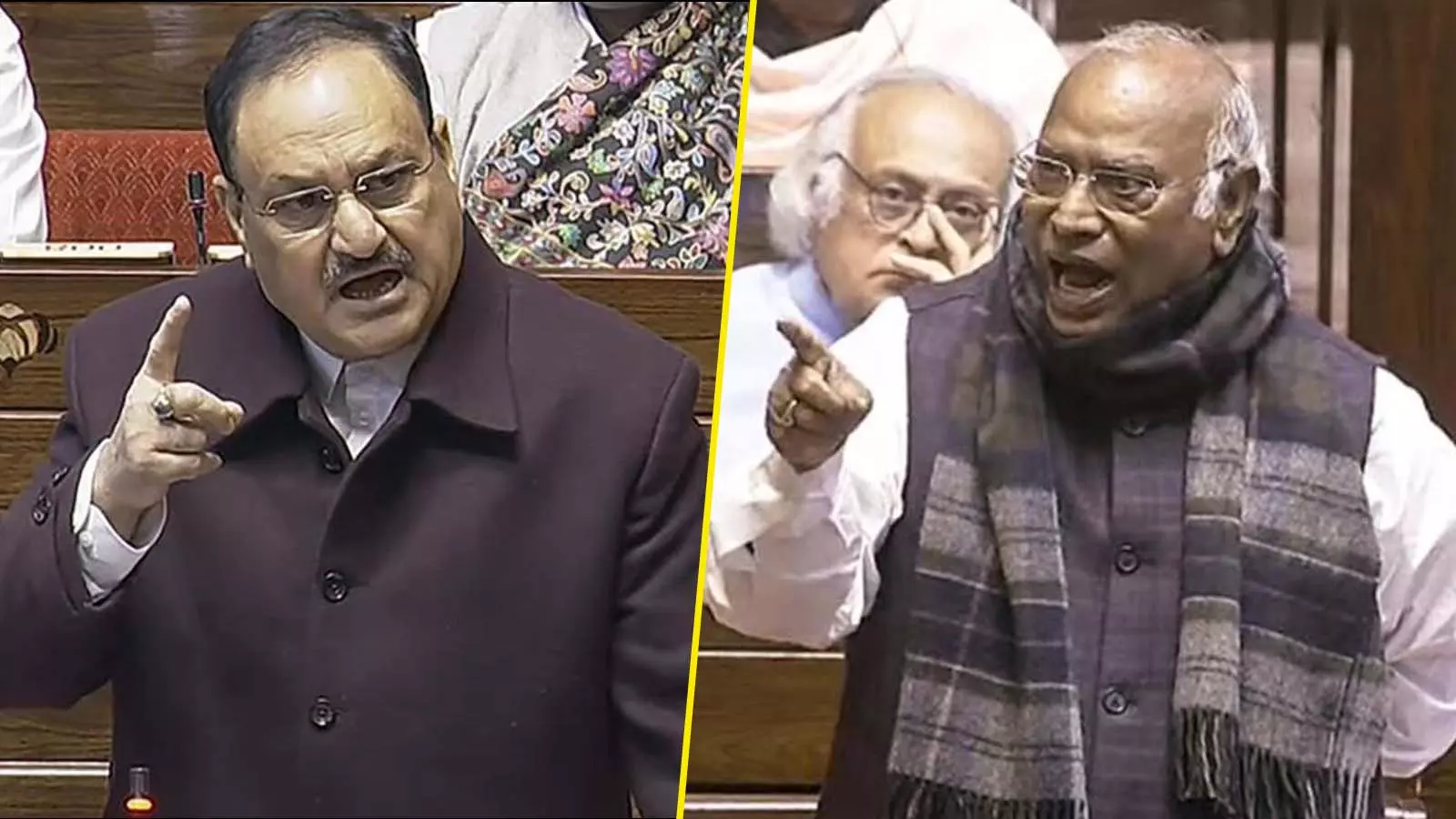
The fierce debate over the National Song ‘Vande Mataram’ returned to rattle Parliament on Thursday (December 11) when the top two leaders of the House crossed swords over the treatment the historic composition has received in the past.
Three days after Prime Minister Narendra Modi accused in Lok Sabha the Opposition Congress and his predecessor Jawaharlal Nehru of dishonouring ‘Vande Mataram’ when they were in power and also came under the criticism of the Trinamool Congress for referring to the creator of the National Song, litterateur Bankim Chandra Chattopadhyay, as “Bankimda” (elder brother Bankim), the arena shifted to the Rajya Sabha. The Parliament is debating Vande Mataram on its 150th anniversary.
Also read: Modi refers to Vande Mataram creator as ‘Bankim da’; TMC up in arms
Union Minister and Leader of Rajya Sabha JP Nadda said in his remarks that the National Song did not receive the respect it deserved after Independence, and held the Congress responsible for it. Concluding the debate on the composition, the BJP leader, who is also a top central minister, said the government doesn’t aim to tarnish the image of Nehru but only wanted to set the historical records straight.
Mallikarjun Kharge, Leader of the Opposition in the Upper House and also the president of the Congress, asked whether the debate was over 'Vande Mataram' or Nehru.
"Whatever is being said here is distorted and not the truth,” he was quoted as saying by PTI. Nadda, however, was in no mood to relent and as remarks continued to play back and forth, the House witnessed a commotion at which Chairman CP Radhakrishnan, the Vice President, had to intervene.
Vande Mataram didn't get its due respect: Nadda
“Vande Mataram did not receive the due respect that it deserved... those in power at that time (government) were responsible for that situation,” Nadda said. He even said the Opposition party cited the age of Nehru to take credit whenever the situation suited it, but stopped short of taking responsibility when things were adverse and put the blame on others.
Also read: Vande Mataram debate in Parliament: Historian questions Modi govt | Capital Beat
Nadda also mentioned that the Prevention of Insults to National Honour Act, 1971, does not have any provision for a penalty if one disrespects or does not sing the national song 'Vande Mataram'.
He also said that while the song had a massive impact on India’s national consciousness during the British Era and united the country, he also referred to a letter penned by Nehru in 1937, citing reservations about some of the song’s stanzas.
Kharge then asked whether Nehru was the prime minister in 1937. To this, Nadda said Nehru was the president of the Congress and that it altered the song by discarding some stanzas that invoked Bharat Mata (Mother India) as Maa Durga, under pressure from the “communal elements”.
Nadda also alleged that the onus for the Constituent Assembly’s handling of the National Anthem and the ‘neglect’ of 'Vande Mataram' lay only with Nehru.
PM and 'entire brigade' exposed: Congress
The Congress claimed later in the day that PM Modi and his “entire brigade” were completely “bruised and exposed for their lies” in the debates that took place on 'Vande Mataram' in both Houses.
The party’s general secretary in-charge communications, Jairam Ramesh, said in a post on X, “It is clear that the PM and his entire brigade have NOT read the two definitive and authoritative books on the national song and the national anthem - written by two of India's finest historians, in the true sense of that term.”
Also read: With Vande Mataram debate, Modi fails to score in history, Bengali culture
The Rajya Sabha MP also shared the screenshot of the cover pages of two books written by two historians – Rudrangshu Mukherjee's Song of India: A Study of the National Anthem and Sabyasachi Bhattacharya's Vande Mataram.
"It is too much to expect that they would do so even after being thoroughly bruised and exposed for their lies," the Congress leader said.
Jairam Ramesh cites 12 letters on National Song
In another post, Ramesh said, “To clear up all the misinformation that the PM and his acolytes have been spreading, this is a compilation of 12 letters and notes penned by the many founding fathers of the Indian Republic, documenting their thoughts on Vande Mataram — Letter from Rajendra Prasad to Sardar Patel (28/9/1937); letter from Subhas Chandra Bose to Rabindranath Tagore (16/10/37); letter from Tagore to Bose (19/10/37); letter from Bose to Nehru (17/10/37); letter from Nehru to Bose (20.10.37); letter from Tagore to Nehru (26.10.37); CWC Resolution on Bande Mataram (Kolkata 28/10/37); JB Kripalani to (C. Rajagopalachari) re Gandhi note (2/1/39); Rajaji to Patel re Gandhi note 7/1/39; Pant to Nehru re Gandhi note 8/1/39; Nehru to Pant re Gandhi not 16/1/39; Gandhi note in Harijan weekly (1.7.39)."
Also read: Congress cites historian Sugata Bose on Tagore's advice over 'Vande Mataram'
Earlier, Ramesh had cited historian Sugata Bose's remarks that it was on Rabindranath Tagore's advice that the party decided in 1937 that only the first part of 'Vande Mataram' would be sung at national meetings, and said these comments "further expose" Modi.
While the Lok Sabha held the debate on 150 years of 'Vande Mataram' for a day (December 8), the Rajya Sabha debated on it for over two days - Tuesday, Wednesday and a part of Thursday.
The Opposition on Wednesday accused BJP leaders of distorting history, with Ramesh saying that the whole aim of the debate was to malign Nehru and insult freedom fighters, including Tagore.
On Monday, Modi alleged that Nehru betrayed “Vande Mataram” by bowing to Muhammad Ali Jinnah's opposition to it, which led to it being fragmented and pandering to his communal concerns, encouraging appeasement politics in India.
(With Agency inputs)