








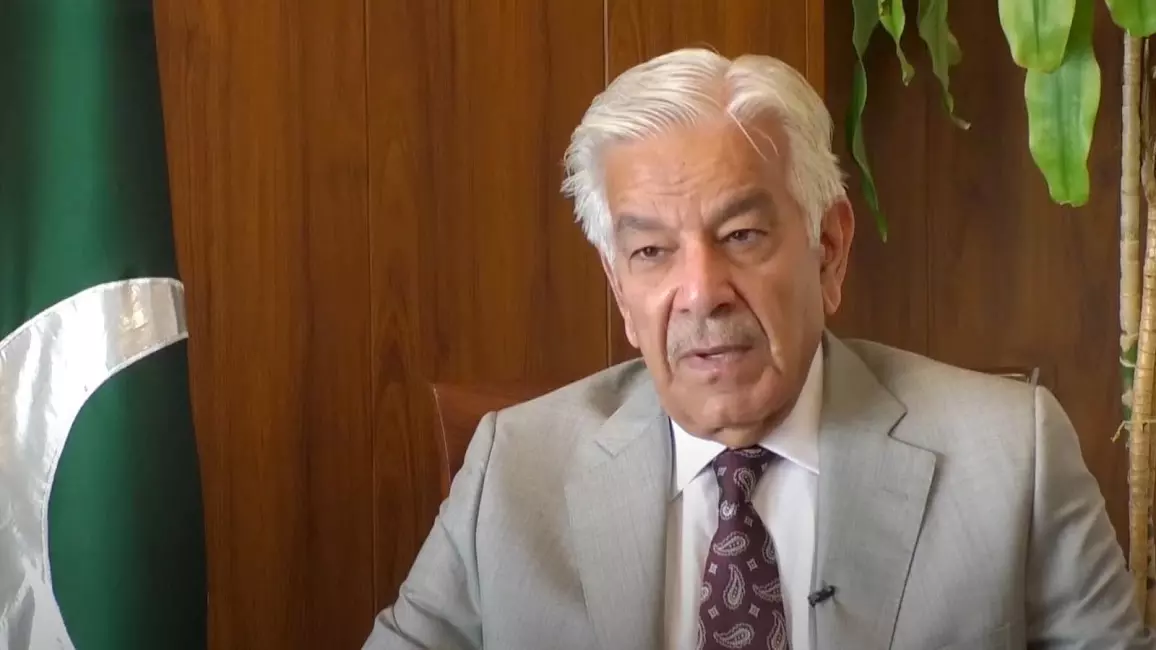
Khawaja Asif says Pakistan could 'go to war' if India threatens water security
Pakistan Defence Minister Khawaja Asif says Islamabad could go to war if India threatens its water security amid the Indus Waters Treaty dispute

Pakistan’s Defence Minister Khawaja Asif has threatened military action against India if it appeared that New Delhi’s actions regarding the Indus River system are jeopardising Islamabad’s water security. His remarks come amid escalating rhetoric between the two neighbours over the Indus Water Treaty, suspended by India following the Pahelgam terror attack.
Asif issues ‘war’ warning
Asif, during an interview with ARY News, said that water was a core national security issue for Pakistan and the country would not think twice before responding if it senses a threat to its access to the two Indus basin waters.
"The moment we feel that our national security — and water is part of our national security — is being threatened, we will go to war against India. Definitely," he said on Sunday (June 22).
Also Read: Khawaja Asif threatens 'swift response' after Rajnath's 'misadventure' warning to Pak
Elaborating further, Asif indicated that Pakistan could respond if there are indications that India was rapidly moving to restrict or alter water flows under the river-sharing arrangement.
According to the India Today report, the remarks came after a video clip of Union Jal Shakti Minister CR Patil surfaced, in which it was purportedly indicated that the flow of Indus waters to Pakistan could be completely stopped by June 2028.
Treaty row intensifies
The latest remarks come against the backdrop of strained ties between India and Pakistan following New Delhi's decision to suspend the Indus Waters Treaty after the April 2025 terror attack in Pahalgam in Jammu and Kashmir that left 26 people dead.
Also Read: Pakistan’s Khawaja Asif accuses the Taliban of acting at India’s behest
India held Pakistan-backed terrorists responsible for the attack and later announced that the World Bank-facilitated agreement would remain in abeyance until Islamabad demonstrates credible and irreversible action against cross-border terrorism.
Signed in 1960, the treaty regulates the distribution of waters from the Indus River system between the two countries. Pakistan receives nearly 80 per cent of the basin's waters under the arrangement, making the river network vital for its agricultural sector, irrigation infrastructure and overall economy.
Pakistan raises objections
Islamabad has consistently criticised India's move, maintaining that any attempt to interfere with water flows could affect millions who depend on the Indus basin for their livelihoods and daily needs.
Last week, Pakistan's Deputy Prime Minister Ishaq Dar urged the United Nations Security Council to take note of what he described as India's violations of the Indus Waters Treaty. Earlier this month, Pakistan also alleged that India was planning a river-linking project aimed at diverting water from the Chenab River, describing the proposal as a serious violation of the treaty as well as other international commitments.