Can Delhi Police take Jantar Mantar off the protest map?
Move comes amid pending court proceedings over protest restrictions, raising questions about the status of the 2018 directions and the basis for the new policy

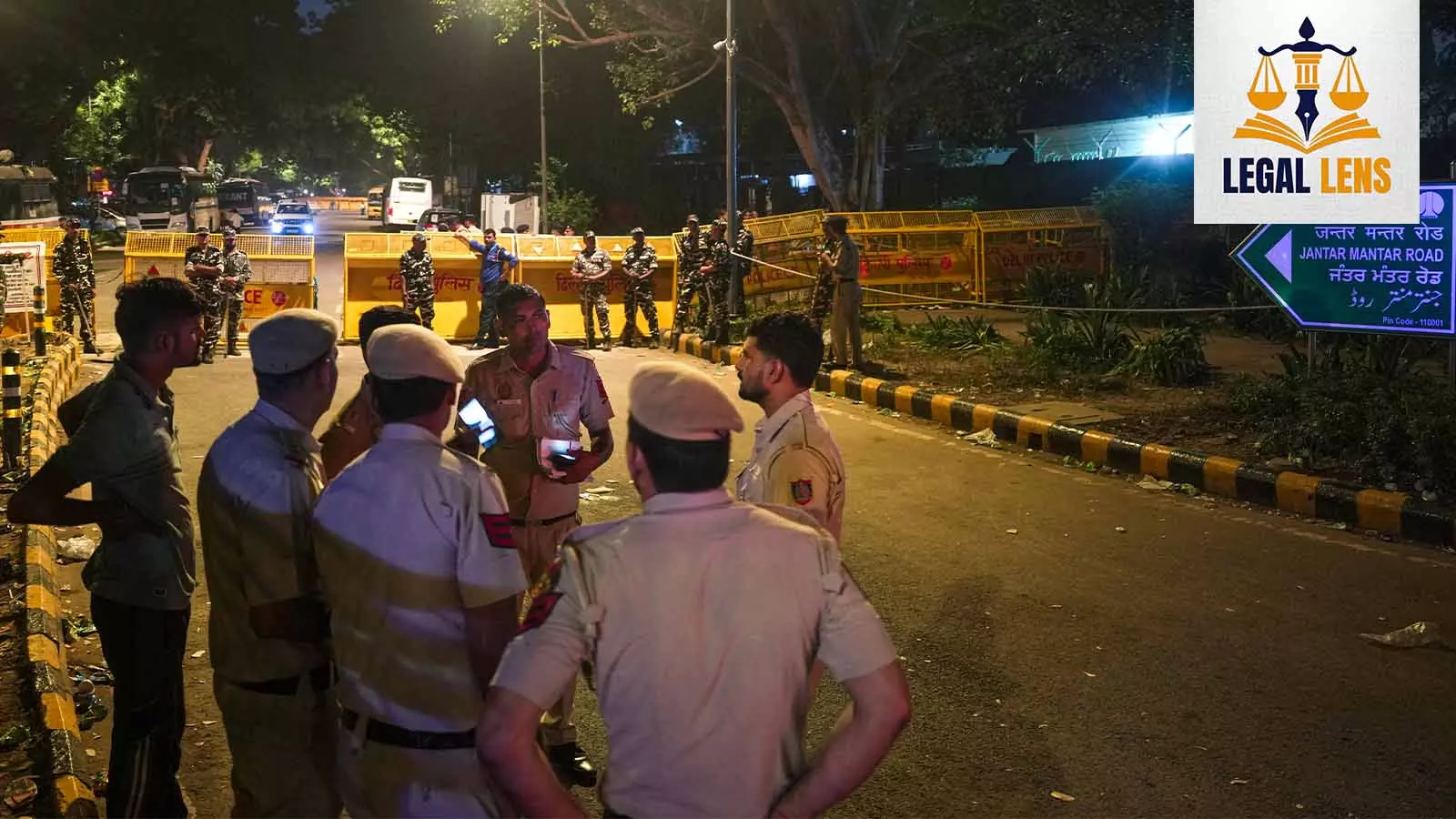
After denotifying Jantar Mantar as protest site, Delhi Police has designated three alternative grounds, but the distances involved and the Supreme Court’s earlier directions raise questions about meaningful access to public protest.
In 2018, the Supreme Court was asked to choose between people demanding the right to protest at Jantar Mantar and residents who wanted relief from the noise and disruption caused by demonstrations. Its answer was memorable: “Total extinction is not balancing.” The judges decided that the two sets of rights could coexist if protests were properly regulated.
Eight years later, Delhi Police has removed Jantar Mantar from its list of designated protest venues. The decision comes amid demonstrations over the Special Intensive Revision (SIR) of electoral rolls and demands for Chief Election Commissioner Gyanesh Kumar’s resignation. It also comes just before the courts are due to consider petitions concerning restrictions on protests in Delhi.
The new order raises two questions: can police change a protest venue during pending litigation, and does the change respect the Supreme Court’s 2018 directions?
What Delhi Police has ordered?
Standing Order L&O/48/2026, dated 11 October, signed by Police Commissioner Anurag Kumar, replaces Jantar Mantar with three designated venues: Ramlila Ground, Burari Ground and CBD Ground in East Delhi. It says a committee appointed by the Union Ministry of Home Affairs examined alternative places for demonstrations and that the decision follows its recommendations.
Also read: After ban, ‘every corner of country became Jantar Mantar’ | Activist Gauhar Raza interview
The order partially changes an earlier standing order of 28 April 2022. It also says detailed procedures for holding demonstrations at the three replacement sites will be issued separately.
The document leaves important questions unanswered. It identifies neither the committee's members nor the date of its appointment. It gives no reasons for discarding the possibility of regulated protests at Jantar Mantar and does not explain whether police could still permit a small gathering there in exceptional circumstances. The order does not attach the committee's recommendations.
Until the promised procedures appear, organisers lack clear information about applying for permission, permissible crowd sizes and restrictions at these venues.
2018 verdict
The legal history begins with the National Green Tribunal's October 2017 direction to stop demonstrations at Jantar Mantar and shift protesters to Ramlila Maidan. Local residents had complained of loudspeakers, encroachments, sanitation problems and prolonged occupation of the road. Protest groups challenged the restriction.
In its 23 July 2018 judgment in Mazdoor Kisan Shakti Sangathan v Union of India, the Supreme Court accepted that residents had suffered genuine hardship. Yet it also recognised the constitutional freedoms of speech and peaceful assembly. The judges suggested practical controls on protest numbers, timings, noise, overnight occupation and obstruction of streets.
They considered Ramlila Maidan as an alternative. Protesters argued that moving farther from the offices of government would make their demonstrations less effective. The Court observed that citizens could not demand an unlimited right to demonstrate at one particular place, but it also recognised that Ramlila Maidan alone might not meet the city's needs.
Also read: CJP to approach police seeking date to hold peaceful protest at Jantar Mantar
Its direction in paragraph 65 was specific. The Delhi Police Commissioner, after consulting other agencies, had to devise a mechanism permitting limited use of Jantar Mantar for demonstrations, with safeguards for nearby residents and offices. The police were given two months to frame guidelines, including a system of prior permission.
The new order must account for this specific direction, which envisaged continued, controlled access to Jantar Mantar.
Alternative venues
The government can point to another Supreme Court order, this one delivered only two days before the denotification. On October 9, in M A Baby v Union of India, a Bench headed by Chief Justice Surya Kant examined sweeping restrictions on Metro and railway services ahead of the proposed demonstrations. The judges questioned the blanket shutdown and asked the authorities to favour regulation over a complete halt to transport.
Paragraph 10 dealt directly with protest sites. The Court recorded agreement among counsel that lawful protesters needed basic amenities and that suitable alternative sites should be identified. It asked the competent authority to consider that suggestion and take an appropriate decision.
This provides support for creating additional protest venues. But the Court asked the authorities to consider alternatives. It did not order Jantar Mantar's removal, or revisit the 2018 direction for regulated access there. Moreover, the lawyers at the October 9 hearing said they did not represent the organisers of the proposed Jantar Mantar protest.
Together, the orders could support multiple equipped venues, including Jantar Mantar under tighter controls. Police must explain why their policy instead removes it.
Pending hearings
Pending litigation generally allows public authorities to continue making administrative decisions. Their powers remain subject to court-imposed restrictions, existing judicial directions and constitutional safeguards.
Also read: ‘Jantar Mantar 2.0 is on’: CJP, student activists vow to continue protests
This distinction matters because the police order followed a contentious weekend. At a special sitting on October 11, Justices Joymalya Bagchi and V Mohana issued notices after finding an initial case to examine allegations that officials had disobeyed the October 9 transport directions. Their final decision on contempt remains pending.
On Monday, the Delhi High Court said it would hear a petition concerning the closure of Jantar Mantar on October 13. Other proceedings concern denial of protest permission and alleged assaults on demonstrators. The Supreme Court is also scheduled to hear related restrictions and detention matters.
The timing warrants scrutiny, while the committee may have completed its work earlier. Its appointment date, proceedings and recommendations would establish when and why the decision arose.
Right to protest
The three new sites are not equally accessible. Ramlila Maidan is roughly three kilometres from Jantar Mantar, while CBD Ground is around 12 kilometres away and Burari Ground about 21 kilometres away. The distances matter because citizens protest partly to bring their concerns to the attention of decision-makers.
Under Article 19 of the Constitution, the freedom to speak and assemble peacefully comes with reasonable restrictions, including those necessary for public order. Authorities may regulate crowd sizes, routes, sound levels and public safety. A Supreme Court judgment in 1972 (Himmatlal K. Shah v Commissioner of Police, Ahmedabad) recognised the government's power to regulate public gatherings while requiring fair rules for granting permission. Its Shaheen Bagh judgment (Amit Sahni v Commissioner of Police, 2020) also stressed the rights of others to use public roads.
For the new policy to work fairly, Delhi Police must show that the replacement grounds are accessible, equipped and genuinely available for demonstrations. It should also clarify what happens to pending applications for Jantar Mantar and whether limited permission there remains possible.
The courts can examine the committee's report, earlier police guidelines and the new policy's effects. In 2018, the Supreme Court required a balance between residents' rights and the freedom to protest. The question now is whether Delhi's revised arrangements preserve a meaningful space for dissent close enough to power to be heard.