








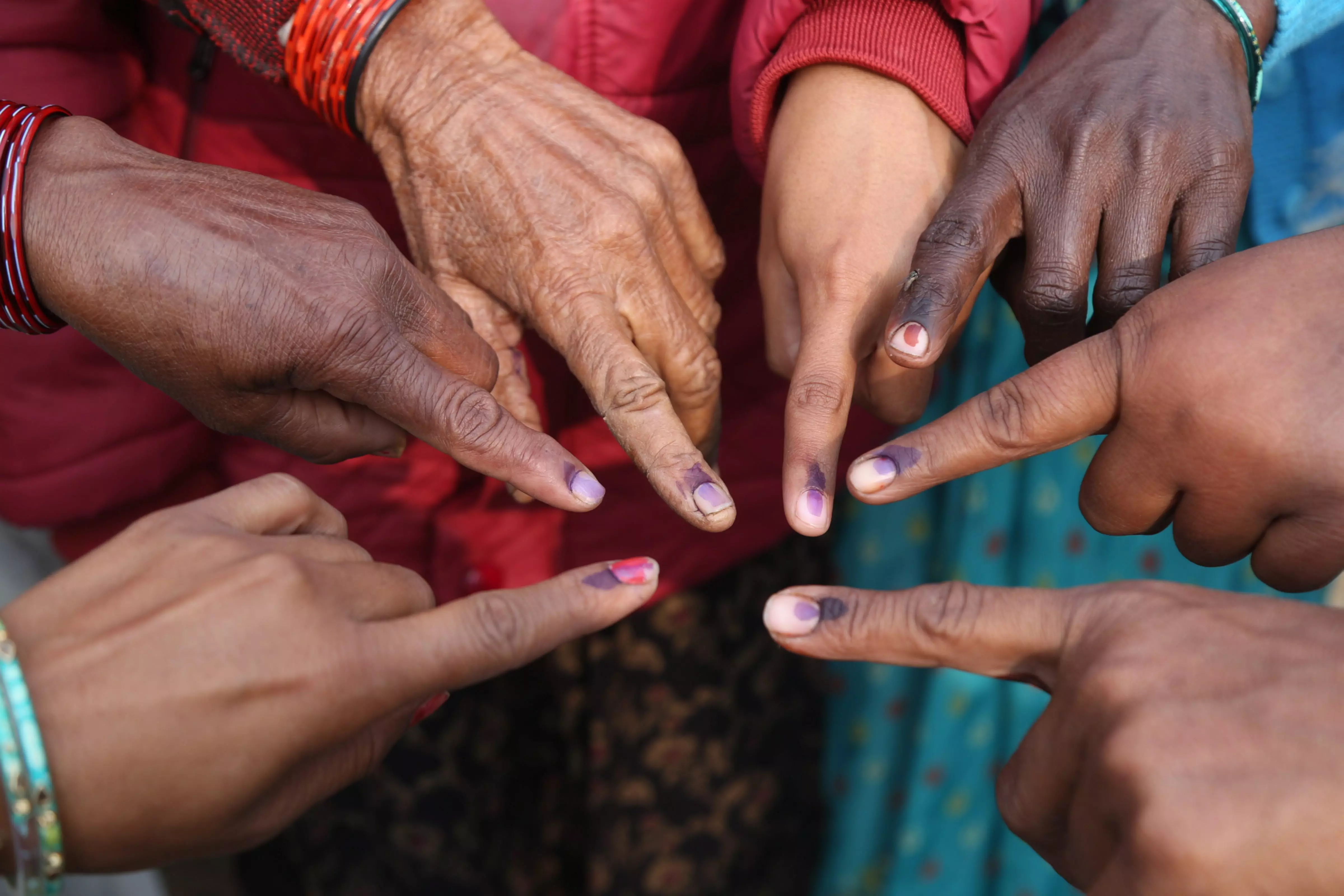
Right to vote, contest elections not fundamental rights: Supreme Court
Supreme Court rules that the right to vote and contest elections are statutory, not fundamental rights, while setting aside Rajasthan HC ruling

The Supreme Court has stated that the right to vote and the right to contest an election are not considered fundamental rights. The Court further stated that the two rights are different from each other, adding that the right to contest elections is subject to stricter regulations with regard to terms of qualifications, disqualifications, and institutional requirements.
Observation in milk union dispute
The observation was recently made by the bench of Justices BV Nagarathna and R Mahadevan during the hearing of a case on an election dispute regarding the District Milk Unions in Rajasthan. The order, authored by Justice Mahadevan, stated that the rights are statutory in nature and exist only to the extent conferred by statute.
Also Read: Lower DR for pensioners than DA arbitrary, violates Article 14: SC
"It is well settled that neither the right to vote nor the right to contest an election is a fundamental right. In Jyoti Basu and others v. Debi Ghosal and others AIR 1982 SC 983 and Javed and other v. State of Haryana and others (2003) 8 SCC 369, this Court authoritatively held that these rights are purely statutory in nature and exist only to the extent conferred by statute,” stated the judgement reported Live Law.
“While the right to vote enables a member to exercise franchise in accordance with the statutory scheme, the right to contest an election or to be elected is a distinct and additional right which may legitimately be made subject to qualifications, eligibility conditions, and disqualifications,” it added.
Doctrinal distinction and precedents
The Court, referring to established precedents including Supreme Court Bar Association v. B.D Kaushik, reiterated the doctrinal distinction between electoral rights. It observed that "a clear doctrinal distinction emerges: the right to vote is the right to participate in the electoral process by exercising franchise; and the right to contest is a distinct and additional right, enabling a person to seek election to an office. The latter is inherently subject to stricter regulation, including qualifications, disqualifications, and institutional requirements."
Also Read: SC to hear plea against frozen Bengal voters' list on April 13
It also noted the 2023 Constitution Bench ruling in Anoop Baranwal, where Justice Ajay Rastogi opined that the right to vote is a fundamental right, while the majority held it to be only a constitutional right.
High Court ruling and challenge
The dispute concerned elections to the Management Committees of District Milk Unions in Rajasthan, specifically the validity of Bye-law Nos. 20.1(2), 20.1(4), 20.2(7) and 20.2(9), which prescribed eligibility conditions for contesting elections.
Representatives of Primary Societies challenged these provisions before the Rajasthan High Court. A single judge declared the bye-laws ultra vires, and the decision was upheld by a Division Bench.
Also Read: SC: Hinduism will be adversely impacted if temples restrict entry on ground of denominations
The appellants, not party to the writ proceedings, approached the Supreme Court. The Court held that the High Court erred in equating eligibility criteria with restrictions on voting rights.
"The impugned bye-laws operate solely in the domain of candidature and holding of office, without impinging upon the right to exercise franchise. The very premise of the High Court's reasoning is therefore fundamentally flawed and unsustainable in law,” stated the Court.
Clarifying further, it stated: "The bye-laws are directed at the eligibility of the President or representative of a primary co-operative society to contest elections to, or to continue as a member of, the Board of Directors of the District Milk Unions."
Eligibility vs disqualification explained
Distinguishing eligibility from disqualification, the Court held the High Court’s reasoning unsustainable. "They (bye-laws) regulate who may enter the electoral fray or continue in office based on minimum functional and performance-related thresholds, and do not seek to add to or alter the statutory disqualifications enumerated under Section 28. By conflating these two distinct concepts, the High Court misdirected itself in law and applied an incorrect standard of scrutiny."
Also Read: ‘Matrimonial battle of Mahabharata’: SC closes 10-year divorce case, quashes 80 cases
It further held that statutory provisions do not exclude regulation through bye-laws. "Section 32 of the Act, 2001 expressly incorporates bye-laws into the electoral framework, thereby recognising their role in structuring representation and governance within the co-operative."
Violation of natural justice principles
The Court also found that the High Court exceeded its jurisdiction by deciding the matter without hearing all affected parties.
"A determination of such wide amplitude could not have been rendered in the absence of all affected parties. At the very least, the High Court ought to have ensured issuance of notice and an opportunity of hearing to those societies whose rights and governance structures and internal regulations stood directly affected. The failure to do so strikes at the root of audi alteram partem, a foundational principle of natural justice,” stated the Court.
Accordingly, the appeal was allowed, and the High Court judgment was set aside.