








SC to hear plea against CBSE's three-language rule, declines interim order
The Supreme Court declined interim relief against CBSE’s mandatory three-language policy for Class 9 students and sought replies from the Centre, CBSE and NCERT

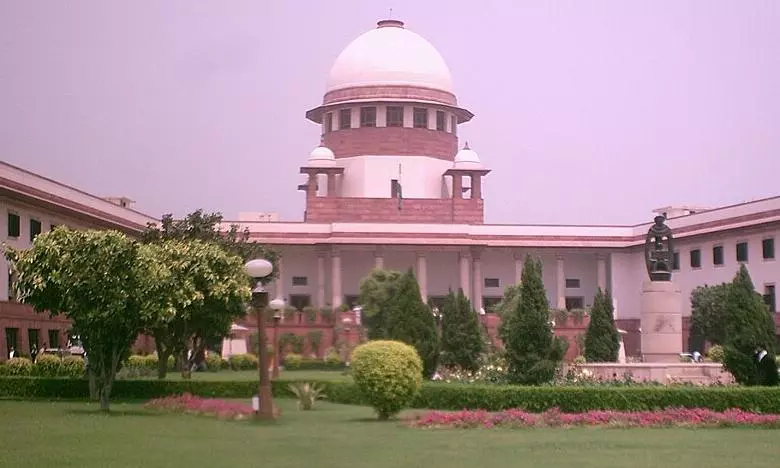
The Supreme Court on Wednesday (May 27) declined to issue an interim order in a petition challenging the CBSE’s decision to make the study of three languages, including at least two native Indian languages, mandatory for Class 9 students from July 1. The court, however, agreed to examine the matter and issued notices to the Centre, the CBSE and the NCERT, seeking comprehensive replies within two weeks.
Court seeks implementation details
During the hearing, a bench comprising Chief Justice Surya Kant and Justices Joymalya Bagchi and Vipul M. Pancholi directed Additional Solicitor General Aishwarya Bhati to file a report on the CBSE’s logistical preparedness to implement the policy. The matter has been listed for hearing in the second week of July.
Also Read: Three-language policy leaves students, parents, educators under stress | AI With Sanket
Appearing for the for the petitioner Yashica Bhandari Jain and others, senior advocate Mukul Rohatgi submitted that a nationwide circular has been issued by the CBSE, which states that the students have to study three languages from the next academic year.
Petitioners cite choice, federalism
Senior advocate Kapil Sibal, appearing for some other petitioners, said the issue involved constitutional issues of federalism and choice.
Language is a matter of choice, and cannot be imposed, Sibal submitted. The top court refused to pass any interim order and said it will hear the matter in July.
Also Read: CBSE three-language policy sparks political row over Hindi imposition fears in South
The CBSE’s decision, announced in a recent circular, forms part of the board’s alignment of its scheme of studies with the National Education Policy (NEP) 2020 and the National Curriculum Framework for School Education (NCF-SE) 2023.
Three-language policy details
The board said students choosing a foreign language may opt for it only as the third language after studying two native Indian languages, or as an additional fourth language. "With effect from July 1, 2026, for Class IX, the study of three languages (R1, R2, R3) shall be compulsory, with at least two languages being native Indian languages," the circular said.
Also Read: No Hindi imposition in 3-language policy but timing could be better: NCERT ex-chief
The CBSE said assessment for R3 would remain entirely school-based, with no Class 10 board examination for the subject, while performance would continue to be reflected in students' certificates.
In April, the CBSE had announced a phased implementation of the three-language formula from Class 6 and the introduction of a two-level system for mathematics and science for Class 9 from the 2026-27 academic session.
Two-level exams from 2028
Under the proposed structure, mathematics and science will have two levels: mandatory standard and optional advanced courses. While all students will appear for a common 80-mark examination, those opting for higher proficiency can take an additional advance-level paper aimed at testing deeper conceptual understanding and higher-order thinking skills.
The CBSE had then said the first Class 10 board examinations under the new two-level system (standard and advanced) would be conducted in 2028 for the 2026-27 Class 9 cohort.
(With agency inputs)