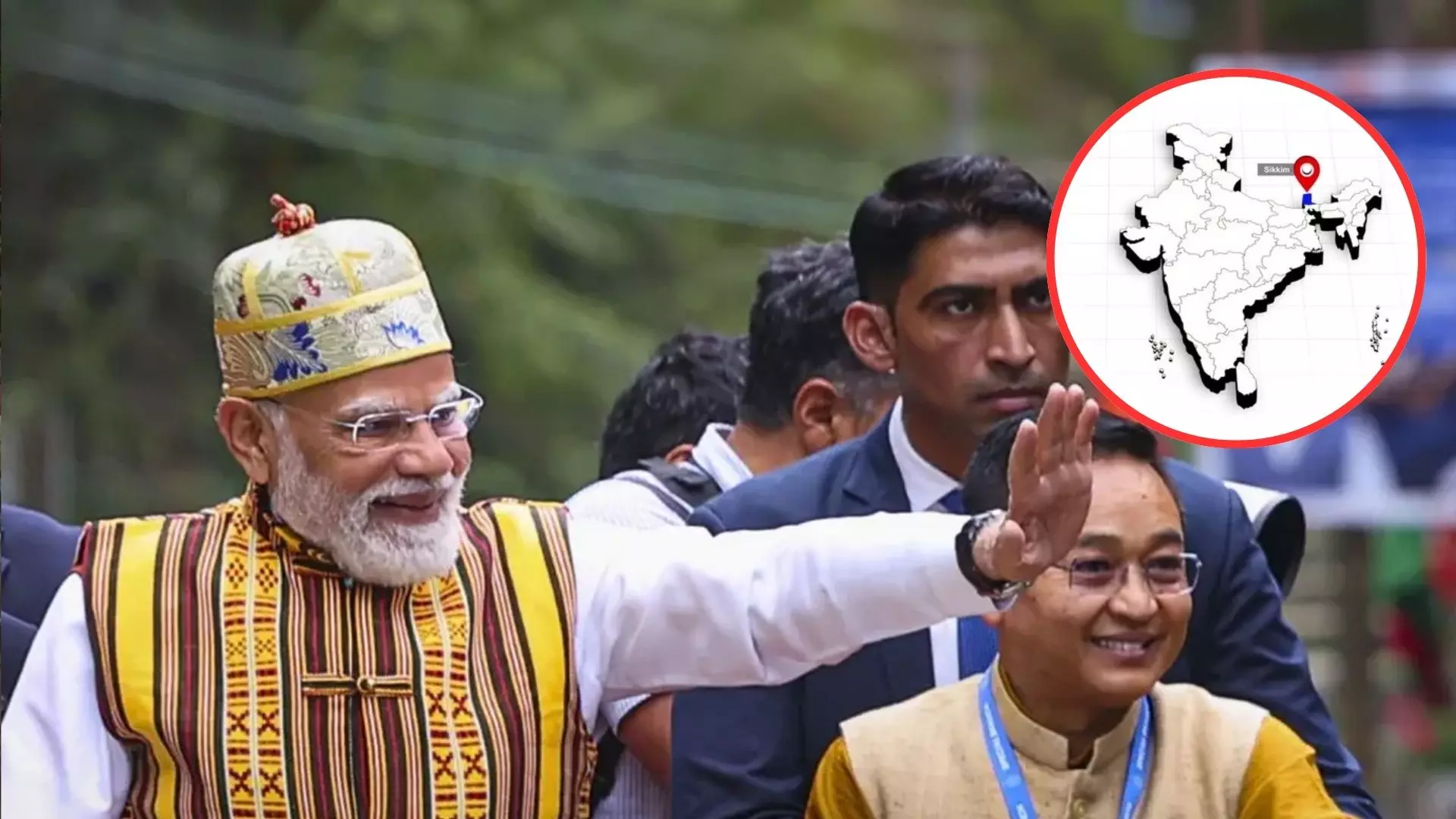
PM Modi in Sikkim
Sikkim statehood at 50: How the Himalayan kingdom became an Indian state
As PM Narendra Modi marks Sikkim’s golden jubilee, here’s the dramatic story of monarchy, referendum, and geopolitics that made it India’s 22nd state

Sikkim is celebrating 50 years of statehood as Prime Minister Narendra Modi marks the golden jubilee of the Himalayan state’s merger with India. The milestone commemorates Sikkim’s transition from an independent Buddhist kingdom under the Namgyal dynasty to becoming India’s 22nd state on May 16, 1975. The story remains one of monarchy, democratic reform, people’s movements, and strategic geopolitics.
Kingdom years
After India gained independence in 1947, Sikkim did not immediately become part of the Indian Union. Instead, it remained an independent kingdom ruled by the Chogyal under the Namgyal dynasty. In 1950, the Indo-Sikkim Treaty made Sikkim an Indian protectorate, giving India control over defence, foreign affairs, and communications, while the monarchy retained internal administrative authority.
For a time, this arrangement ensured relative stability. However, socio-economic disparities widened over the years. Political power remained concentrated among the palace elite, while large sections of the population, especially farmers and workers, felt politically marginalised.
Democratic unrest
By the early 1970s, dissatisfaction with monarchical rule escalated into widespread protests. Calls for democratic representation intensified as anti-monarchy demonstrations swept through Sikkim.
In 1973, the Tripartite Agreement was signed between the Chogyal, the Indian government, and major Sikkimese political parties. This agreement introduced democratic reforms and paved the way for elections and responsible governance. The agreement marked a decisive shift away from absolute monarchy.
Strategic shift
The developments in Sikkim also had major geopolitical implications. China strongly opposed India’s increasing role in Sikkim and criticised the merger process.
Under Prime Minister Indira Gandhi, India moved swiftly as regional tensions and domestic instability deepened. Following India’s military confidence after the 1971 Bangladesh war, New Delhi acted decisively to secure Sikkim’s future within the Indian Union.
Referendum vote
In 1975, Sikkim held a historic referendum in which more than 97 per cent of voters supported abolishing the monarchy and fully integrating with India. The result ended over three centuries of Namgyal rule.
On May 16, 1975, Sikkim officially became India’s 22nd state. The merger was formalised through constitutional amendments, permanently transforming the region’s political identity.
Modern legacy
Today, Sikkim is recognised as one of India’s most environmentally conscious and progressive states, known for organic farming, biodiversity conservation, and inclusive development.
As Sikkim celebrates its golden jubilee, the “Thousand Steps of Unity” cultural showcase in Gangtok symbolises not just 50 years of statehood, but also the enduring journey from monarchy to democracy.
Sikkim’s history remains a striking example of how public aspirations, democratic reforms, and strategic realities reshaped an entire kingdom into a modern Indian state.
The content above has been transcribed from video using a fine-tuned AI model. To ensure accuracy, quality, and editorial integrity, we employ a Human-In-The-Loop (HITL) process. While AI assists in creating the initial draft, our experienced editorial team carefully reviews, edits, and refines the content before publication. At The Federal, we combine the efficiency of AI with the expertise of human editors to deliver reliable and insightful journalism