



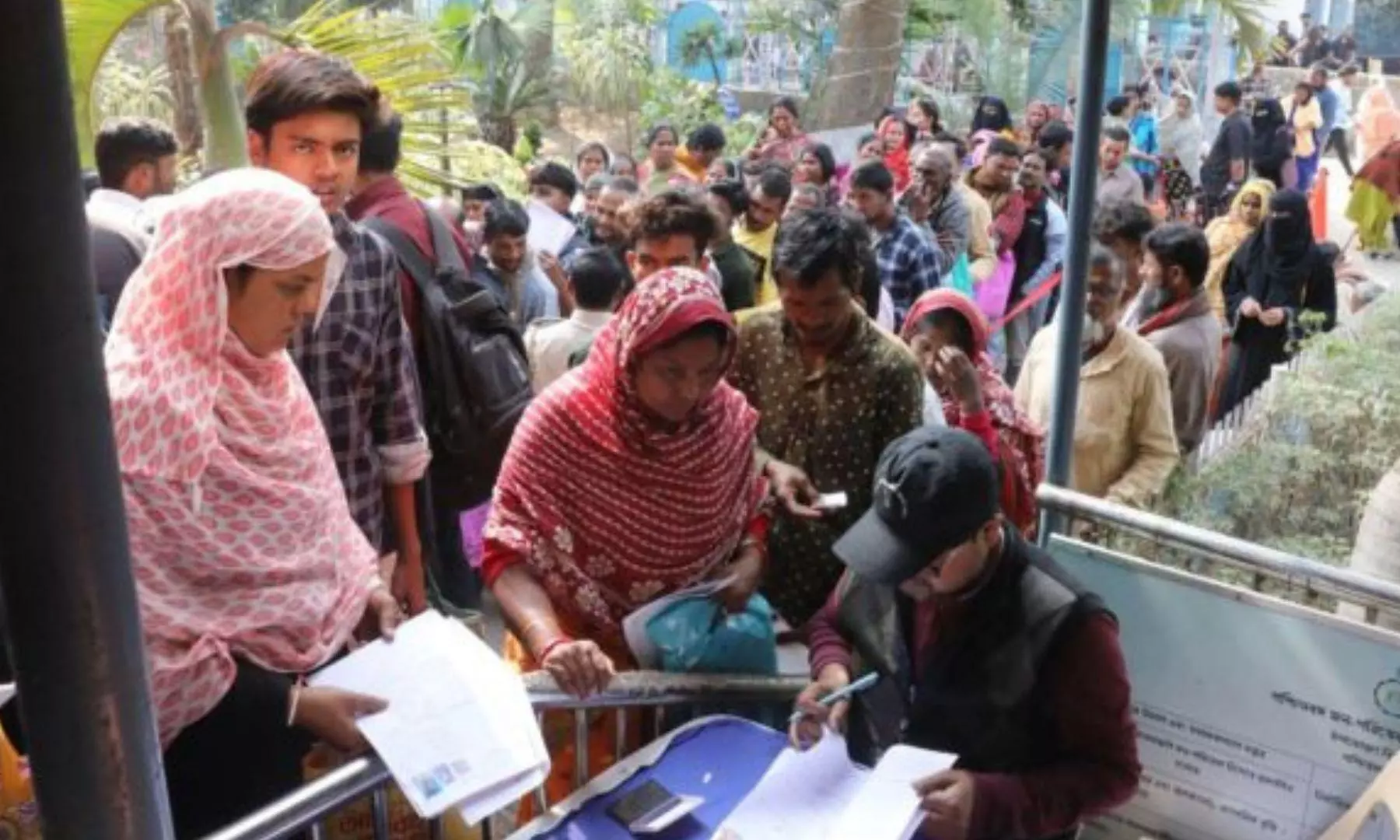
Among the concerns raised were cases in which voters said spelling discrepancies and technical limitations in the process had affected their electoral registration.
‘Can any process cause such misery?’: Voters share stories, flag SIR flaws at Delhi hearing
Public hearing heard accounts of voters excluded from electoral rolls, including former MP Tarun Mandal, raising questions about SIR and transparency

A public hearing in Delhi on Thursday (October 15) on the Special Intensive Revision (SIR) of electoral rolls heard testimonies from voters who said they had been wrongly excluded from voter lists. Chaired by former Supreme Court judge Justice Madan Lokur, the hearing examined the constitutional validity, methodology and wider impact of the revision, with participants raising concerns about documentation requirements, transparency and the exclusion of eligible voters.
The hearing, organised by the Lawyers Association for Constitution, also formally notified the Election Commission (EC) and invited a senior official to attend. The proceedings continued for several hours, with presentations being made on the SIR's impact in Odisha, Rajasthan, Telangana, Delhi and West Bengal. Testimonies were heard from Karnataka, Telangana and Delhi, among other states.
Also read: SIR explained: From voter deletions to Form 6, what has changed?
Among the concerns raised were cases in which voters said spelling discrepancies and technical limitations in the process had affected their electoral registration. The testimonies highlighted the difficulties faced by people attempting to establish their eligibility and retain their place on the electoral rolls.
Technical hurdles
Speaking at the hearing, a participant criticised the reliance on digital systems and the difficulties they could create for ordinary citizens. The voter IDs of a family of seven children were rejected as the portal accepted only six children.
The participant questioned the fairness of allowing such technical limitations to influence electoral eligibility, arguing that the process had caused substantial hardship. The testimony also raised a broader concern: whether legitimate Indian citizens should have to endure such difficulties to retain their voting rights.
“Can any process put the people through so much misery, so much suffering?” the participant questioned.
Also read: What Rahul Gandhi's SIR petition in SC asks, and why sceptics doubt it
The speaker also challenged the authority of Booth Level Officers (BLOs) and Electoral Registration Officers (EROs) to make decisions that could effectively raise questions about a person's citizenship. Referring to earlier Supreme Court judgments and the 2002 intensive revision exercise, the participant argued that citizenship determination should not become part of the EC's voter-registration process.
Constitutional concerns
The testimony invoked Article 326 of the Constitution, which provides for adult suffrage in elections to the Lok Sabha and state legislative assemblies, subject to constitutional and statutory qualifications.
The concerns extended beyond the mechanics of verification to the broader consequences of removing names from electoral rolls. Participants questioned whether citizens were always adequately informed when their names were deleted and whether the procedures offered sufficient transparency and opportunities for redress.
The hearing also sought to document the experiences of people who believed they had been wrongly affected by the revision. Its proceedings were intended to bring individual cases into a wider examination of the SIR's legal and practical implications.
Former MP excluded
One of the people who testified was Tarun Mandal, a former Lok Sabha MP from West Bengal, who represented Jaynagar in the 15th Lok Sabha.
Also read: West Bengal SIR: Could an administrative route ease the tribunal backlog?
Mandal said he had served the central government for about 21 years as a Class I officer in the Central Health Service and subsequently worked at the India Security Press before taking voluntary retirement. He said he received a government pension as well as an MP's pension and had previously held a diplomatic passport.
Questions in Bengal
Mandal expressed concern about the geographical concentration of people awaiting decisions in West Bengal. Referring to figures cited at the hearing, he said around 22 lakh people were awaiting decisions before tribunals. He identified Murshidabad and Malda as districts with large numbers of appellants, citing approximately 7.5 lakh cases from Murshidabad and 5.6 lakh from Malda.
Mandal alleged that his birthplace in Murshidabad, a district bordering Bangladesh, might have influenced the treatment of his case.
Demand for justice
The hearing was described as the first in a series planned across the country. The commission conducting the exercise aims to release its final report by December 2026, while the lawyers and activists involved said they would continue gathering evidence and recording testimonies.
The proceedings sought to bring attention to the human consequences of electoral-roll revision, particularly the difficulties experienced by people who said they had submitted valid documents but were still unable to secure their place on the voter list.