








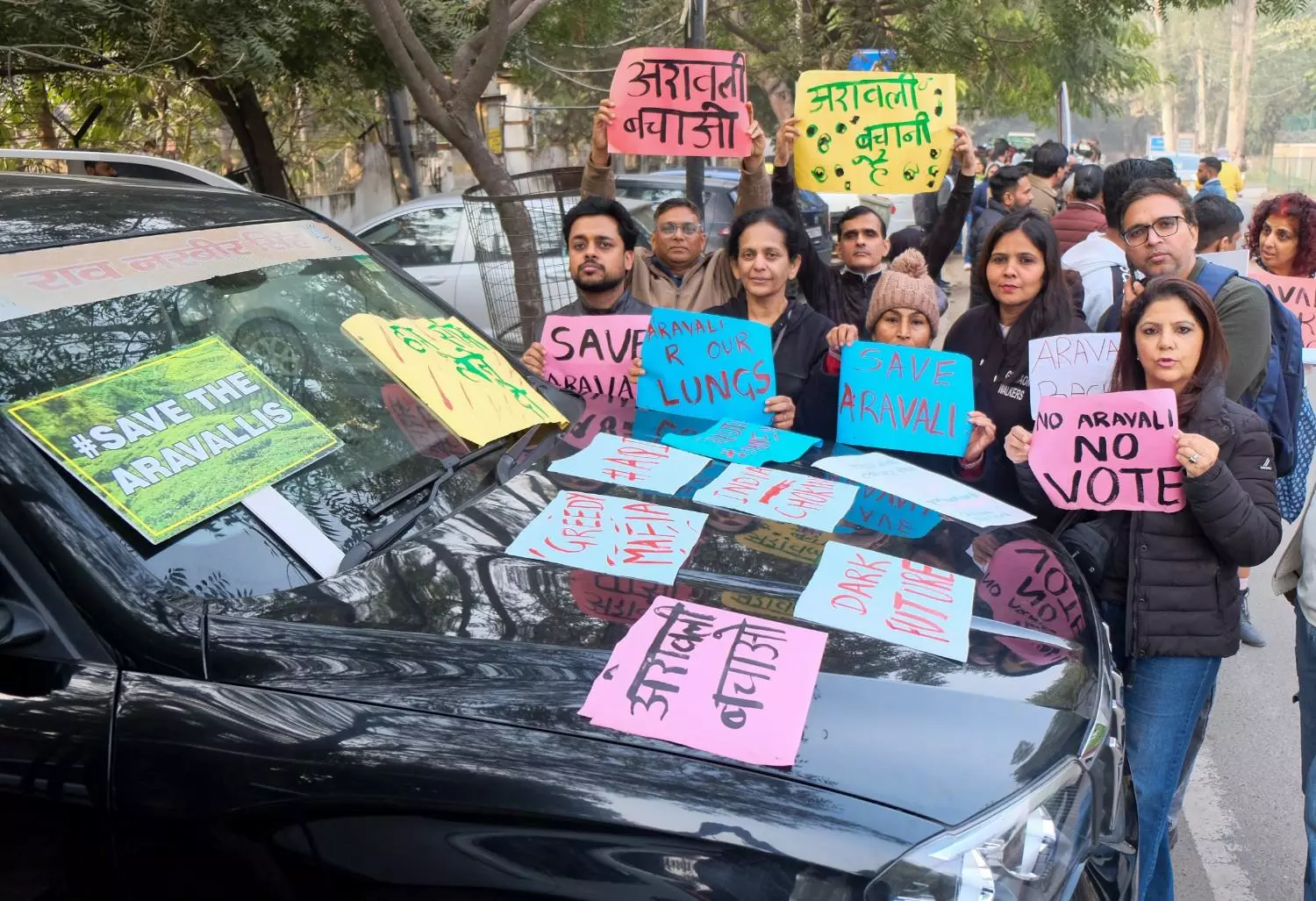
Supreme Court puts its earlier acceptance of Aravalli hills definition in abeyance
Supreme Court puts its November order on the Aravalli Hills definition in abeyance and orders a new expert panel over mining concerns

The Supreme Court on Monday (December 29) has “put in abeyance” its earlier decision wherein it accepted the Central Environment Ministry’s definition of Aravalli Hills and Aravalli Range. The earlier order was issued on November 20.
The top court’s earlier acceptance of the said definition in November had exposed most of the Aravalli region to the possibility of being used for regulated mining activities.
SC orders formation of new committee
The Chief Justice of India (CJI) Surya Kant also issued an order directing the formation of a new expert committee to examine issues related to the definition of the Aravallis.
Also Read: Why the new Aravalli definition is dangerous | Neelam Ahluwalia interview
The bench has also issued notice to the Centre and the four Aravalli States - Rajasthan, Gujarat, Delhi and Haryana, seeking their response to its suo motu case on the issue.
The Aravalli range extends across Delhi, Haryana, Rajasthan and Gujarat. The suo motu proceedings were initiated following protests over a possible threat to the Aravallis after the Supreme Court accepted the recommendations of a committee on the mountain range.
Earlier acceptance of Aravalli definition
Last month, the top court had cleared an elevation-based definition to identify landforms as part of the Aravalli Hills for the purpose of regulating mining activities. As per reports, the definition would exclude over 90 per cent of the Aravallis from mining regulation.
Also Read: Save Aravallis: Why Gujarat activists are wary despite govt assurances
In May 2024, while hearing a matter related to illegal mining in the Aravallis, the Court had underscored the need for a proper definition of the mountain range, noting that different States had adopted varying definitions of “Aravalli Hills” and “Aravalli Range”, reported the Bar and Bench.
A committee constituted thereafter submitted its report in October this year, recommending several measures for the protection and preservation of the Aravalli Hills. The report stated that any landform in Aravalli districts with an elevation of 100 metres or more above the local relief should be classified as Aravalli Hills.
What the earlier definition said
It further defined the Aravalli Range as two or more Aravalli Hills located within a distance of 500 metres from each other, measured from the outermost point on the boundary of the lowest contour line on either side.
Also Read: Congress accuses Centre of pushing ‘flawed’ Aravalli redefinition
In its November 20 judgment, a Bench comprising then Chief Justice of India B R Gavai and Justices K Vinod Chandran and N V Anjaria accepted the committee’s recommendations on the definitions and the prohibition of mining in core or inviolate areas, stated the report
However, the Court declined to impose a blanket ban on mining in the Aravallis, observing that a complete prohibition could lead to illegal mining, the emergence of mafias and criminalisation.