








Right to menstrual health is part of right to life, says Supreme Court
Menstrual health is a fundamental right under Article 21, says Supreme Court, directs free sanitary pads in schools

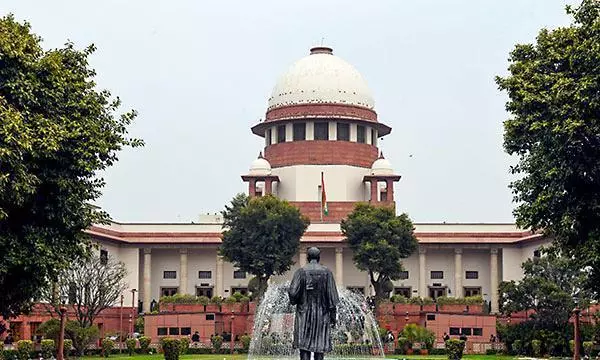
The Supreme Court on Friday (January 30) stated that the right to menstrual health is a part of the fundamental right to life enshrined in the Constitution, as it directed all states and Union Territories to ensure girl students in private and government schools are provided bio-degradable menstrual sanitary pads for free.
Warns against non-compliance
A bench of Justices J B Pardiwala and R Mahadevan instructed states and Union Territories to ensure separate toilets for female and male students in all schools. It also said all schools, irrespective of whether they are state-run or controlled, will have to provide disabled-friendly toilets. The apex court warned private schools of de-recognition in case of non-compliance.
Also Read: SC stay on UGC equity rules sparks fierce debate across academia, politics
The bench also said that it would hold governments accountable if they too fail to provide for toilets and free sanitary pads to girls.
The Supreme Court passed the ruling during the hearing of a case regarding the pan-India implementation of the Centre's policy 'Menstrual Hygiene Policy for School-going Girls' in government and government-aided schools.
‘Right to menstrual health’
"The right to life under Article 21 of the Constitution includes the right to menstrual health. Access to safe, effective, and affordable menstrual hygiene management measures helps a girl child attain the highest standard of sexual and reproductive health. The right to a healthy reproductive life embraces the right to access education and information about sexual health,” stated the court.
Also Read: What Justice Bhuyan’s remarks on judicial transfers reveal about state of judicial independence
“The right to equality is expressed through the right to participate on equal terms. At the same time, equality of opportunity necessitates that everyone has a fair chance to acquire the skills necessary to access benefits," it added, as quoted by the Bar and Bench.
On inaccessibility to menstrual hygiene
Elaborating further, the court stated inaccessibility to menstrual hygiene would be tantamountto a violation of the dignity of girl children.
"The inaccessibility of menstrual hygiene management measures undermines the dignity of a girl child, as dignity finds expression in conditions that enable individuals to live without humiliation, exclusion, or avoidable suffering. Privacy is inextricably linked with dignity. As a corollary, the right to privacy entails a duty on the State not only to refrain from violating privacy, but also an accompanying obligation to take necessary measures to protect the privacy of an individual," it added.
Also Read: SC stays UGC regulation pertaining to definition of caste discrimination
“It is meant for the classroom, where girls hesitate to ask for help. It is for the teachers who want to help but are restrained due to a lack of resources. It is for the parents who may not realise the impact of their silence, and for society, to establish that progress is measured by how we protect the most vulnerable,” stated the court.
“We wish to communicate to every girl child who may have become a victim of absenteeism because her body was perceived as a burden, that the fault is not hers. These words must travel beyond the courtroom and law review reports, and reach the everyday conscience of society at large," it added.
(With agency inputs)