








'Blank cheque given to EC': SC verdict on SIR sparks sharp reactions
Opposition parties and civil rights activists slam the ruling, but BJP calls it a 'surgical strike' on misinformation spread by opposition against SIR process

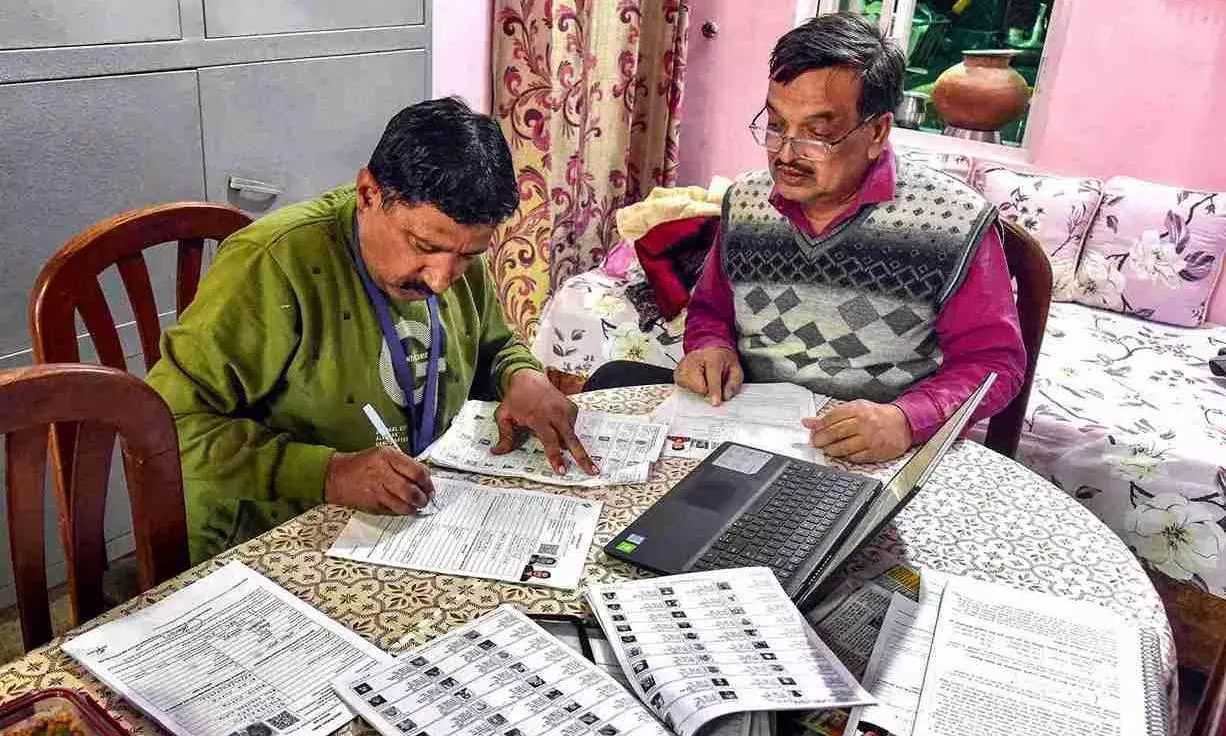
Reactions poured in from across the political spectrum on Wednesday (May 27) after the Supreme Court upheld the Election Commission’s Special Intensive Revision (SIR) of electoral rolls, with the ruling BJP hailing the verdict while opposition parties and civil rights activists warned of large-scale voter exclusion.
The apex court upheld the constitutional validity of the SIR exercise, while also stressing that citizenship verification cannot be carried out arbitrarily and that affected voters must have access to legal remedies and due process protections.
Also read: Supreme Court says SIR is legally valid, doesn't violate constitutional provision
The BJP described the judgment as a major endorsement of the Election Commission’s powers. Party spokesperson Shehzad Poonawalla said the Supreme Court had carried out a “surgical strike” on what he called misinformation spread by the opposition against the SIR process. He argued that the verdict established the revision exercise as essential for ensuring “free and fair elections”.
Opposition’s reactions
However, opposition parties reacted with deep concern, arguing that the real issue lay not in the legal framework but in its implementation on the ground.
The Congress, Trinamool Congress (TMC), Left parties and Rashtriya Janata Dal (RJD) warned that the verification process could disproportionately affect poor, rural and marginalised communities lacking extensive documentation.
Also read: Election Commission announces Phase 3 of SIR across 16 states, 3 UTs
Congress leader Pawan Khera pointed to previous voter roll revisions where, according to the opposition, large numbers of names were deleted without corresponding additions of eligible voters.
TMC leader Mahua Moitra claimed the ruling effectively validated what she called “hurried and discriminatory practices” by the Election Commission, alleging that lakhs of voters were left in uncertainty following similar revision exercises.
Former Rajya Sabha MP Jawhar Sircar also criticised the verdict, saying public trust in constitutional institutions had weakened further after the ruling. He alleged that voter deletions in states such as Bihar and West Bengal could become politically weaponised.
‘Blank cheque’ judgement
Civil rights groups and independent activists who were among the petitioners also expressed sharp disappointment over the ruling, arguing that the verdict could weaken transparency and public confidence in the electoral process.
Political activist Yogendra Yadav claimed the judgment effectively handed excessive control over voter eligibility to the ruling establishment. In a strongly worded post on X, Yadav argued that the verdict marked a dangerous moment for Indian democracy, alleging that the Election Commission’s SIR exercise could now be used to decide “who can vote and who cannot”. He further claimed that one of the Constitution’s last institutional safeguards had been weakened by the ruling.
Senior advocate Prashant Bhushan also criticised the verdict, saying the Supreme Court had effectively given a “blank cheque” to what he described as a partisan Election Commission. Bhushan argued that the judgment failed to ensure sufficient transparency in the revision of electoral rolls and warned that the decision could have serious long-term implications for democratic processes and voter rights in the country.
At the same time, activists said the focus would now shift toward monitoring the implementation of the SIR process on the ground and ensuring legal safeguards promised by the Supreme Court are properly enforced to prevent wrongful deletion of genuine voters.