'Siddaramaiah is a strong OBC leader, can become PM' | Capital Beat
Kancha Ilaiah Shepherd says Siddaramaiah could become Congress’s national OBC face after Karnataka leadership transition

As speculation grows over the political future of Karnataka after Siddaramaiah resigned as Chief Minister, author and Dalit activist Kancha Ilaiah Shepherd said the Congress leader has the stature to emerge as a national OBC face capable of challenging Prime Minister Narendra Modi politically, and also be Congress's Prime Ministerial face. Karnataka Governor Thaawarchand Gehlot has since accepted Siddaramaiah’s resignation, a day after the veteran Congress leader stepped down amid ongoing political changes in the state.
The discussion comes amid Congress’s carefully managed leadership transition in Karnataka, with Deputy Chief Minister DK Shivakumar widely expected to take over the top post. Questions are now being raised about the future of Siddaramaiah’s Ahinda politics and the Congress party’s electoral strategy ahead of the 2028 Karnataka Assembly polls.
Also read: Siddaramaiah: The shepherd who rewrote Karnataka's political history
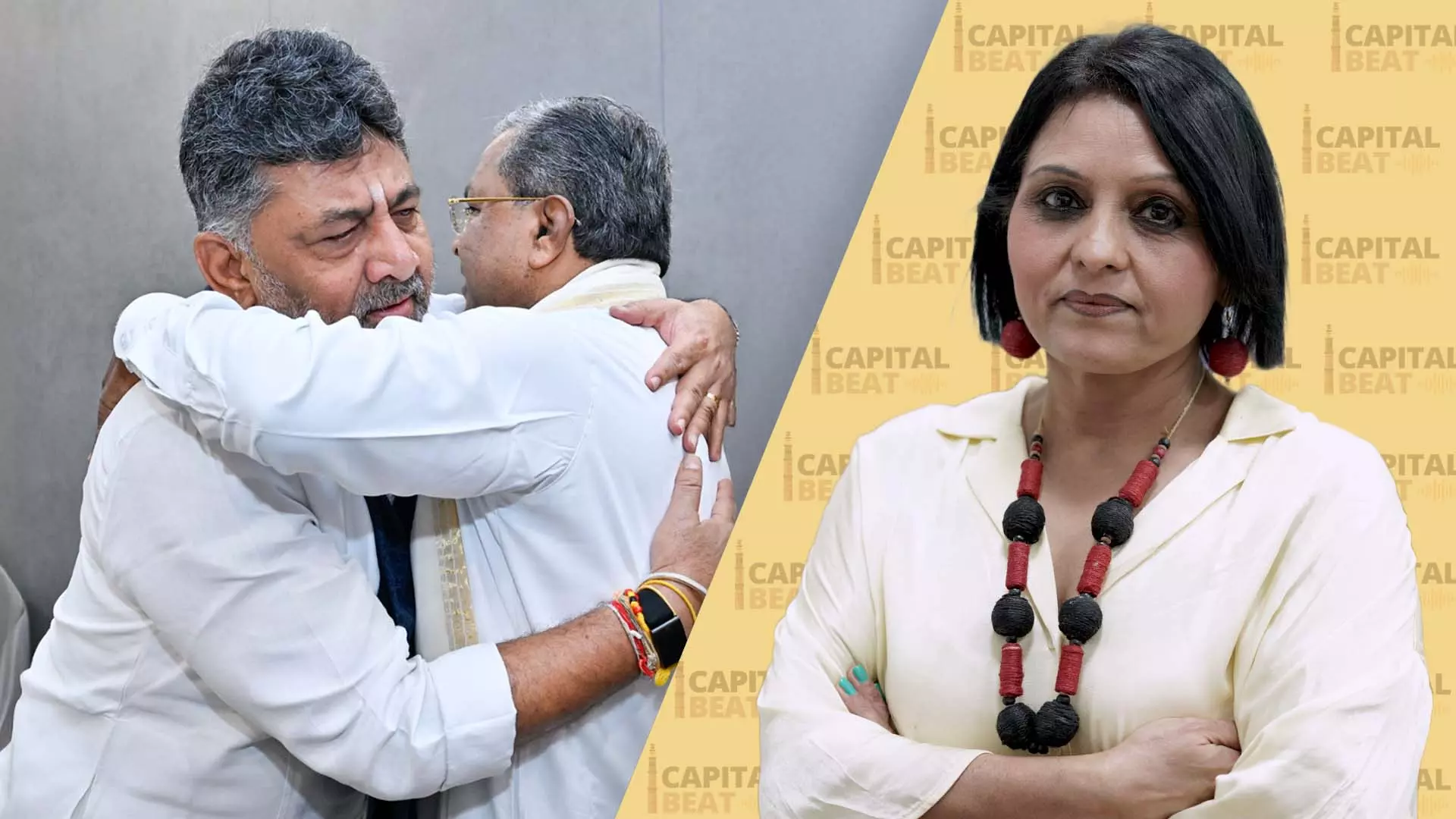
In this episode of Capital Beat, The Federal spoke to Shepherd, Preethi Nagaraj, political analyst, and D Umapati, senior journalist, on the implications of Siddaramaiah’s resignation and what lies ahead for the Congress.
Smooth transition
The panel largely agreed that the transition from Siddaramaiah to Shivakumar had so far remained smooth despite emotional reactions from Siddaramaiah's supporters.
Nagaraj said Siddaramaiah appeared initially shocked when asked to step down, but she noted that he likely sensed the transition coming over the past few weeks.
Also read: Top quotes from Siddaramaiah’s press conference after quitting as CM
She described Siddaramaiah as a “lateral entry” into the Congress, recalling that he had spent decades opposing the party before eventually joining it in 2006 after building the AHINDA (Minorities, Backward Classes, and Dalits) movement.
At the same time, she said the Congress leadership also had to accommodate Shivakumar, who had remained loyal to the party throughout his political career.
AHINDA concerns
Umapati warned that Siddaramaiah’s exit marked “the end of a chapter” for AHINDA politics in Karnataka unless the Congress leadership carefully managed the transition.
According to Umapati, Siddaramaiah had outgrown Karnataka politically and deserved a larger national role within the Congress.
However, he dismissed suggestions of an immediate internal rebellion within the Congress. He said Siddaramaiah had accepted the high command’s decision and would cooperate with the transition process.
Still, he noted that the future strength of AHINDA politics would depend on how effectively the Congress retained Siddaramaiah’s backward class support base after the leadership change.
Cabinet arithmetic
The panel also discussed the possible shape of a future Shivakumar Cabinet.
Nagaraj said the Congress was likely to balance caste and community equations carefully before the 2028 elections.
According to her, the expected deputy chief ministers could include representatives from Muslim, Dalit and Lingayat communities in order to preserve the coalition that helped Congress return to power in Karnataka.
She also indicated that some ministers close to Siddaramaiah could remain in the Cabinet to maintain continuity and avoid alienating his supporters.
Nagaraj further claimed that Siddaramaiah’s son, Dr. Yathindra Siddaramaiah, was being discussed as a possible deputy chief minister candidate as part of efforts to pacify Siddaramaiah loyalists.
She described Siddaramaiah as “bigger than the chair” and argued that the transition could ultimately allow him to emerge as a pan-India political figure.
National role
Shepherd made the strongest political intervention during the discussion, arguing that Siddaramaiah should move to Delhi and eventually take over the Congress presidency after Mallikarjun Kharge.
He said Siddaramaiah’s appeal extended well beyond Karnataka because of his long association with backward class politics, secularism and the socialist traditions of Ram Manohar Lohia.
He also highlighted Siddaramaiah’s role in promoting caste census politics and described him as a committed “Mandalite”.
According to him, the Congress needed a strong OBC leader to counter the BJP nationally.
He added that Congress had historically erred by failing to elevate OBC leadership after the Mandal era. He also said Siddaramaiah’s political communication skills and understanding of caste politics could help reshape Congress nationally.
PM possibility
The discussion took a dramatic turn when Shepherd said Siddaramaiah could even emerge as a potential prime ministerial face if Congress returned to power nationally. "Siddramaiah can serve as Prime Minister," he said.
He argued that Congress needed a strong southern OBC leader to counter BJP attacks centred on dynastic politics.
He described Siddaramaiah as a capable administrator with mass appeal and pointed to his long administrative experience in Karnataka.
He also noted that Siddaramaiah was among the longest-serving chief ministers in Karnataka and had presented 18 state Budgets during his political career.
Bigger canvas
The panel concluded that Siddaramaiah’s resignation may ultimately expand his political possibilities rather than diminish them.
Nagaraj said the Congress leader could now move beyond the constraints of state politics.
Umapati echoed that view and said Congress should not “waste” Siddaramaiah by limiting him to Karnataka politics.
Even as Shivakumar prepares to possibly take over Karnataka’s leadership, the discussion underscored a larger debate within the Congress: whether Siddaramaiah’s future lies not in Bengaluru, but in Delhi as the party searches for a broader national social justice narrative.
(The content above has been transcribed from video using a fine-tuned AI model. To ensure accuracy, quality, and editorial integrity, we employ a Human-In-The-Loop (HITL) process. While AI assists in creating the initial draft, our experienced editorial team carefully reviews, edits, and refines the content before publication. At The Federal, we combine the efficiency of AI with the expertise of human editors to deliver reliable and insightful journalism.)