








Tariff war not one-sided; US senators complain about ‘unfair Indian tariffs’ on pulses
Republican senators ask Trump to raise India’s 30 per cent tariff on US pulses during trade talks, saying duties hurt American farmers

Two Republican senators have urged US President Donald Trump to ask India to lower tariffs imposed on pulses imported from the US, as trade negotiations between the two countries are going on.
Senators Steve Daines of Montana and Kevin Cramer of North Dakota have written to the US President, stating that Montana and North Dakota were the two largest producers of pulse crops, adding that India was its largest consumer amounting for about 27 per cent of global consumption.
‘Will help US farmers’
The senators said India had announced a 30 per cent tariff on yellow peas shipped from the United States, with the duties coming into force in November 2025. “As a result of the unfair Indian tariffs, US pulse crop producers face a significant competitive disadvantage when exporting their high-quality product to India,” stated the letter as quoted by the Hindustan Times.
Also Read: India mulls options on Iran's Chabahar port project amid US tariff threat
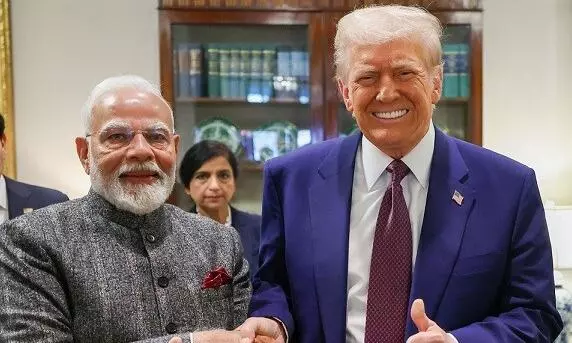
They asked Trump to raise the issue directly with Prime Minister Narendra Modi, arguing that a reduction in the duties would help American farmers while also benefiting Indian consumers. “As the United States looks to rebalance trade disparities, American farmers are ready to help fill the gap,” the letter said.
The appeal comes as a 50 per cent tariff on Indian imports into the US continues to remain in effect. Half of that levy was imposed by Trump as a penalty linked to India’s oil trade with Russia.
‘India imposed 30 per cent duty on yellow peas’
India had announced the 30 per cent duty on yellow peas in October 2025, when the Department of Revenue said imports would attract a 10 per cent basic customs duty along with a 20 per cent Agriculture Infrastructure and Development cess, provided the Bill of Lading was dated November 1, 2025 or later.
Also Read: India-US trade deal first tranche ‘very near’, says Commerce Secretary
Before the change, yellow peas were permitted to enter India without any duty, a concession that was expected to continue until March 2026. The policy was later revised after domestic farmers pressed the government to step in, citing a surge of low-cost imports that had pushed down local prices, according to a Reuters report.
‘Trump’s earlier letter to PM Modi’
The senators from North Dakota and Montana opposed the 30 per cent levy, noting that lentils, chickpeas, dried beans and peas are among the most widely consumed food staples in India. They also recalled that Trump had personally delivered an earlier letter raising similar concerns to Modi during trade talks in 2020.
Also Read: Trump slaps 25 pc tariff on 'any country' trading with Iran; India to face fallout
Despite the passage of several months, the 50 per cent US tariffs on Indian goods remain in place, and the two sides have yet to reach a broader trade agreement.
More recently, US Commerce Secretary Howard Lutnick said a possible India-US trade deal collapsed because Modi “didn’t call” Trump. India dismissed the assertion, saying it remains interested in securing a mutually beneficial agreement. U.S. Ambassador to India Sergio Gor later echoed that view, saying negotiations between the two countries were still ongoing.