Why 2026 could be a testing year for India | Talking Sense With Srini
Strategic instability in the neighbourhood, global economic headwinds and domestic political churn converge as India enters the year ahead

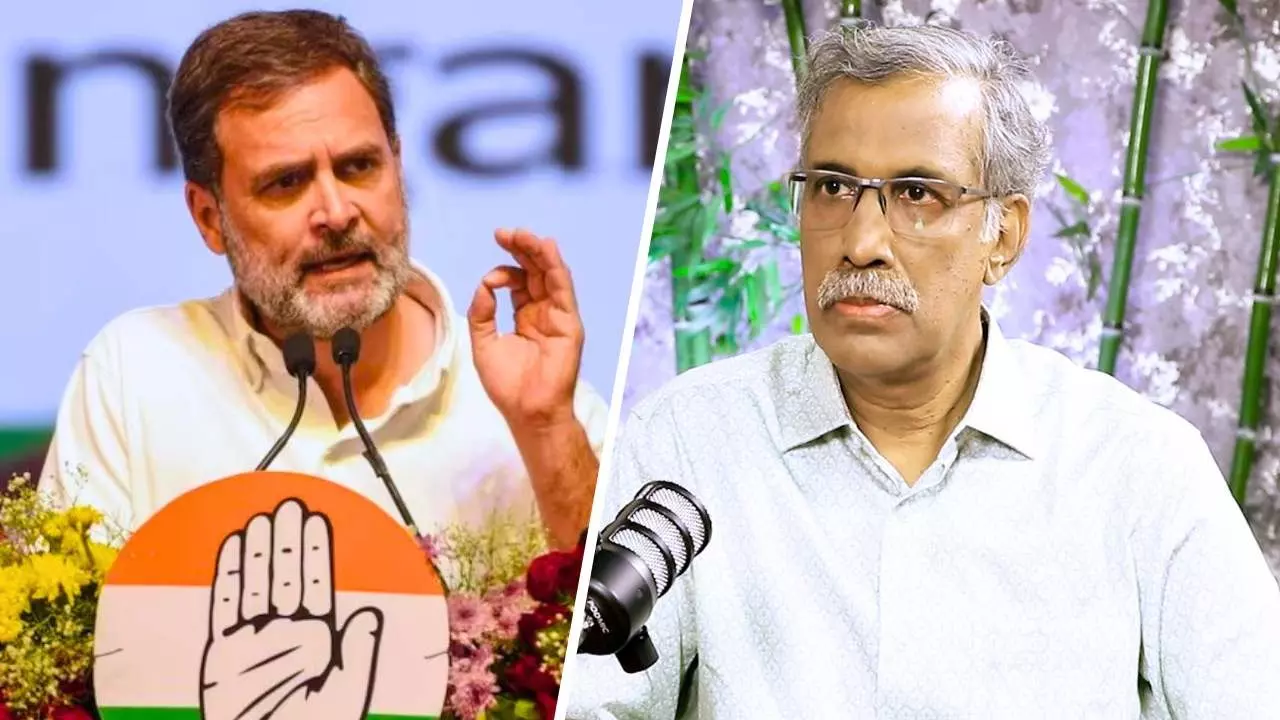
As 2026 begins, India stands at a critical crossroads, facing strategic uncertainty in its neighbourhood, economic headwinds driven by global disruptions, and a domestic political opposition struggling to find coherence. In the latest episode of Talking Sense with Srini, The Federal’s Editor-in-Chief S Srinivasan outlines the key fault lines that could shape the year ahead.
Fragile neighbourhood raises concerns
India’s immediate neighbourhood, Srinivasan argues, remains deeply fragile. Bangladesh is witnessing growing radicalisation, while developments in Pakistan, particularly the visible proximity between its military leadership and the US, raise serious concerns for New Delhi.
Also read | Bangladesh unrest casts long shadow over 2026 West Bengal polls
The increasing use of Chinese weaponry by Pakistan, he notes, adds another layer of strategic unease. Nepal’s recent Gen-Z-led protests signal political churn, while Afghanistan presents India with a diplomatic dilemma of sustaining engagement without ignoring human rights, especially the treatment of women. Sri Lanka stands out as a relative positive, with India’s humanitarian assistance helping stabilise ties.
Uncertainty shadows economic growth
On the economic front, Srinivasan traces much of India’s current uncertainty to global shocks that unfolded in 2025, particularly the return of Trumpism. Steep US tariffs on Indian goods and tighter visa regimes have disrupted trade and investment flows, leading to a pullback by both foreign institutional and direct investors.
While headline growth numbers remain robust, Srinivasan points to growing scepticism around the credibility of official data. Weak private investment, underutilised industrial capacity, and high consumer prices, he argues, tell a more complex story than inflation and GDP figures suggest.
Congress battles organisational crisis
Politically, 2026 could be a decisive year for the Congress party. Despite gains in the 2024 Lok Sabha elections, Srinivasan notes that the party failed to win a single state election in 2025. With crucial polls due in Assam, Kerala, Tamil Nadu, and West Bengal, the Congress faces a do-or-die moment.
Also read | Digvijaya is right: Congress must be led by leaders, not epigones
In Tamil Nadu, internal debates over continuing as a junior ally of the DMK reflect a deeper organisational crisis. According to Srinivasan, the party’s revival hinges on rebuilding its grassroots cadre rather than airing internal dissent in public.
Finally, Srinivasan flags governance and federalism as pressing concerns. From water shortages and pollution to crumbling urban infrastructure, governance failures are becoming harder to ignore. He argues that genuine Centre-state dialogue and cooperative federalism will be essential if India is to navigate 2026 without further institutional strain.