Will India-Pakistan dialogue resume? Experts decode peace push
A citizens’ appeal, Track-II diplomacy, and global pressure spark debate on whether India and Pakistan are moving towards dialogue after Operation Sindoor.

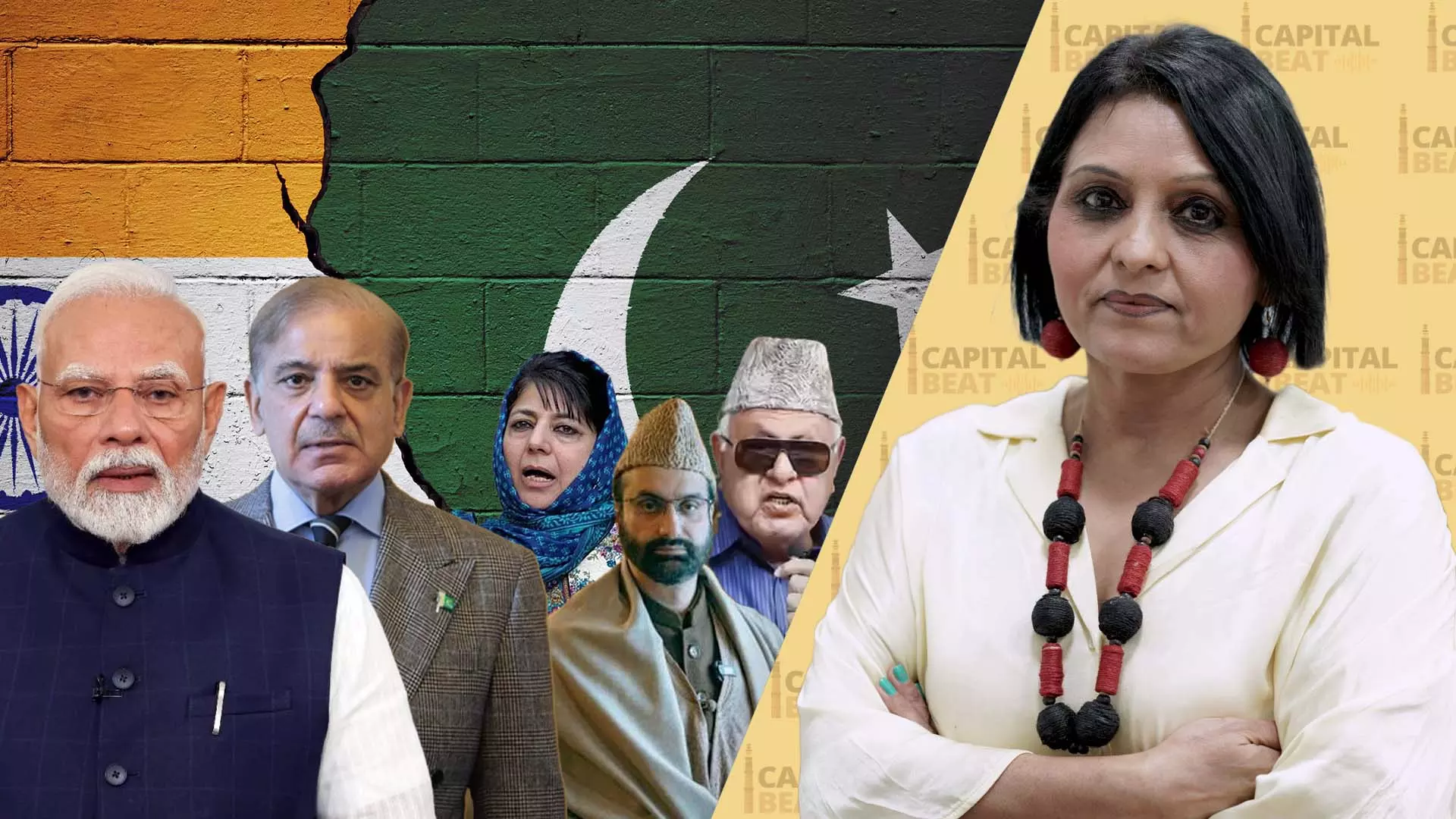
An open letter signed by 117 eminent citizens from India and Pakistan is being seen as the latest indication that discussions around reviving bilateral engagement are gathering momentum. While some experts believe the developments point towards carefully calibrated Track-II diplomacy backed by international encouragement, others argue there is little political space for New Delhi to soften its position towards Pakistan.
Also read: Centre rejects reports of backchannel India-Pakistan talks, says they have no official status
In this episode of Capital Beat, The Federal spoke to Pushparaj Deshpande, author and policy expert; Sanjay Kapoor, senior journalist; and Prof. Aftab Kamal Pasha, Middle East expert, on whether the recent developments signal a genuine shift or remain symbolic.
Citizens' appeal
The debate follows a joint appeal issued by the Centre for Peace and Progress, signed by 117 eminent personalities from both countries, urging Prime Minister Narendra Modi and his Pakistani counterpart Shehbaz Sharif to restore dialogue and normalise bilateral ties.
Also read: Pakistan Minister warns of 'severe consequences' over India's Indus Waters Treaty suspension
The signatories called for reinstating High Commissioners, restoring visa services, reopening airspace for commercial flights, reviving cross-border trade and connectivity, and rebuilding people-to-people engagement. The appeal came exactly a year after 'Operation Sindoor'.
The discussion also gained significance after reports emerged of informal interactions involving former diplomats, military officials, and strategic experts in Sri Lanka. Although the Ministry of External Affairs clarified that these meetings should not be interpreted as official dialogue, they have fuelled speculation about renewed Track-II engagement.
Pattern emerging
Pasha argued that several developments suggest a carefully calibrated process may already be underway.
He pointed to repeated statements by US President Donald Trump following Operation Sindoor, in which Trump claimed credit for facilitating the ceasefire and expressed interest in mediating on Kashmir. According to Pasha, this was followed by discussions involving strategic experts, statements from Gulf countries encouraging India and Pakistan to resolve their disputes, and comments by senior RSS leaders supporting greater people-to-people engagement.
Pasha also referred to reports of RSS leader Ram Madhav, former Army Chief General MM Naravane and former diplomat Ruchi Ghanashyam participating in discussions in Sri Lanka organised by the International Institute for Strategic Studies.
Putting these developments together, Pasha argued that "a pattern is emerging" and suggested the BJP may be "testing the waters" after its strategy of diplomatically isolating Pakistan had produced limited results.
He also suggested the United States, Saudi Arabia and Qatar have strategic interests in reducing tensions between the two nuclear neighbours, especially given broader instability in West Asia.
BJP's challenge
The discussion also considered the BJP's political constraints if any formal dialogue were to resume and BJP leader Ravinder Raina's remarks that "terror and talks cannot go together", and that India has consistently sought peaceful relations but cannot engage while cross-border terrorism continues.
Kapoor said the current political environment leaves very little room for any major policy shift.
According to Kapoor, the BJP has built a strong domestic political narrative centred on a hard line against Pakistan, making any significant softening politically difficult.
He argued that while India initially succeeded in diplomatically isolating Pakistan to some extent, the international landscape has since evolved.
Kapoor noted that Pakistan has improved ties with several countries, while tensions between the two neighbours continue over issues such as terrorism and the Indus waters dispute.
Limited optimism
Kapoor remained sceptical that Track-II efforts would translate into formal negotiations anytime soon.
He said meaningful dialogue requires an enabling political atmosphere, something he believes is currently absent.
Although civilisational links, shared culture, literature and historical ties continue to bind people across both countries, decades of political hostility have widened public perceptions on both sides.
Kapoor also questioned whether external pressure from Washington alone would be enough to alter New Delhi's current policy.
While acknowledging that the United States, China and Russia may all favour dialogue, he maintained that domestic political considerations remain the biggest obstacle.
Strategic pressure
Pasha argued that broader geopolitical developments could also be encouraging informal diplomatic engagement.
He suggested that instability arising from the Iran-Israel conflict has heightened concerns among Gulf nations, particularly Saudi Arabia, which would not want renewed India-Pakistan tensions to further complicate regional security.
According to him, any future terrorist attack could quickly escalate into another military confrontation, making preventive diplomacy increasingly important.
Pasha added that unofficial channels may therefore be serving as confidence-building mechanisms before any official political initiative.
Policy critique
Deshpande broadly welcomed the citizens' appeal, saying greater economic engagement, trade, cultural exchanges and people-to-people contact would ultimately benefit both countries.
However, he stressed that Pakistan would first have to ensure that cross-border terrorism does not continue.
Deshpande also disagreed with suggestions that recent developments were entirely spontaneous.
He said Track-II diplomacy has continued through various international forums, including meetings in Qatar involving senior former BJP leaders and officials, indicating that conversations have been taking place for some time.
According to him, the discussions in Sri Lanka should be viewed as part of this broader diplomatic process rather than as isolated events.
Foreign policy debate
Deshpande was sharply critical of the Narendra Modi government's Pakistan policy over the past decade.
He argued that New Delhi's attempt to diplomatically isolate Pakistan had failed while simultaneously allowing Islamabad to strengthen ties with the United States and China.
He also referred to Leader of Opposition in Lok Sabha Rahul Gandhi's criticism in Parliament that India's approach had contributed to a closer China-Pakistan alignment.
Deshpande claimed India now faces a more difficult strategic environment across South Asia, pointing to strained relations with several neighbouring countries.
He further argued that any future engagement with Pakistan would now occur from what he described as "a position of weakness" rather than diplomatic strength.
Uncertain future
As the discussion concluded, the panel remained divided on whether current developments represent the beginning of a serious diplomatic process or simply continued unofficial engagement.
Kapoor maintained that while Track-II initiatives are valuable, they cannot substitute for political willingness at the highest levels.
Pasha added one final observation, suggesting Israel may not favour closer India-Pakistan engagement because it benefits from continued regional rivalry, although he acknowledged this remains one factor among many.
For now, the experts agreed that although Track-II conversations appear to be continuing, whether they eventually translate into official India-Pakistan dialogue remains uncertain.
(The content above has been transcribed from video using a fine-tuned AI model. To ensure accuracy, quality, and editorial integrity, we employ a Human-In-The-Loop (HITL) process. While AI assists in creating the initial draft, our experienced editorial team carefully reviews, edits, and refines the content before publication. At The Federal, we combine the efficiency of AI with the expertise of human editors to deliver reliable and insightful journalism.)