








‘Will never forget this gesture’: Iran thanks India for solidarity at Khamenei funeral
Flag‑draped coffins move through crowds in Tehran, as mourners throng streets with vows of revenge; burial at Imam Reza shrine on July 9

The Iranian embassy in India has shared a long post on X thanking the “friendly Government and people of India” for participating in the funeral of the late supreme leader, Ayatollah Seyyed Ali Khamenei.
“The esteemed presence of political leaders, Members of Parliament, eminent scholars, intellectuals, and leaders of India’s diverse faiths and religious communities at these solemn ceremonies reflected the deep historical, cultural, and human bonds between our two nations. It also stood as a powerful expression of mutual respect and sincere solidarity with the people of Iran during this time of national mourning,” the post read.
Who attended from India?
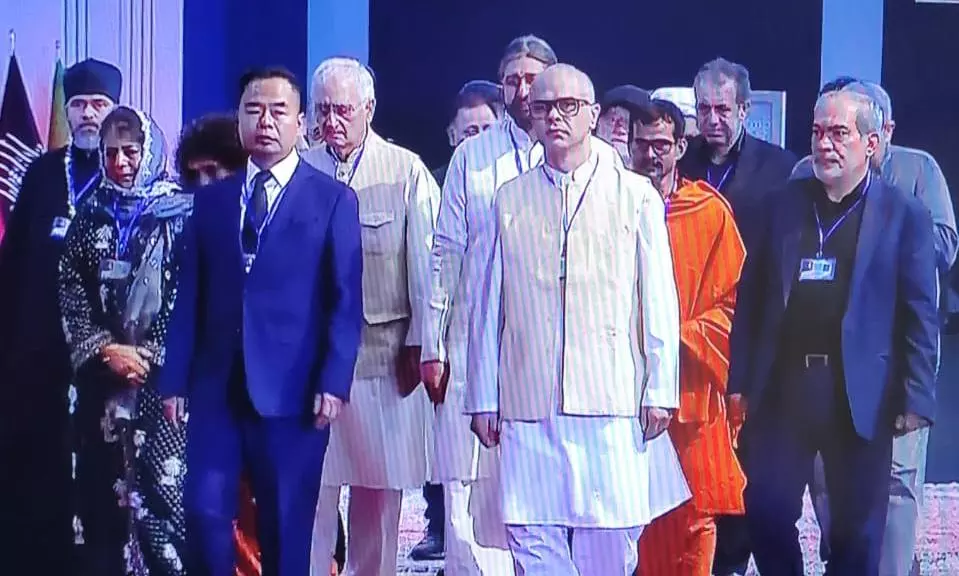
While Iran President Masoud Pezeshkian had invited Prime Minister Narendra Modi to the funeral, it was attended by Union minister Pabitra Margherita and Bihar Governor Syed Ata Hasnain on Friday (July 3). They paid their respects on behalf of the government and the people of India.
A delegation of Indian religious leaders also paid tribute to the late Iranian leader who ruled Iran for three decades before being killed at the age of 86 on February 28, the first day of the massive US and Israeli air strikes on Tehran. Former external affairs minister Salman Khurshid represented the Congress, while former Jammu and Kashmir chief minister Mehbooba Mufti was also in attendance.
Appreciation from Iran
“The people of Iran will never forget this gesture of friendship, compassion, and heartfelt respect. They regard it as a precious testament to the enduring ties between the Islamic Republic of Iran and the Republic of India, and as a valuable foundation for further strengthening the longstanding friendship between our two countries,” the Iranian embassy’s post said.
Also read: Trump says US gave Iran a 'week off' for Khamenei's funeral
“The Embassy of the Islamic Republic of Iran in India once again conveys its sincere appreciation to all Indian officials, distinguished personalities, and the noble people of India who stood with the people of Iran and expressed their sympathy during this period of grief,” the embassy signed off.
Funeral procession in Tehran
The main funeral procession in the Iranian capital happened on Monday (July 6). The procession went through capital Tehran, with Khamenei’s flag-draped coffin, and those of his family killed in the airstrike, boarded on a truck. The Iranian authorities decorated the truck’s side to resemble the ornamental grating that surrounds the shrine of an imam.
The truck crept through crowds of black-clad mourners, who reached out to touch the grating. Some threw scarves and other items for attendants to brush against the coffin, a common practice in Iran seen as a blessing. Attendants sprayed misted water across the crowds to cool them in the summer heat.
Burial on July 9
The coffins will be taken through the streets of Tehran on their way to Mehrabad International Airport over a 12-hour journey, said Revolutionary Guard Gen. Hasan Hasanzsdeh, who is overseeing the procession. On July 7, ceremonies will be held in the holy city of Qom, and the burial in Khamenei’s hometown of Mashhad is scheduled for July 9.
Also read: Trump says ‘one shot’ could eliminate Iran’s leadership during Khamenei funeral
Authorities have shut down streets, airspace and daily life for the mourning, which began Saturday and will end on Thursday as Khamenei is buried at the Imam Reza shrine in Mashhad.
Mourners seek revenge
As the funeral has gone on, there’s increasingly been threats from mourners to avenge Khamenei’s death. Mourners and the signs they carry have called for the killing of both US President Donald Trump and Israeli Prime Minister Benjamin Netanyahu. Such signs were seen again Monday along the procession’s route, with one effigy of Trump being hanged.
The US is meanwhile pressing ahead with negotiations with Iran aimed at fully reopening the Strait of Hormuz, rolling back its disputed nuclear programme and reaching a permanent end to the war. Talks appear to be on hold until after the burial. Trump, meanwhile, has promised to destroy Iran’s civilization during the war, among other threats.
(With agency inputs)