For years India’s strong urge to get a permanent seat in the United Nations Security Council (UNSC) has not only been stoutly opposed by its next-door neighbours, China and Pakistan, but also a few other distant countries.
Together these nations, alongside Pakistan, have joined hands to form what is called as Coffee Club under Italy’s leadership.
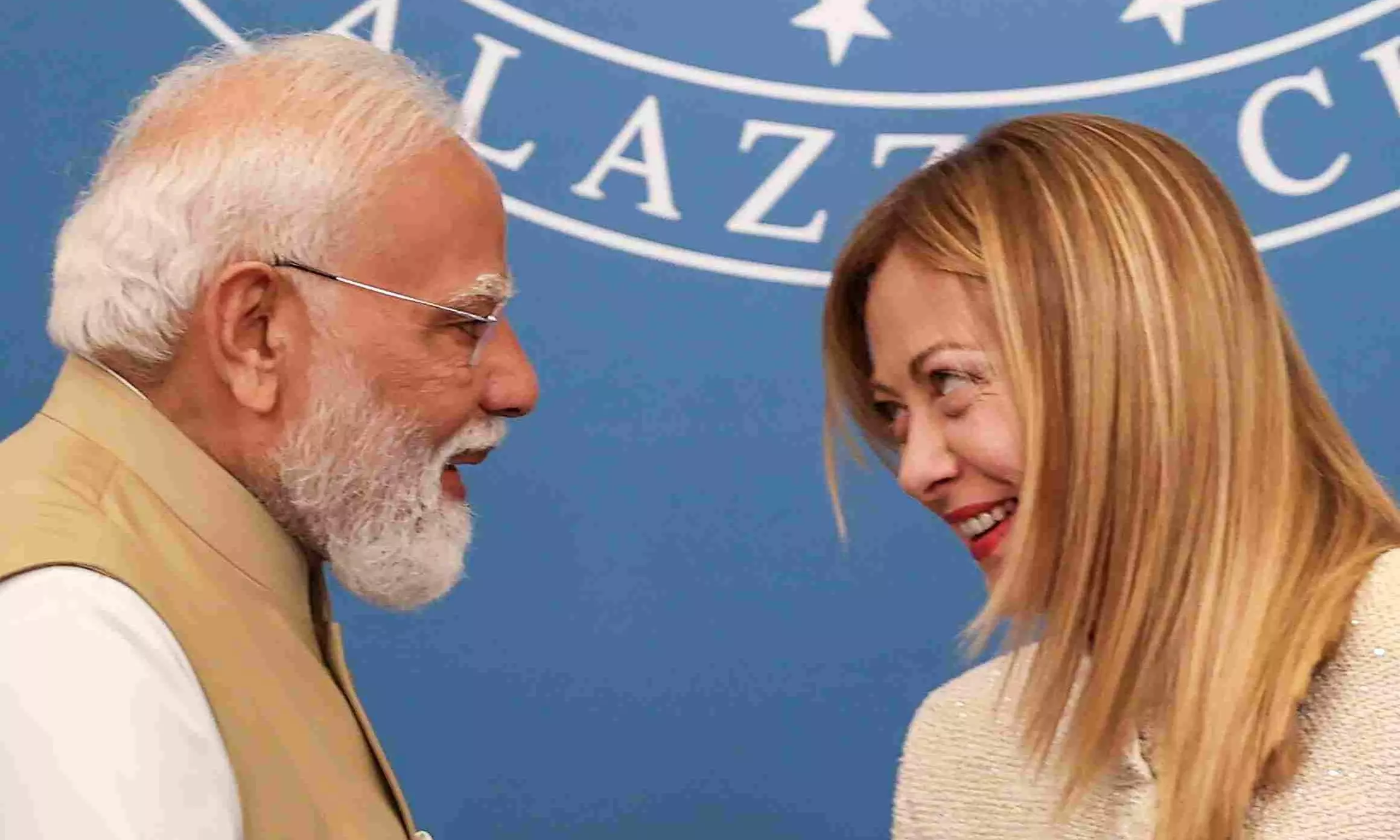
But it is a moot point whether Prime Minister Narendra Modi discussed the issue of India’s permanent UNSC membership during his recent meeting with his Italian counterpart, Giorgia Meloni, in Rome, or not. Public attention to such serious bilateral business was lost to Modi’s toffee tip to Meloni.
This rather created a rare vivacity and even virtual sensation all over, not just back home but far beyond.
UNSC bid takes a backseat?
Despite this, there was no word about India’s lingering UNSC bid in the joint-statement issued in Rome after the meeting of the two leaders. It is quite unlike the visits of Indian prime ministers in the past to foreign capitals or world dignitaries coming to New Delhi.
India’s desire to be among and beside the big-five on the high table of the UNSC was often endorsed in the past though without ever becoming possible during the top-level political and diplomatic parleys.
But Italy has been an exception to this as it apparently is even now, courtesy the absence of any mention of the UNSC through the briefings and readouts issued after Modi’s talk with Meloni.
So far Italy has been against opening permanent membership of the UNSC with the support of countries like Pakistan, Argentina, South Korea, Canada, Mexico and Turkey.
It looks strange because though the wars that dog the world today and the issue of the Strait of Hormuz off-and-on blockade were discussed by the two leaders the role and nature of the UN and its Security Council were met with silence.
Even as the UN may not be as relevant now as has been the case before Donald Trump’s second term as the US President, its institutional character and India’s claim for presence in its crucial security arm remain as before. More so, because Indian Forces continue to be the part of the UN peace-keeping armies sent to the troubled parts of the world.
So, as things get from bad to worse in multiple regions of the world, issues related to make the UNSC more representative and effective become all the more urgent.
Italy's stance and Coffee Club
But this was seemingly given a miss in Rome by both Modi and Meloni. The talks related to this, if held at all, were not disclosed in public statements that followed.
The reason behind it is, obviously, Italy’s long stand on this. So far it has been against opening permanent membership of the UNSC with the support of countries like Pakistan, Argentina, South Korea, Canada, Mexico and Turkey.
Instead of permanent membership, Italy advocates expanding the UNSC by adding more non-permanent members through elections on a rotational basis. This, it has been saying, could give more countries a chance to be on the UNSC. To achieve it, Italy formed a group of nations called as Coffee Club. This was way back in 1995 with the help of Pakistan, Mexico and Egypt under the plan and guidance of Italy’s envoy to the UN Francesco Paolo Fulci.
In 2005, more countries were added to the group and its role was defined as Uniting for Consensus (UfC). It was tasked to build a consensus among UN-member states to keep India and other G-4 countries off the UNSC’s permanent membership. Brazil, Germany and Japan are other members of the G-4. These countries like India have also been seeking permanent status in the UNSC.
The present permanent UNSC member countries are the US, UK, France, Russia and China. Except China, all the other four countries are from the allies that fought against Germany in the Second World War following which the UN was created.
Japan that fought along with Germany against the allies is still not a permanent member of the UNSC.
Missed opportunity
In the past, India has been a non-permanent member of the UNSC for no less than eight terms. Its last two-year term ended in 2022 amid the hope that one day it will become a permanent member to have more say on issues related to war and peace.
But sadly, this appears not to be anytime soon since by all indications it was either given a go-by or took a backseat during the recent talks between Modi and Meloni.
(The Federal seeks to present views and opinions from all sides of the spectrum. The information, ideas or opinions in the articles are of the author and do not necessarily reflect the views of The Federal)