The ousted prime minister's planned return to Bangladesh in December could trigger a political surge, challenge Tarique Rahman’s govt and raise fears of military intervention
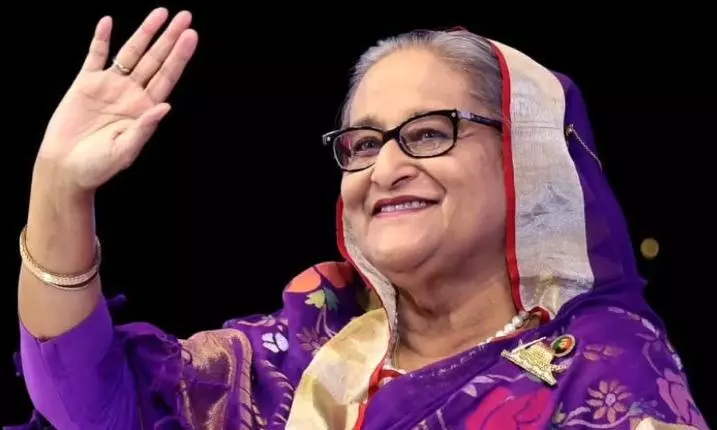
Ousted Prime Minister Sheikh Hasina’s public announcement of her desire to return to Bangladesh to face trial in December has generated considerable excitement in the country, not merely among her Awami League supporters but also among the people at large. Every time a friend in Bangladesh or among Bangladeshis abroad calls, the first question is about whether Hasina will really go back.
A Bangladeshi woman I call Boin (sister) in Kuwait called to check this week whether ‘Aapa’ (elder sister, as Hasina is called) is really going home in December because scores of her fellow Bangladeshis in the oil-rich kingdom are planning to confirm airline bookings to Dhaka around that time. Such calls have come to me from Bangladeshi friends in hundreds from the West, Middle East, Malaysia and Australia in the last 40 days.
Also read | Hasina's home-return promise rattles Bangladesh government, Islamists
From back in Bangladesh, such calls to check on ‘Aapa’s real plans’ have multiplied and include a rickshaw puller I used often in Dhaka, several auto-wallahs and commoners, most with no direct connection to the Awami League. Most complain about severe governance failures in law and order and on the economic front since Hasina was ousted, and they tend to conclude only the ‘Sheikh’s daughter’ (reference to her father Sheikh Mujibur Rahman) can run this difficult country.
She may be experiencing a surge in popularity partly by default because her successors have miserably failed on all fronts and turned Bangladesh into a lawless, vendetta-driven republic, and partly because her home-return announcement is seen as an act of unusual bravery because she carries a death penalty and risks execution on return.
Hasina reconnects with her grassroot base
Hasina, who has used her two years in exile in Delhi to reconnect to her party support base through dozens of group calls on Telegram and WhatsApp to grassroots activists, may be feeling buoyed by this surge in popular support. Despite facing massive persecution – tens of thousands of false cases, police harassment or mob attacks engineered by BNP, Jamaat-e-Islami and NCP supporters – Awami League activists exude confidence about their ability to mobilise lakhs of angry citizens once Hasina returns to face trials.
But such confidence is more based on hope than on actual visible contours of organisational revamp for mass mobilisation. The BNP government is sure to deploy huge posses of army and paramilitary soldiers to quell a popular surge, beside the police; they don't fully trust the police. Prime Minister Tarique Rahman has refused repeated invitations to visit India, apparently upset with Hasina’s press conferences in Delhi but actually to avoid any possible dialogue to facilitate a safe home-return for the ousted leader.
Hasina’s return poses a dilemma for Rahman
Some analysts in Bangladesh say Rahman appears worried over the fallout of Hasina’s return – a possible popular surge can unsettle his government, a violent crackdown may have global blowback, Hasina's execution can push the country into a civil war situation, but keeping Hasina in jail can also bring tens of thousands of angry citizens to the streets. That is why, the analysts say, Rahman’s government has complicated the issue by asking for Hasina’s formal extradition under a treaty that the two countries signed when she was in power and that led to the repatriation of ULFA leader Anup Chetia to India.
India is clearly unwilling to extradite her, and the Modi government has indicated any such request is subject to judicial review in Indian courts, because under the terms of the treaty, any extradition request can be granted only if the host nation is satisfied that the person concerned has been convicted after a fair trial under the due process of law.
Also read | Why did New Delhi allow Sheikh Hasina’s media conference?
“The insistence on Hasina’s formal extradition is to sabotage her plans to return home and face justice. She has been convicted in absentia by a kangaroo court and the verdict won’t stand any proper judicial scrutiny,” says Rokeya Prachy, award-winning actress and Awami League spokesperson.
“Such is the panic over Hasina’s home-return that the youth leaders who brought down her government are already moving off to foreign countries like Turkey and Malaysia,” Prachy claims.
Political chaos could open door to the military
Some say that a popular surge after Hasina’s return may lead to chaos that could provoke a military takeover. Army chief Gen Waqar-u-Zaman, whose radical Islamist orientation is now on full display (full beard after Hajj, inclusion of religious studies in military training curriculum, creation of an Islamic Institute for the military), may choose to run the country through an interim government staffed with radical clerics and US-backed civil society figures in a re-run of August 2024.
“A military takeover followed by suspension of parliament and another interim government will be a complete disaster for Bangladesh,” says Bangladesh's eminent constitutional lawyer Tania Amir. “It may be designed to prepare Bangladesh for an Islamist takeover through a Sharia-driven state and the army will facilitate the process,” she said.
Three questions that could shape Hasina’s return
So, three key questions hang over Hasina’s planned homecoming, even as the deeply religious leader is determined to return, placing her faith in Almighty Allah and the Bangladeshi people. (A) whether Bangladesh government will accept her back normally, in the way she came, as an ousted Prime Minister seeking a safe haven, because any insistence on a formal extradition, so far unacceptable to India, will complicate matters and lengthen the process (B) if her planned return is seen to provoke a popular surge and threatens the government, it may bring up the possibility of a military takeover and defeat any possibility of an Awami League resurgence (C) is there still some possibility of a covert India-mediated BNP-Awami League understanding that gives Hasina a fair trial on return and leads to lifting the ban on Awami League while the League refrains from street agitations to topple the BNP government in power now.
Also read | Bangladesh urges India to fast-track Sheikh Hasina's extradition
Extensive interactions with Awami League leaders in recent weeks have left me with the impression that neither Hasina nor her senior leaders have thought through the various possible scenarios around her planned homecoming. An aging Hasina, bolstered by a determination to stage a comeback, may be driven by a ‘now-or-never’ impetus to return by December. But unless all possible consequences, including the chances of a Benazir Bhutto-type assassination attempt by Pakistani jihadis (Bangladesh intelligence reports the presence of one such six-member tanzim), are factored into her home-return plans, it would remain a leap in the dark. In politics, bravery and divine blessings are no substitute for careful planning – as Hasina or her late father have often discovered in the past.
(The Federal seeks to present views and opinions from all sides of the spectrum. The information, ideas or opinions in the articles are of the author and do not necessarily reflect the views of The Federal.)