



As calls for colonial accountability grow, we examine the moral, economic, and practical dilemmas of historical apologies and reparations
We are entering the festive season of Deepawali, a time of celebration, forgiveness, and fresh beginnings. It is an appropriate moment to reflect on the issue of reparations.
This topic resurfaced in public debate during the recent Commonwealth Heads of Government Meeting (CHOGM). Addressing the summit, King Charles III stated that the transatlantic slave trade period filled his heart with horror and his soul with the most profound personal sorrow. However, he stopped short of a formal apology, observing that while we cannot change the actions of those before us, we can learn from the past.
To provide context, the transatlantic slave trade refers to the period between the 15th and 19th centuries, during which nearly 12 million Africans were enslaved and forcibly shipped to the Americas. It formed the second leg of the triangular trade route: European arms and textiles to Africa, enslaved people to the Americas, and sugar, coffee, and tobacco back to Europe. Britain, by virtue of its vast global empire, was one of the largest perpetrators and beneficiaries of this system.
Principles of reparation
Reparations represent an acknowledgment of harm and a commitment to repair. The basic principles and guidelines on the right to a remedy and reparation were articulated in a 2005 United Nations General Assembly Resolution. The declaration highlights victims' rights to remedies and access to justice, significantly affirming that statutes of limitations do not apply to gross violations of international human rights law.
Should countries demand and expect apologies and reparations for past historical injustices? An apology for past wrongs is a meaningful gesture that helps restore dignity. When accompanied by financial compensation, the return of stolen cultural heritage, or direct investment in affected communities, it moves closer to addressing past grievances.
India and the British Empire
Author and politician Shashi Tharoor has been a vocal critic of the ruinous economic and human toll of British colonial rule in India. Tharoor highlights that before colonization, India accounted for nearly 27% of global GDP, which collapsed to less than 3% by the end of British rule. He has also drawn attention to the tragic, preventable deaths of up to 3 million people in the Bengal Famine of 1943, exacerbated by Winston Churchill’s policy of diverting grain supplies from India to Europe during World War II.
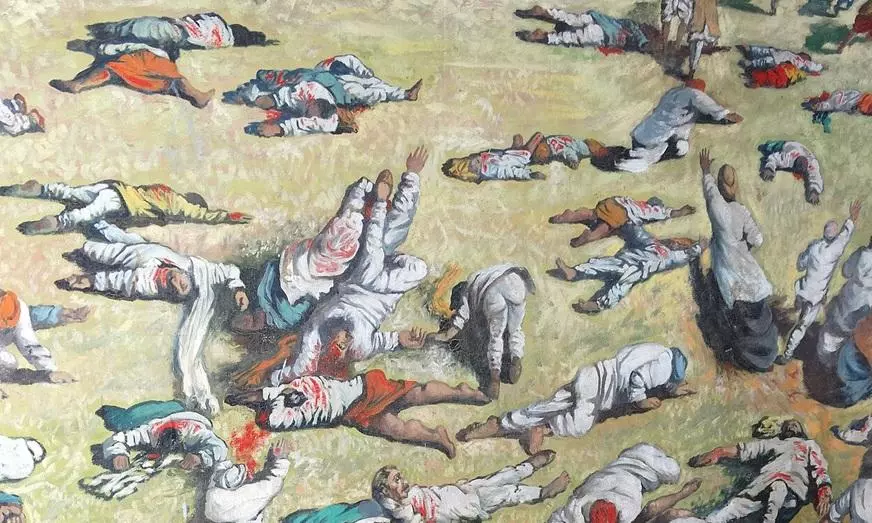
Despite this history, Britain has consistently refused to issue a formal apology, even for the Jallianwala Bagh massacre in which hundreds of peaceful protesters were killed. On its centenary in 2019, the British Prime Minister described the event as a "shameful scar," yet offered no formal apology. Similarly, during her visit to Jallianwala Bagh, Queen Elizabeth II described it as a "distressing example" of past history, but stopped short of an official apology.
Global precedents
Several nations have begun taking concrete steps in this direction.
Australia addressed the "Stolen Generations" — Indigenous children forcibly removed from their families and placed in church missions and foster care from the mid-1800s to the 1970s to make them “Australian”. The Prime Minister issued a formal apology, and state governments established ex-gratia compensation schemes.
Belgium expressed deep regret for the atrocities committed in the Democratic Republic of the Congo under King Leopold II, and Belgian courts have awarded compensation to five women who were forcibly abducted.
The Netherlands provided financial compensation to Holocaust survivors and to widows of victims of Dutch military atrocities in Indonesia, alongside establishing a 200 million Euros awareness fund.
Germany established extensive reparation frameworks for victims of Nazi atrocities.
The United States paid financial reparations to Japanese Americans illegally interred during World War II and created the Indian Claims Commission to address land settlements and financial compensation for Native American tribes.
Compensating the colonisers
Tharoor, in his book An Era of Darkness, has argued that even a symbolic reparation of one pound per year for 200 years would suffice as atonement for two centuries of colonial rule. Others argue for a strictly economic reckoning. Columnist Minhaz Merchant computed India's historical GDP losses, export values, and contemporary growth rates to estimate British exploitation at US$ 500 billion as of 1988 (which, I speculate, would exceed US$ 6 trillion today). But Britain has not even apologised for stealing India’s treasures like the Koh-i-Noor.
Instead of compensating its colonies, Britain historically prioritised enslavers: under the 1833 Slavery Abolition Act, the British government paid roughly 20 million to compensate former slave owners for their lost "property" — while providing nothing to the millions of enslaved people who suffered.
Ethical dilemma and accountability
The debate raises complex questions: How far back should nations go in seeking apologies or compensation for crimes committed generations ago under vastly different world orders? Who pays, and who receives? Should contemporary taxpayers bear the financial responsibility for the misdeeds of their ancestors? Should compensation go directly to descendants, or be invested in national development?
Should we be judging the past through the prism of the present?
Pursuing old claims also risks reopening historical wounds rather than healing them. Furthermore, enforcing historical reparations remains challenging when the international community struggles to enforce modern international law against ongoing atrocities.
History is complicated. But an acknowledgment of past misdeeds provides closure and, more importantly, reinforces a collective commitment to prevent their repetition. As George Santayana observed: "Those who cannot remember the past are condemned to repeat it."
(The Federal seeks to present views and opinions from all sides of the spectrum. The information, ideas or opinions in the articles are of the author and do not necessarily reflect the views of The Federal.)