Canadian PM's Davos freedom-from-hegemony speech has been hailed for bold realism; few realise the geopolitical strategy he outlined was called Non-Aligned, from Nehru’s time
Canadian Prime Minister Mark Carney’s speech at Davos qualifies him to be a member of the BRICS. It is time to change the name of the grouping, to make it more inclusive and better reflect what the group stands for: Global Alliance for Cooperation and Autonomy, anyone?
BRICS is a coalition of the largest emerging markets, striving to expand the space for autonomous economic and political action by countries outside the charmed circle of the G7. What Carney has made clear is that even a G7 member like Canada is being constrained by the hegemon amongst the G7, needs to stop pretending that Canada can look after its interests in a state of submission to the US, and must start forging a new geopolitical strategy that resists hegemony.
Welcome to the BRICS world, Mark Carney.
Trump's speech
The most anticipated speech at the 56th edition of the World Economic Forum at Davos was, of course, US President Donald Trump’s.
The world wanted to know if he would insist on taking Greenland by force, as he had threatened to, and slap punitive tariffs on countries that opposed US takeover of the island, whose political status is that of a protectorate of Denmark, with a fair degree of autonomy for the island’s 57,000 residents, 89% of them indigenous Inuit, albeit with traces of their interaction with Danish conquerors.
That would have spelt the end of the military alliance NATO, long considered the bulwark of Western democracies against Communist Soviet Union and, later, its successor state, Russia.
Carney’s call to middle powers
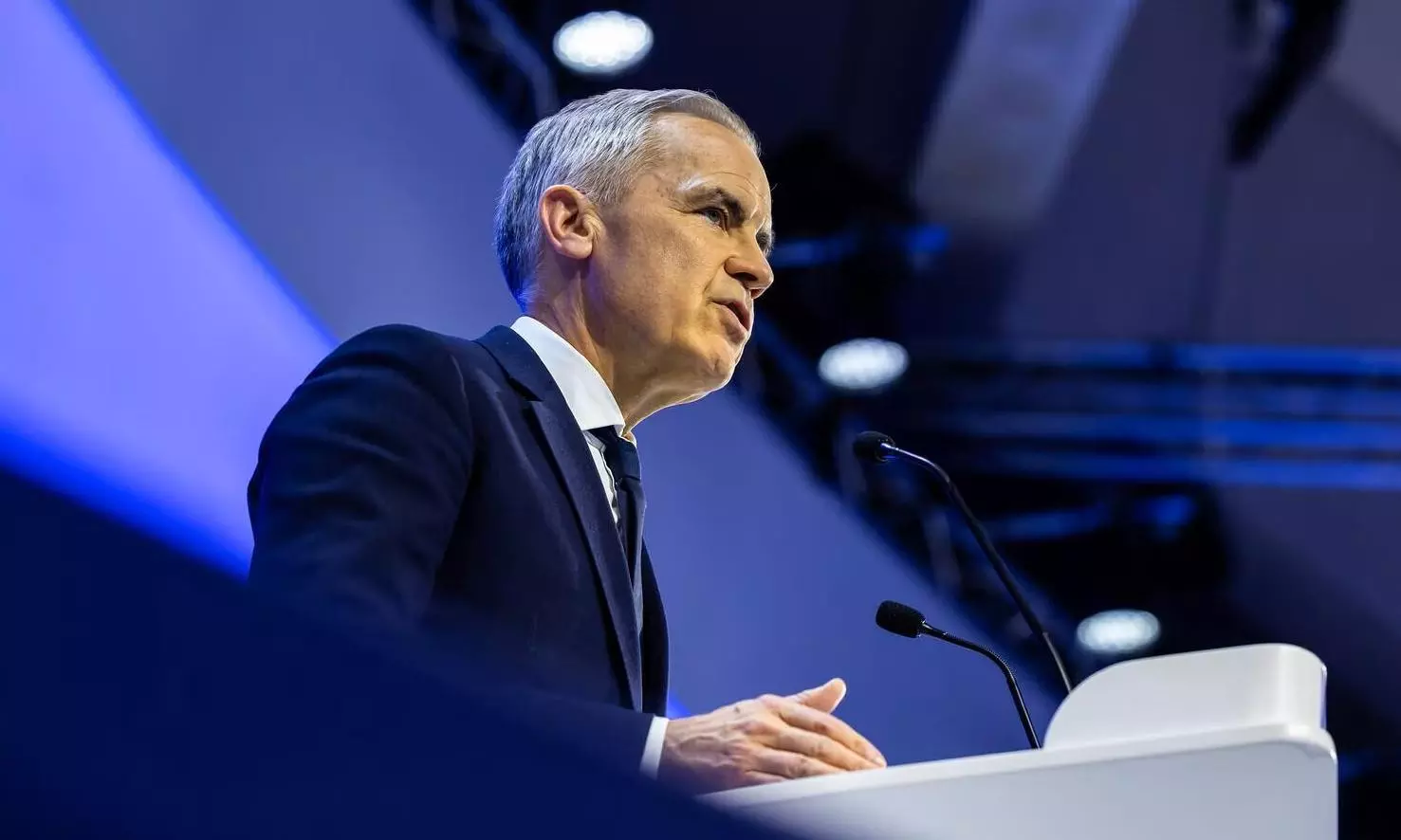
But the most impactful speech was delivered on January 20 by Carney. Without referring to Trump by name, he described what is happening to the rules-based international order that has prevailed since the end of World War II as “rupture, and not transition”.
Carney behaved like Christopher Columbus discovering America. America did not need to be discovered.
With a passion and eloquence that few suspected the dour former central banker of possessing, Carney called on middle powers to unite against economic coercion from great powers that "have begun using economic integration as weapons, tariffs as leverage, financial infrastructure as coercion, supply chains as vulnerabilities to be exploited." If you are not at the table, warned the Canadian PM, you are on the menu.
Also read: Trump 2.0: 5 geopolitical shifts to watch out for
He also outlined his vision for how Canada should make its way, detached from hegemony and patronage. Identify the values you wish to live by as a nation, build internal strength, form coalitions with like-minded powers on particular issues, while minimising friction and refusing binding alignments.
In outlining such a strategy, Carney behaved like Christopher Columbus discovering America. America did not need to be discovered. It already was home to large populations, some of whom had reasonably evolved civilisations that had built huge pyramids and developed sophisticated calendars, complete with predictions for the end of the world.
Non-alignment
The strategy that Carney outlined has been called Non-Alignment from Nehru’s time. A bunch of newly decolonised countries, ranging from India and Indonesia to Egypt and Yugoslavia banded together, refusing to belong to either of the camps led, respectively by the US and the Soviet Union, were prepared to cooperate with either of the Superpowers or with any coalition of nations willing to work together to advance a particular course.
Nehru, Sukarno, Nasser and Tito were the foremost leaders, each a political giant in their respective lands. Leave aside the personalilties, and focus on the strategy they followed. It mirrors what Mark Carney says, should be Canada’s future strategy.
Also read: In today’s global cacophony, India’s challenge is to act with quiet steadiness
The old NAM (Non-Aligned Movement) lost its vigour after the collapse of the Soviet Union, and the world became unipolar. India stood to gain as much from aligning with the US (for example, in signing the Indo-US nuclear deal), as against it (refusing to ostracise Russia over the war in Ukraine).
Then again, there were matters of economic and financial autonomy from the West’s hegemonic control. To pursue that, what is required is not a movement of minnows, however well-aligned they might be. Rather, what is required is an alliance of developing countries with heft. This led to the emergence of BRICS, originally with the foremost emerging markets, Brazil, Russia, India and China getting together, and later incorporating new members, South Africa to begin with.
New geopolitical strategy
To create an international agency outside Western dominance and control for clearing financial transactions amongst themselves and with other countries, BRICS has set up BRICS Clear. The grouping aspires to create an alternative to the dollar for settling cross-border transactions that do not involve the US as a counterparty. The New Development Bank is up and running. China’s participation in these initiatives is extremely useful, given its economic heft.
However, China is also the second most dominant centre of economic and military power, with designs on Indian territory. It would be useful for India to be able to pursue its anti-hegemonic cross-border economic and financial agenda without dependence on China. BRICS, expanded to include Canada and other middle powers that wish to break free of American hegemony, would be ideal.
Also read: Can BRICS counter Trump's tantrums?