A grouping of Saudi Arabia, Pak and Turkey cannot develop the attributes of NATO even if other countries join it, for there are too many issues to be addressed
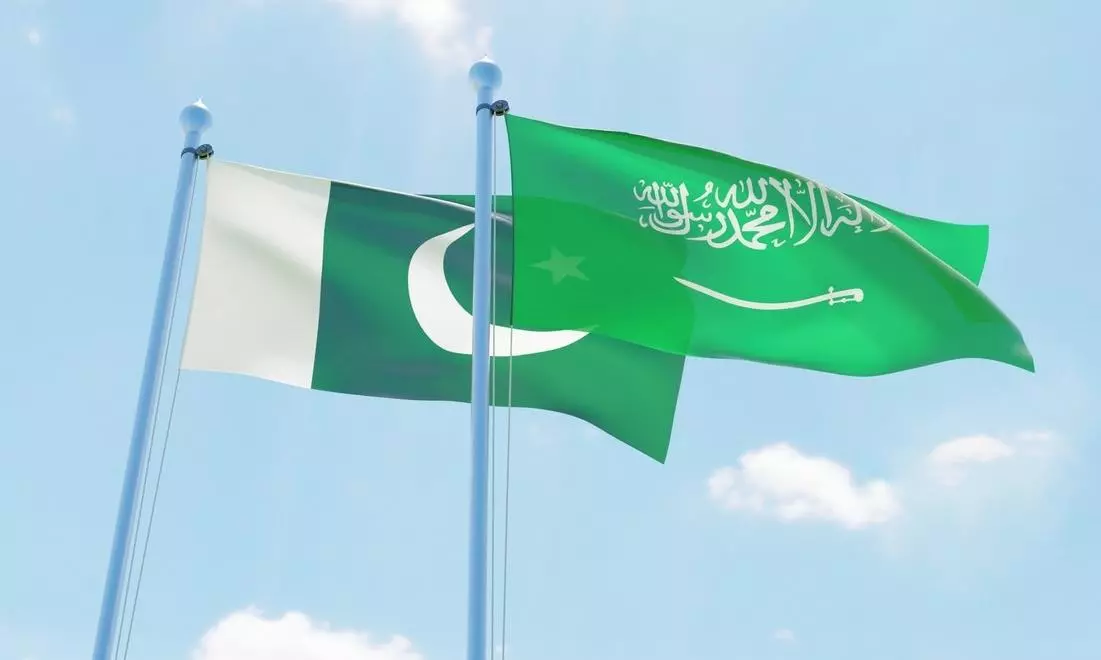
Pakistan and Saudi Arabia entered into a Strategic Mutual Defence Agreement (SDMA) in September 2025. This was a major geopolitical development for both West and South Asia.
Pakistan-Saudi relations, which have continuously included defence and economic dimensions, have been close over the past six decades. Indeed, Saudi Arabia has relied on contingents of the Pakistani Army for its security, including the protection of its royal family.
Counterview | With arrival of ‘Islamic NATO’, BJP-RSS must rethink religious nationalism
Saudi-Pakistan bonding
Saudi has also been among those countries that have saved Pakistan when it has, in the past, faced macro-economic crunches. It is also believed that Islamabad assured Riyadh, since it developed nuclear weapons, that it would go to any extent to protect Saudi Arabia if it faced an existential crisis.
Also read: As India, EU near free-trade agreement, here’s what’s at stake
There were credible reports in mid-1999 that Saudi Arabia’s then defence minister, Prince Sultan Bin Abdulaziz, had visited the Kahuta nuclear facilities. The visit was a signal that Pakistan’s assurance was not mere hot air.
Muslim countries recognise that, as they are theocracies, they cannot demand that India should be secular. They accept that it is for India to decide the nature of its polity.
Twenty-five years on, Saudi-Pakistan defence ties now have an avowed strategic dimension. The SDMA is a public manifestation of this dimension. The agreement also signals a Saudi assurance that it will not allow Pakistan to go under economically. This is crucial for Pakistan because its economic situation will continue to remain bleak.
Turkey in SDMA?
There are now reports that the SDMA is being expanded to include Turkey. Some analysts are speculating that this new grouping of Saudi Arabia, Turkey and Pakistan, if it comes about, could be considered as an Islamic NATO. This is a highly exaggerated view.
Also read: India now UAE’s biggest LNG buyer with USD 3-bn deal; aims for mega trade, defence ties
Each of these countries believes that it should be the leader of the Ummah. Saudi Arabia feels that, because it protects Islam’s two holiest mosques and has vast wealth, it is the natural leader of the Islamic world. Turkey, under President Recep Tayyip Erdogan, has reinvented itself. It is now Islamic, having departed from the secular traditions of Kemal Atatürk.
Erdogan wishes Turkey to have the influence it had during the Ottoman Empire. In this quest, he will be opposed by Saudi Arabia and other Arab countries, such as Egypt. This shows that there are inherent contradictions between Saudi Arabia and Turkey. Also, not so long ago, Turkey was aligned with Qatar and Iran.
Pakistan's reputation
In addition to Saudi Arabia, Pakistan has traditionally enjoyed good ties with Turkey. But it has dependencies on both, something that has deprived it of the reputation that Turkey and Saudi Arabia have in the Islamic world.
Pakistan essentially believes that it should be the leader of the Muslim Ummah because it is the only Islamic country that possesses nuclear weapons. However, these weapons have not given Pakistan the leadership position that it has always sought.
Also read: Trump’s Board of Peace: Europe stays away; Muslim countries agree to sign on
NATO’s position is different. It has remained a strong military alliance since its establishment in 1949 because the US has been its undoubted leader. Of course, in the era of US President Donald Trump, NATO too may get impaired. All in all, a grouping of Saudi Arabia, Pakistan and Turkey cannot develop the attributes of NATO even if other countries join it.
Is Muslim unity a myth?
It is historically inaccurate to think that Islamic countries overcome Shia-Sunni differences when confronted with a state that does not profess Islam. The doctrinal differences between Shias and Sunnis go to the heart of the Islamic faith and extend to the political domain as well.
Some analysts are speculating that a new grouping of Saudi Arabia, Turkey and Pakistan, if it comes about, could be considered as an Islamic NATO. Each of these countries believes that it should be the leader of the Ummah.
There are occasions when all Muslim countries join hands on a particular issue, such as the Palestinian question. But these are rare. Certainly, in the case of India, Muslim countries in overwhelming numbers have excellent bilateral ties with it.
This is so even if in the OIC (Organisation of Islamic Cooperation), they collectively show concern about the condition of Muslim minorities in India.
This concern has continued since the early 1990s, irrespective of the ideological leanings of the party in power. Indeed, this writer was told by diplomats of some Muslim countries that India should ignore the OIC resolutions on both Jammu and Kashmir and the condition of Muslim minorities in India.
Muslim countries recognise that, as they are theocracies, they cannot demand that India should be secular. They accept that it is for India to decide the nature of its polity. At most, their concern regarding Muslims in India relates to their being freely allowed to practise their faith. Here too, they find it difficult to come together because of the deep theological differences among them.
Insulting the Prophet
The only issue that exercises them is if the Prophet of Islam or revered Islamic personalities are perceived to be insulted by some Indian leaders. Only a few incidents of this kind have occurred. They have not damaged India's ties with the Islamic world. Yes, they have caused embarrassment and it should be avoided.
Also read: Interests over morality: What MBS’s royal welcome in US reveals about global politics
One case of this nature had come up when a former BJP spokesperson had made some comments which were interpreted as derogatory to the Prophet Mohammed. However, despite Pakistan’s endeavours, it did not damage India's ties with the Islamic world.
In this context, it is noteworthy that China's conduct towards its Uyghur minority is atrocious. China does not permit this Muslim community to even practise its faith. However, the OIC has maintained silence on the issue. This shows that the Islamic Ummah does not really seek to save the rights of Muslims living in countries that are strong. Their interests take precedence over the condition of Muslim minorities in these countries.
Sympathy for Pakistan
History shows that in the case of the India-Pakistan armed conflict in the past, some Islamic countries helped India's western neighbour. This was the case when, in 1965 and 1971, the Shah of Iran sent some aircraft and armaments to Pakistan.
Also read: India reacts to Saudi-Pakistan defence deal, says respect ‘mutual interests’
King Zahir Shah of Afghanistan, with whom India had excellent relations, informed Pakistan that he would not stir up any trouble on its western frontiers. Jordan, too, had sympathy for Pakistan. All this did not affect the course of the wars. In 1971, India achieved spectacular success.
Now, with both countries possessing nuclear weapons, the Islamic world will remain largely neutral. The internal policies, including the policy of the Indian government towards its Muslim minority, will not impact the approaches of most Muslim countries towards an India-Pakistan conflict. Like all members of the international community, they too would like the conflict between the two nuclear states to end as quickly as possible.
It's for India to decide
India will not remain secular just because the external world demands that it be so. It will remain secular only if its people continue to be committed to the principle of secularism. The defence of secular values cannot come from abroad.
Even in these contested times, those committed to equality for all Indians, irrespective of faith, must uphold the constitutional principles that govern society and the polity.
That alone offers a way forward.
(The Federal seeks to present views and opinions from all sides of the spectrum. The information, ideas or opinions in the articles are of the author and do not necessarily reflect the views of The Federal.)