From Venezuela to trade and India-Pakistan tensions, Trump’s actions signal a retreat from a rules-based order to raw power, unsettling India’s strategic interests
US actions, statements and comments since the beginning of this year directly or indirectly impinge on Indian interests.
The foremost action has been the military operation to forcibly remove Venezuela’s President Nicolas Maduro and his wife Cilia Flores from Caracas to face criminal charges in a New York court for permitting drug trafficking into the US. Its geopolitical objectives and strategy have now been revealed. This has implications for the entire world, particularly for an emerging global power like India.
Also read | Trump threatens to take Greenland ‘the hard way’, wants to stop Russia, China
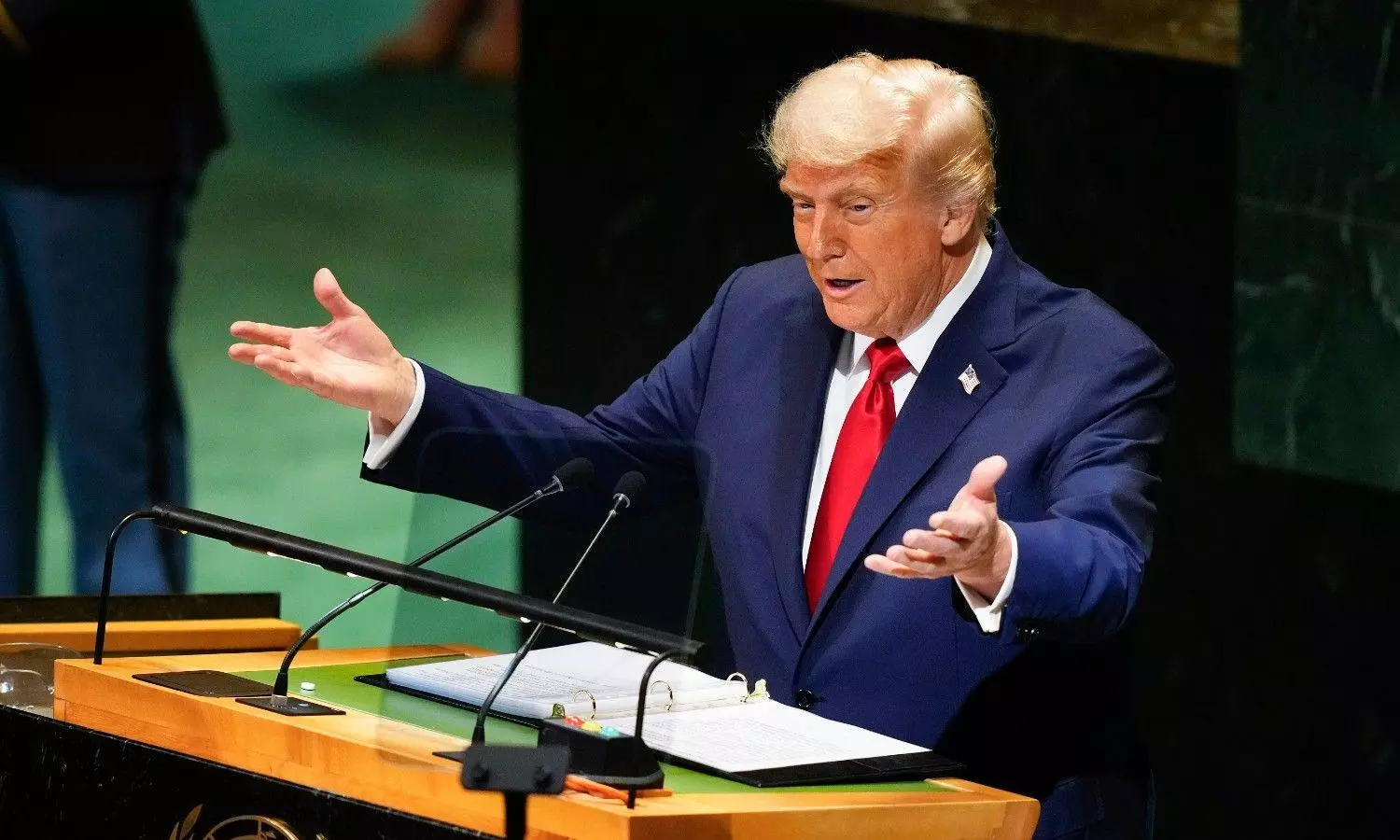
By ordering the forcible removal of Maduro and his wife, Trump has made clear how far and by what means he is willing to go to protect and advance US interests. In doing so, he has abandoned the rules-based world order that was put in place by the US and its allies after the Second World War. It is not that earlier US administrations did not break the rules that sustain world order, but they tried to cloak their actions in the garb of plausibility. Trump is not interested in such niceties. His approach is that, as the US has the power to openly impose its will on other countries, it will do so whenever it deems necessary.
Rules versus raw power
The principle that the sovereignty of countries is sacred and there should be no interference in the internal affairs of other countries was always invoked by the US, even while violating sovereignty and interfering in the internal affairs of other countries. Trump has no desire to show that his actions are within the ambit of international law. It is also apparent that he does not feel bound by any global rule or convention. Raw power appeals to him, and he does not hesitate to apply it.
India has always advocated that the international system should be based on fairness and equity. It has naturally promoted its own interests, but it has sought to reconcile these with those of other nations, especially those of the global south. It cares about its independence and strategic autonomy. Indeed, at this stage of its development, a rules-based world order is valuable to it. Thus, Trump’s action against Maduro, whom India recognised as Venezuela’s President, has caused unease in India. It has been cautious in its reaction to Trump’s Venezuela operation because it does not want Trump to get more agitated and hostile against it at a time when the India-US trade deal is stuck.
Conflicting claims on deal
A couple of days back, US Secretary of Commerce Howard Lutnick claimed that the India-US trade deal had been finalised. However, to put the final seal on it, he told the Indian negotiators that Prime Minister Narendra Modi needed to speak to Trump. As Modi did not do so, the trade deal could not be sealed. Meanwhile, the US closed trade deals with other countries at higher tariff rates than those it had agreed to for India. Later, the Indian negotiators reverted to the US side and agreed that the deal should go ahead. Lutnick told them that the “train had left the station” and that the deal was no longer on the table.
India has denied Lutnick’s account of the trade deal negotiations while stating that both sides were close to finalising the deal at different times. India has also clarified that Trump and Modi had telephonic discussions eight times in 2025. These were on different aspects of bilateral relations. It is good that India has put its version of the negotiations on the record. It would be preferable, though, if it put out greater details in the public domain. These could be the dates of the telephone calls, which side initiated them and a mention of the subjects that the two leaders discussed. These elements would not compromise diplomatic norms nor jeopardise ties. They would not harm discussions on the trade deal.
Also read | India refutes US claim on trade deal, says Modi spoke to Trump 8 times
The Modi government could also go public with those aspects of the trade deal that have been agreed upon and the few gaps that remain. In this way, it would be more effective to respond to Lutnick’s claim that the deal had been finalised. India cannot give in on some matters concerning agriculture because of the interests of its farmers. It also cannot compromise on matters of cultural or religious sensitivity. A reinforcement of the government’s position will clear any misgiving there may be in any section of Indian public opinion in these two areas.
Peace claims under scrutiny
One matter that has become an obsession with Trump relates to India’s stand that the cessation of hostilities with Pakistan in May last year was achieved bilaterally. This position is in keeping with India’s traditional view that India-Pakistan ties are bilateral and no third party has a role in them. Naturally, this does not mean that India does not have conversations with the major powers and others on India-Pakistan issues, especially those concerning war and peace. But it does mean that India acts autonomously with Pakistan and not at the behest or under the influence of any other country in its relations with Pakistan
Trump seems convinced that it was his intervention that ended India-Pakistan hostilities, which could have spiralled into a nuclear exchange. Thus, he believes that he saved millions of lives. He has been upset at not getting the Nobel Peace Prize for bringing an end to eight wars, including the India-Pakistan military conflict in May last year. He has talked about this almost every week.
Grudge-driven tariff politics
He repeated this on January 9 during a meeting with leaders of the US oil and gas industry, in the context of their plans to engage in Venezuela’s petroleum industry. In a media conference on the occasion, he once again asserted that he should be given the Nobel Peace Prize. Referring to the same context, he cited his mediation in ending India–Pakistan hostilities last May and recalled Pakistan Prime Minister Shehbaz Sharif’s remark that his intervention had saved 10 million lives. It may be recalled that Pakistan’s Foreign Minister Ishaq Dar had formally written to the Nobel Peace Prize committee, on behalf of his government, last June, nominating Trump for the prize because of his successful mediation.
Also read | US tariffs on India may rise up to 500% as Trump backs Russia sanctions bill
Obviously, Trump is holding a grudge against Modi for not contributing to his effort to get the prize by acknowledging that the cessation of India-Pakistan hostilities was bilaterally worked out. This is a major element in imposing the 50% tariff against India. This includes an element of 25% for India continuing to import Russian oil. India has greatly reduced these imports, but the tariff is still there. This is not only because he wants to send a signal to Russia, but also because of the grudge.
It is unlikely that India-US relations will enter a stable phase soon.
(The Federal seeks to present views and opinions from all sides of the spectrum. The information, ideas or opinions in the articles are of the author and do not necessarily reflect the views of The Federal.)