For Bollywood, Pakistan is India's evil twin: different enough to fear, close enough to need, and too entangled in India's self-image to ever let go
The ‘spy’ film Dhurandhar has been widely reviewed but this is not a review.
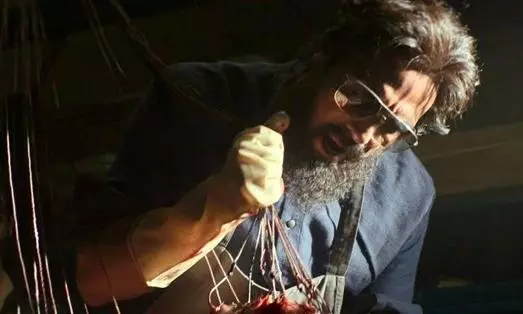
The film is ostensibly about an Indian agent (Ranveer Singh) pretending to be a Baloch, who infiltrates a criminal gang in Karachi and relays valuable information about anti-Indian activity there. But this plot only gives Indians an excuse to imagine Pakistan unhindered.
If imagining Hell unfetters a Puritan’s inhibited mind, so too perhaps would imagining Pakistan serve an Indian nationalist. Since Pakistan is ‘capable of anything’, the logic might also be that an Indian film set in Pakistan could also show virtually ‘everything’.
Evil twin
Dhurandhar is set among the criminal gangs of Karachi, and it has gratuitous bloodshed and torture that might have invited a ban for a comparable film set in India.
The action scenes are extravagant, but most of them serve little purpose. People’s heads are blown away and the fingers are sliced off; a gangster is boiled in what looks like masoor dal; others are dragged by their necks through busy streets by motorcycles; a captured Indian agent under torture has umpteen small hooks attached to the skin on his face.
But just as Hell is the ‘other’ of God’s World, Pakistan, in my understanding, is India’s ‘other’.
Also read: Ranveer Singh’s 'Dhurandhar' banned in 6 Gulf nations over ‘anti-Pakistan’ messaging
The ‘other’ is someone intrinsically different from oneself but also bound to oneself and even needed in a self-definition. The evil twin is a figure familiar from literature, and Pakistan in the Indian nationalist imagination could be like that since they were born together.
If imagining Hell unfetters a Puritan's inhibited mind, so too perhaps would imagining Pakistan serve an Indian nationalist.
Dhurandhar has been called authentic, but it features romance sequences where the Indian agent, as a junior gang member, romances a powerful politician’s daughter openly on the streets without getting into trouble. Spying is facilitated when key anti-India events (like 26/11) are organised in his fortuitous presence, and we see Ajmal Kasab actually get his gun handed to him.
Pretty women in Pakistan do not have their heads covered — when any picture of a Karachi street on the net shows us otherwise. Pakistani serials also do this, but that does not make it ‘authentic’.
Pakistan as the 'other'
Pakistan has begun to feature more explicitly after 2014, when it was once represented only obliquely. Among the first films to allegorise Pakistan as the ‘other’ was Manoj Kumar’s Upkaar (1967), incorporating the 1965 war but also being about two brothers — one good and one led astray — wrangling over the division of family land.
The same motif was repeated later in Do Raaste (1969) but with another youngest brother alongside the pacifist eldest one (Balraj Sahni), someone who is tougher on the selfish sibling. The youngest brother can be interpreted as the tougher Shastri compared to the accommodating Nehru in their dealings with Pakistan.
Also read: Dhurandhar: How Aditya Dhar’s lavish spy thriller pushes nationalist propaganda
Evidently, the pictures painted of Pakistan depend on India’s political circumstances and the more virulent Gadar: Ek Prem Katha (2001) came when AB Vajpayee was Prime Minister. In this film, Tara Singh follows his beloved Sakina to newly-formed Pakistan; he is required to convert in public and embrace Pakistan, which he is willing to do, but baulks at shouting ‘Hindustan Murdabad’, as is demanded. That proves to be too much.
Later softening
We detect here the supposition that Pakistan’s existence is only justified by its anti-Indian sentiment; this suggests that Indian nationalism also needs Pakistan as an adversary and hence imagines Pakistan as similarly dependent on its animosity towards India.
But there was a softening in later films and Veer Zaara (2004) was more moderate since it shows a liberal Pakistani woman migrating to a tolerant and democratic India.
A neighbour with a GDP of about 10 per cent of India's should preoccupy the Indian imagination so extensively as to make the film hugely successful
Religious identity became a key issue after 2014. In Raazi, a Muslim woman from Kashmir deliberately marries into a military family in Pakistan and betrays it to demonstrate her patriotism. The deaths of people who have done her no harm are treated as collateral.
Disorder, chaos in Pakistan
In Dhurandhar, Pakistan and India are represented by the contrasts of disorder and order. India is mostly people in suits sitting at tables and planning out operations, while Pakistan is shown through wild men with flowing hair and beards carrying automatics and never hampered by policemen.
The only weighty policeman (Sanjay Dutt) is also in a kurta pyjama and has flowing hair as he executes minor gangsters. But if the film is extremely violent, it is still all evidently make-believe; no one dreaded character is anything more than the actor playing him, which virtually disallows true excitement.
Why Dhurandhar pictures Pakistan so pointedly in this way can only be speculated about, but the cause is not only Indian nationalism’s doing.
Pakistan is no longer under an elected leader, and a supreme general — who is deliberately trying to portray himself as a religious fanatic — is adding to its chaotic image. At the very least, Dhurandhar may be a clever attempt to capitalise on this, but it also brings to light a peculiar Indian weakness — that a neighbour with a GDP of about 10 per cent of India’s should preoccupy the Indian imagination so extensively as to make the film hugely successful.
Whither Akhand Bharat?
Still, this phenomenon needs deeper investigation since India and Pakistan are not only geopolitical adversaries, given the cherished notion of ‘Akhand Bharat’. The nostalgia with which the Hindu right wing talks of ‘Akhand Bharat’ (undivided India) is not a matter of wanting to usurp Pakistani territory but of also of being reunited with those who share some of their practices, though it is not clearly known what those practices might be.
Also read: Dhurandhar beats Pushpa 2, becomes highest-grossing Hindi film ever
If the Islamic invaders and rulers excluded the ‘heathen others’, thereby forcing the eventual creation of a unified Hindu religion out of a variety of practices, many Hindu nationalists correspondingly respond today to Pakistan as their own kind ‘led astray by Islam’. This factor places a different significance on the relationship between India and Pakistan and justifies the sense that Pakistan is India’s ‘other’.
Why Dhurandhar pictures Pakistan so pointedly this way is not only Indian nationalism’s doing. Pakistan is no longer under an elected leader, and a supreme general who is deliberately trying to portray himself as a religious fanatic is adding to its chaotic image.
The fact that Pakistan is going through a turbulent and unstable phase today explains Dhurandhar and its success, and the film virtually declares — through its portrayal of Pakistan — that the country is still an unruly mass not yet successfully contained by nationhood.
Bangladesh in Indian cinema
Today, we are confronted by another specter in the east, which is a potentially hostile Bangladesh.
The east has not carried the same connotations as the west perhaps because of the left-liberal domination of politics in Bengal and the Awami League being friendly, but with the country becoming politically misaligned with India — notwithstanding the victory of the BNP — one wonders at the likely mythologies that might emerge and how Bangladesh will be regarded in future cinema.
(The Federal seeks to present views and opinions from all sides of the spectrum. The information, ideas or opinions in the articles are of the author and do not reflect the views of The Federal.)