As speculation over the post-Modi era intensifies, a widening pool of contenders signals a complex BJP succession race shaped by ideology, RSS influence and Hindutva politics
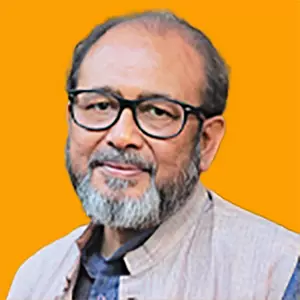
Suvendu Adhikari’s selection as the BJP’s first-ever Chief Minister in West Bengal makes the succession race in the party further crowded.
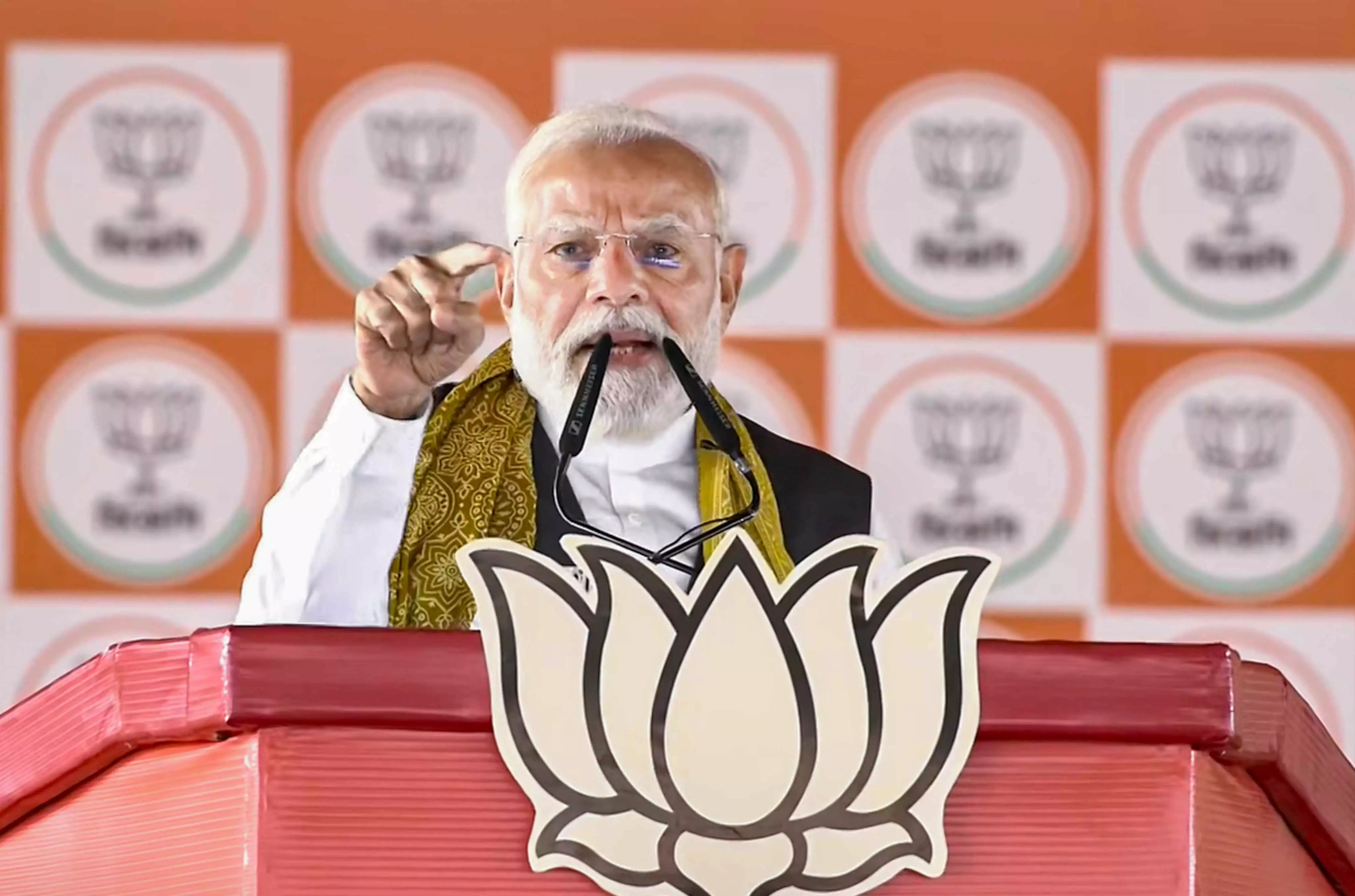
Victory in West Bengal and his articulation of pungent Hindutva vocabulary enable him to take space, ironically as among the more ‘hardline’ BJP leaders. This reality must be accepted even though Prime Minister Narendra Modi is not stepping down in the near future. Only unforeseen developments before 2029 can lead to a vacancy.
As it appears now, the BJP’s defeat in the next parliamentary polls, whenever held, appears unlikely.
The post-Modi question
Even though the question – “After Modi who” – is not discussed in private or public within the BJP, every leader and significant cadre weighs options endlessly.
Also read | From CM's 'right hand' to CM: Suvendu Adhikari set to lead Bengal's first BJP govt
Successions used to be the single most dangerous moment for almost every pre-modern state. The BJP isn’t one of those, but here too, power is tied veritably to Modi rather than a robust party committee or board.
In the run-up to the 2014 polls, there was significant jostling among those aspiring to be the party’s prime ministerial candidate – Rajnath Singh, Nitin Gadkari, Sushma Swaraj, Arun Jaitley and even LK Advani.
The applause for Modi when he walked up to the stage at a party conference in New Delhi in early 2013 made it evident that it had become a one-man race. RSS chief Mohan Bhagwat too fell in line, fearing revolt by the rank and file.
In modern democracies, succession generally follows one of three models: Institutional, i.e. by internal election as in the United Kingdom; Primary system as in the United States; and dynastic or centralised mechanism which in India includes most parties, with non-dynastic parties having a small 'command and consultative' circle. The BJP falls in the last category and the RSS brass, so far, remains part of that compact circle.
Inside the 75-year debate
In 2014, Modi created the informal ‘rule of 75’ to keep Advani and other party elders out of his ministry. As 2025 neared, speculation mounted within the Sangh Parivar – both Modi and Bhagwat were to turn 75 within days of one another.
In early 2024, immediately after the Ram temple’s inauguration, ties between the two soured over Modi mounting the most personality-centric electoral campaign. During that phase, Bhagwat sounded the ‘retirement at 75’ gong on several occasions.
But by March 2025, Modi made up with the RSS chief in Nagpur and no further mention was made. The two maintained silence on the matter.
It was left to Amit Shah to state that Modi will not retire upon turning 75 in September 2025 and will complete his term.
Till recently, there were two categories of successors to Modi – old-guard and the post-2014 lot. Among the elders, Rajnath Singh, Gadkari and Shivraj Singh Chouhan remain in the fray. For them to get a serious shot at the job, the vacancy must come up soon.
BJP's next top contenders
The longer Modi stays at the helm, the race will get limited to the younger lot.
Even before Modi became PM, Shah appeared to be his chosen one. This was reconfirmed in 2019 when, after five years as party president, he was inducted into the government as Home Minister.
Also read | How Assam CM Himanta Biswa Sarma became the strategist who rewired the state’s politics
Yogi Adityanath emerged as his first rival in the post-Modi sweepstakes. The Mahant from Gorakhnath was a lateral entry into the BJP. His appointment was a political manoeuvre of the RSS in 2017 to create a counter-balancing force to Modi.
Ties between Modi and Adityanath are not the best, although since 2022, the latter has refrained from publicising his persona as he did initially, especially during COVID.
Adityanath has also decided to wait for his time in the post-Modi era. He, Shah and Devendra Fadnavis will be the closest rivals. They will have to slug it out. All three would solicit support from the RSS and its leaders will have a tough call to make.
Fadnavis of course has two advantages: one, he is a Nagpur ‘boy’. Secondly, he has a pro-development image and thereby could be more acceptable to the non-Hindutva voters who do not cast their lot with the Opposition.
The RSS factor in succession
But the three have limitations of an image that does not have the 360-degree characteristics of Modi. Fadnavis, although a strong votary of Hindutva, does not have the image of hardline Hindutva votaries that Shah and Adityanath openly project. Modi too is one, but he also has the capacity to outwardly moderate his visage.
The other two in the succession race, Himanta Biswa Sarma and Adhikari, are also lateral entrants, from the Congress and Trinamool Congress to boot.
As the two have never been in the RSS, they have a natural tendency to demonstrate being more loyal than the king. Accordingly, the two are perpetually pursuing aggressive Hindutva.
Between the two, Adhikari has the advantage of being the Chief Minister of a ‘more’ mainstream state. But, without Modi’s shield, they may not secure support outside their states, especially if the Hindutva fervour gets moderated with time.
The BJP traditionally balances personality-led leadership (Atal Behari Vajpayee and Modi) with a strong ideological backbone of the RSS. Just as Modi’s emergence was a consequence of generational shift, the next succession is likely to follow the same course.
Since no potential successor can rise without RSS support, post-Modi, Shah stands a better chance. He cannot afford to lose to Adityanath or even the other two on the popularity index.
Unspoken BJP leadership battle
All aiming to be the successor must be perceived as staunch defenders of the party’s core tenets (Hindutva, national security).
Shah has the advantage of being an organisational strongman as well as adept at pursuing national politics. The others remain satraps essentially. Shah also has the advantage of being considered to be best placed to carry forward Modi’s legacy.
Also read | Maharashtra moment: Is Fadnavis BJP's best bet after Modi?
Adityanath will present the ‘hardline’ appeal. The Mahant, however, faces a challenge from Sarma and Adhikari. Sarma has a head start over Adhikari, having taken over the reins in Assam in 2021. He has also delivered a region bigger than just his state.
Adhikari is expected to aggressively deploy Hindutva, as was evident during the campaign. He repeatedly reiterated that the BJP would be backed by all Hindus.
Since 2014, Modi has successfully mainstreamed Hindu majoritarian reasoning. This enables potential successors to play within the same field.
Battles within the BJP do not spill out in the open. The unspoken rivalry will increasingly become widely known and, from time to time, may spill out in the open, especially if questions arise about Modi’s continuance.
(The Federal seeks to present views and opinions from all sides of the spectrum. The information, ideas or opinions in the articles are of the author and do not necessarily reflect the views of The Federal.)