Reports suggest Tehran and Washington are nearing a deal that could reopen the Strait of Hormuz and pave the way for talks on Iran’s nuclear programme and sanctions relief
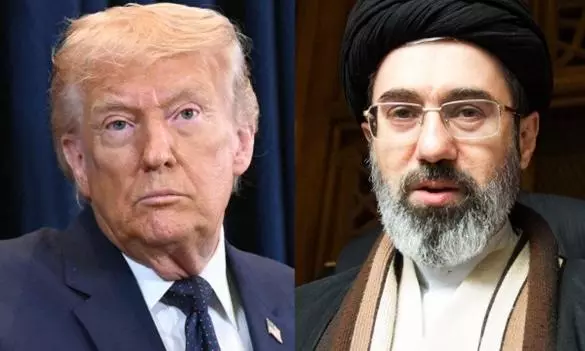
The international media is full of reports that Iran and the US have reached an agreement on a Memorandum of Understanding (MoU), which is to be signed shortly. That will extend the ceasefire for a period of 60 days to enable further negotiations on Iran’s nuclear programme and the lifting of sanctions currently in place against it.
Meanwhile, the details of the MoU have not been authoritatively disclosed, but it is believed that it will contain a provision for the opening of the Strait of Hormuz (SOH). That is what the global community has been waiting for.
Cautious optimism surround talks
While there are overwhelming chances that an MoU will be signed between the two sides, it would be prudent to keep ‘fingers crossed’ because there is always the possibility of the proverbial slip between ‘cup and the lip’ in all negotiations aimed at bringing conflicts to an end. But before considering the possible glitches, it would be useful to consider what Iranian and US leaders and representatives, as well as mediators, are saying. There are also factors within each country, and globally too, which are in favour of an MoU.
Also read | Pakistan says US, Iran may sign deal in 24 hrs; what’s in the ‘Islamabad Agreement’?
At the beginning of this week, Iran downed a US Apache helicopter in the SOH region. This infuriated Trump, who decided to launch several military attacks in different regions of Iran. The Iranians also attacked targets in Israel and US facilities in the Arab Gulf States. Suddenly, it seemed that the ceasefire, which has been in place since April 8, might be in danger because Trump declared that he had decided on a massive attack on Iran. Some doubted if he would do so because he had held out similar threats in the past without carrying them out. This time it was the same.
On the night of June 11 (US time corresponding to the morning of June 12, Iran time), Trump posted on Truth Social: “Based on the fact that discussions with the Islamic Republic of Iran have been brought to the highest level of Iranian leadership and approved, I have, …cancelled the scheduled strikes and bombings against Iran this evening. Discussions and final points have been, in both concept and great detail, approved by all parties involved, including the United States, Israel, Saudi Arabia, UAE, Qatar, Turkey, Pakistan, Bahrain, Kuwait, Jordan, Egypt and others. The Naval Blockade will remain in place till this Transaction is finalized—Time and Place of the signing to be announced shortly”.
Separately, it was indicated that Vice President JD Vance may go to Switzerland to do so. More than 30 hours have passed since Trump’s post, and from Iran too positive indications of a finalisation of the MoU have been given, but no details of the document or where and when it will be signed have been indicated.
Positive signals from Tehran
On June 12, the spokesperson of Iran’s Foreign Ministry told the media that the “final” text of the MoU was being considered by relevant Iranian institutions. More upbeat was his boss, Foreign Minister Abbas Aragchi, who has been involved in the negotiating process. Aragchi posted on X that the deal had “never been closer”. To assuage the sentiments of many Iranians, especially those in the Revolutionary Guards, Aragchi emphasised that Iran would never abandon Hezbollah, which is combating Israel in Lebanon.
The minister also said that the SOH would remain under Iranian and Omani sovereignty. That is not the point. What matters is whether all nations would enjoy the right of innocent passage and whether Iran would not apply a fee or a toll. Aragchi also said that Iran’s nuclear issue, the lifting of sanctions and the unfreezing of assets will be addressed in the stage after the MoU has been signed.
One significant report doing the rounds is that the UAE has agreed to give/release US $10 billion. If this is credible, then it would finesse the issue of the release of Iranian frozen assets by the US and its allies. This was a major sticking point because Trump would have been condemned by his US political opponents for releasing funds to Iran, especially when Trump had criticised Obama for doing so in the Joint Comprehensive Plan of Action (JCPOA).
Pakistani Prime Minister Shehbaz Sharif has also joined the chorus hailing that a deal has been finalised and now awaits signature. Naturally, he wishes to bask in global approbation for his mediation efforts.
Challenges shadow peace efforts
Just as the world wants an MoU so that normalcy can gradually return to global energy markets, there are sections in the US and Iran that also fervently desire the MoU. For the Republicans, the November midterm elections are a factor; they cannot afford to go to the polls with rising inflation. The pragmatists in Iran want to go ahead with the enormous task of reconstruction, and that requires oil revenues, which are currently impaired by the US naval blockade. In addition to the drive for martyrdom, there is also a very practical streak in Iran.
There are snags on the path to the deal. These have the capacity to delay and even derail it, though the possibility is small. There are hardliners in Israel who do not wish to be dictated to by the US and want to defang Hezbollah further. Prime Minister Benjamin Netanyahu is among them. It will require great sternness on Trump’s part to bring Israel to heel.
Also read | Iran-US peace talks show breakthrough as draft ceasefire deal emerges
More confusing is the situation in Iran. For one, there is no authoritative Iranian account of what Supreme Leader Mojtaba Khamenei wants. Certainly, it will not be surprising if he desires guarantees against decapitation strikes in the future. The problem is that the level of Iran-US distrust is so high that it is unclear whether such a credible guarantee can be available. The other important issue is the control of the SOH. It is difficult to imagine any country accepting anything, in the long term, except a return to the status quo ante in this regard.
The situation should become clear in the next few days, if not earlier. The world will be earnestly hoping for an MoU and a return to unimpeded energy supplies from the Gulf. But international relations seldom proceed on hope.
(The Federal seeks to present views and opinions from all sides of the spectrum. The information, ideas or opinions in the articles are of the author and do not necessarily reflect the views of The Federal.)