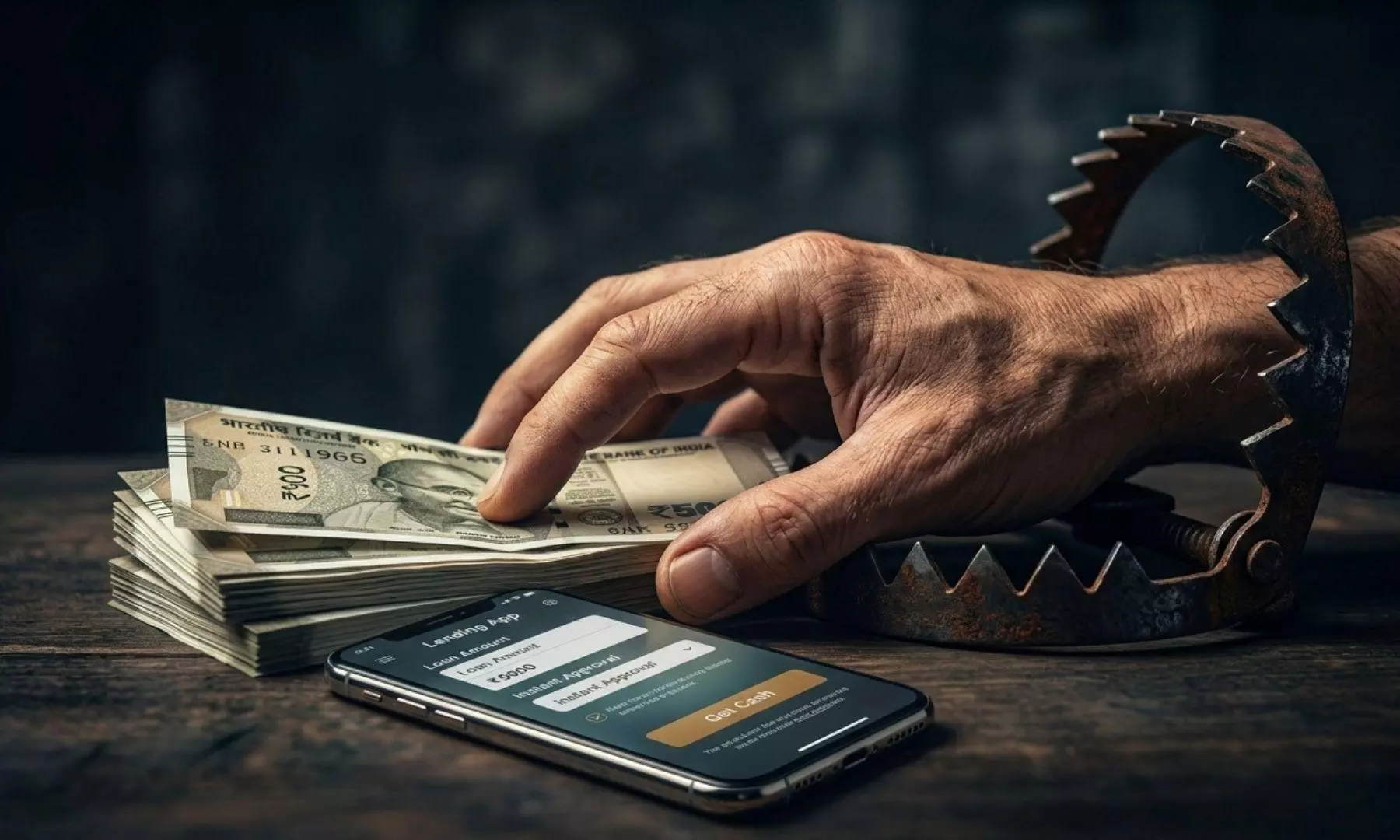
The cycle can become particularly dangerous when one loan is used to repay another.
Personal loans come at a click, but is taking them worth the risk?
While loan eligibility shouldn’t be confused with one’s ability to repay it, a quick loan can turn into a trap when borrowing becomes default solution for every gap in household cash flow

Getting a personal loan in India no longer involves visiting a bank, filling out forms, or speaking to a manager. For millions of borrowers, it can now mean opening a phone app, entering a few details, and receiving money within minutes.
In financial year 2026, digital Non-Banking Financial Companies (NBFCs) and lending apps accounted for more than three-fourths of personal loans by volume. Banks, meanwhile, accounted for only 8 per cent of borrowers, reflecting the very different loan sizes handled by the two channels.
Also read: No surprise visits, threat calls: RBI lays down strict rules for loan recovery
The average digital loan was just over ₹16,000, compared with nearly ₹5 lakh for a bank loan. Banks therefore continued to dominate lending by value, accounting for around 61 per cent of the money lent, while apps have taken over the small, urgent borrowing segment.
Instant access, aggressive recovery
The appeal for borrowers lies in minimal paperwork, no bank visit, and quick access to cash. A borrower needing ₹15,000 urgently can potentially get a loan through an app with just a few taps.
But the same speed that makes digital lending convenient can also make borrowing easier than it should be. People have died by suicide over these debts. Recovery agents have shamed borrowers on social media, harassed their families, and called their relatives and friends, highlighting concerns around aggressive recovery practices associated with some lending operations.
The problem is also part of a wider rise in household borrowing. Household debt in India has climbed to 45.5 per cent of GDP, according to the Reserve Bank of India (RBI), while non-housing retail loans — borrowing used for consumption and other purposes — account for 58.4 per cent of that debt.
Consumption debt
The RBI has said borrower quality has improved, but household debt has remained above its five-year average of 42.9 per cent since September 2023.
That raises a larger question about what Indians are borrowing for. Much of the borrowing is being used for consumption rather than assets that generate wealth.
Also read: No credit history? RBI says banks can’t reject your loan application
A car, for example, may be a genuine need, but it is also a depreciating asset. The borrower continues paying EMIs for years even as the vehicle loses value. Similarly, a phone needed for work differs from borrowing for a larger television, an expensive overseas holiday, or a lavish wedding.
Need or want?
There are, of course, legitimate reasons to borrow. A job loss, pay cut, medical expense not covered by insurance, or a delayed insurance payout can leave households with little choice but to seek credit.
The concern arises when small loans become a routine way to fund consumption — from gadgets and kitchen appliances to festival gifts and other discretionary purchases.
Therefore, the real villain here is not the personal loans but the habit, when borrowing becomes the default solution for every gap in household cash flow.
Debt trap
The cycle can become particularly dangerous when one loan is used to repay another. A borrower may take a second loan to clear the first and then a third to meet the second loan's repayment.
It can continue until one EMI is missed. At that point, instead of managing a single loan, they may be juggling several repayment obligations at the same time.
Also read: Gold or silver: What should you buy now? How do you decide?
This highlights an important distinction: eligibility does not necessarily mean the buyer can afford a certain product. What a lender is willing to offer may be different from what a borrower can realistically repay.
Younger borrowers
Data also shows who is particularly exposed to this trend. Almost 60 per cent of these loans go to people under 35, while nearly 40 per cent go to borrowers in tier-3 cities.
That puts younger borrowers and people in smaller towns, particularly those with tighter incomes, in a position where an unexpected financial shock can leave less room to manage repayments.
The RBI has been cracking down on unauthorised lending apps, while also supporting cybercrime helplines and awareness campaigns around digital lending.
Borrow carefully
Ultimately, regulation is only one part of the solution. Borrowers also need to distinguish between being eligible for a loan and being able to afford it.
The next time a notification says "you are approved", the more important question may not be how much money can be borrowed, but whether you actually need the purchase — and whether you can comfortably repay the loan.