Why it took 4 years for ATM cash withdrawals via UPI to take off
Here’s how cardless cash withdrawal works, its benefits and limitations, why implementation took years after RBI initiative, and what customers should know

India has made rapid shift towards digital payments, but cash continues to play an important role in everyday life. Consumers still need currency for payments in rural areas, small neighbourhood shops, local transport, religious offerings, domestic help, and places where digital acceptance remains limited or unreliable.
Until recently, withdrawing cash almost always required carrying a debit or ATM card. Customers inserted the card into an ATM, entered their PIN and collected cash. While convenient, this method has long been vulnerable to card skimming, card cloning and PIN theft.
Also read | UPI biometric payments: India goes PIN-free with face or fingerprint scans
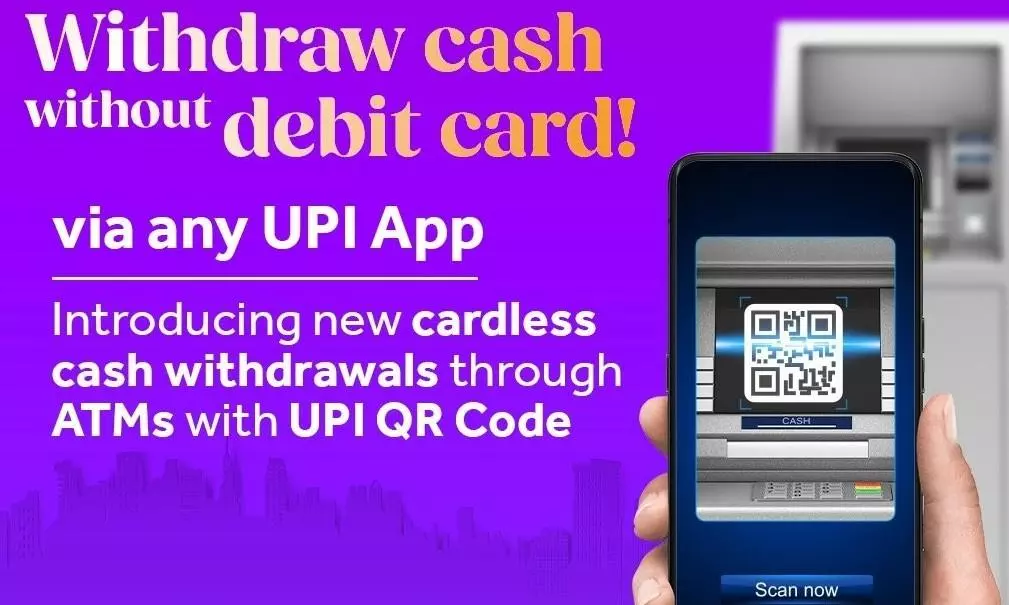
The Reserve Bank of India (RBI) sought to address these risks by enabling interoperable UPI-based cash withdrawals, allowing customers to withdraw cash by simply scanning a QR code displayed on an ATM screen. Although the regulatory framework was introduced in 2022, widespread implementation has taken nearly four years.
Different ways customers make payments
Consumers today use different payment instruments for different purposes.
UPI payments have become the preferred mode for day-to-day retail transactions because they are fast, convenient and accepted by millions of merchants. Yet cash remains necessary in several situations where digital payments are either unavailable or inconvenient.
Credit cards continue to be widely used for higher-value purchases, hotel stays, travel bookings, recurring subscriptions, international transactions and purchases where interest-free credit or reward benefits are attractive.
Debit cards remain relevant despite the growth of UPI. They are accepted internationally, work at merchants that may not support UPI, are useful for ATM withdrawals, and are preferred by customers who wish to spend only from their own bank balances without using credit.
UPI-based ATM withdrawals combine the convenience of digital authentication with access to physical cash, eliminating the need to carry a debit card.
What RBI framework introduced
On May 19, 2022, the RBI issued Circular RBI/2022-23/54 (CO.DPSS.POLC.No.S-227/02.10.002/2022-23) on Interoperable Card-less Cash Withdrawal (ICCW).
The circular permitted banks, White Label ATM operators and ATM networks to offer interoperable cash withdrawals authenticated through the Unified Payments Interface (UPI). Transactions continue to be routed through the National Financial Switch (NFS) operated by the National Payments Corporation of India (NPCI).
Prior to the circular, a few banks offered proprietary cardless withdrawal facilities that worked only for their own customers. RBI’s framework created a common interoperable system allowing customers of participating banks to withdraw cash from any compatible ATM.
How to withdraw cash using UPI
Using the facility is straightforward.
1. Select “UPI cash withdrawal” on the ATM screen.
2. Enter the amount.
3. The ATM displays a dynamic QR code.
4. Open any UPI application and scan the QR code.
5. Authorise the transaction using the UPI PIN.
6. Collect the cash from the ATM.
Unlike conventional ATM withdrawals, no debit card is inserted into the machine.
What does it cost?
For customers, normal savings-bank ATM withdrawal charges continue to apply after the prescribed number of free transactions, irrespective of whether cash is withdrawn using a debit card or through UPI at an ATM. Banks bear the costs of upgrading ATM software, integrating with UPI systems and maintaining the necessary infrastructure.
Why did implementation take so long?
The biggest question is why a customer-friendly initiative announced in 2022 took nearly four years to become widely available.
The RBI circular enabled the facility but did not prescribe a mandatory implementation timeline. Banks were free to decide when to adopt it based on their own technological readiness and commercial priorities.
Also read | New UPI rules effective from today to boost stability, efficiency
Implementation required ATMs to generate secure dynamic QR codes, integrate with UPI platforms, support real-time authentication, process transaction reversals and comply with revised operational standards.
Interoperability further increased complexity because every transaction requires seamless coordination between the customer’s bank, the ATM operator, the UPI application and NPCI’s switching infrastructure.
Banks also had to invest in upgrading ATM software without any significant new revenue stream, making the project less urgent than other digital initiatives.
Minutes of NPCI’s National Financial Switch Steering Committee as recently as 2025 showed that member banks were still being encouraged to complete implementation of reversals and other operational enhancements, indicating that ecosystem readiness was still evolving.
Numbers still missing
Implementation has visibly accelerated over the past two years.
Several major public sector banks—including State Bank of India, Bank of Baroda, Punjab National Bank, Canara Bank, Union Bank of India, Indian Bank, Bank of India and Central Bank of India—have enabled UPI-based ATM cash withdrawals. Among private sector lenders, HDFC Bank, Yes Bank, Federal Bank and City Union Bank have also introduced the facility.
Where implemented, the service generally appears to be available across compatible ATMs operated by those banks rather than only at a limited number of pilot locations. Customers only need to look for the “UPI cash withdrawal” option on the ATM screen.
However, the pace of adoption cannot yet be quantified accurately. Neither the RBI nor the NPCI currently publishes separate statistics on the number of ICCW-enabled ATMs, participating banks, or the daily and monthly volume and value of UPI-based ATM withdrawal transactions. While NPCI publishes comprehensive monthly UPI transaction statistics—23.2 billion transactions worth nearly ₹29.9 lakh crore in May 2026—it does not identify how many of these relate to ATM cash withdrawals. Likewise, RBI’s monthly ATM statistics continue to report aggregate cash withdrawals without a separate category for ICCW transactions.
The absence of such data makes it difficult to objectively assess customer adoption or compare the progress of individual banks. Periodic publication of ICCW statistics by NPCI or RBI would improve transparency, help measure the success of the initiative and encourage faster implementation across the banking sector.
Uneven public disclosure
Banks have adopted different approaches to customer communication. Some have published detailed FAQs and user guides, while others have made little public disclosure regarding implementation. Consequently, many customers discover the facility only when they encounter a compatible ATM.
Greater transparency from banks and the payments ecosystem would improve awareness and encourage wider usage.
The regulatory lesson
UPI-based ATM withdrawals represent a natural extension of India’s digital payments ecosystem by combining digital authentication with access to physical cash.
Also read | UPI transactions to remain free, says RBI Guv Sanjay Malhotra
The experience, however, also illustrates an important regulatory lesson. RBI successfully created an interoperable framework but left implementation entirely to individual banks. Without a mandatory timeline or phased compliance schedule, adoption progressed unevenly across the banking sector.
Future industry-wide initiatives could benefit from clearly defined implementation milestones, periodic progress reporting and public disclosure of participating institutions and infrastructure coverage. Such measures would enable customers to enjoy the benefits of regulatory innovations much sooner.