








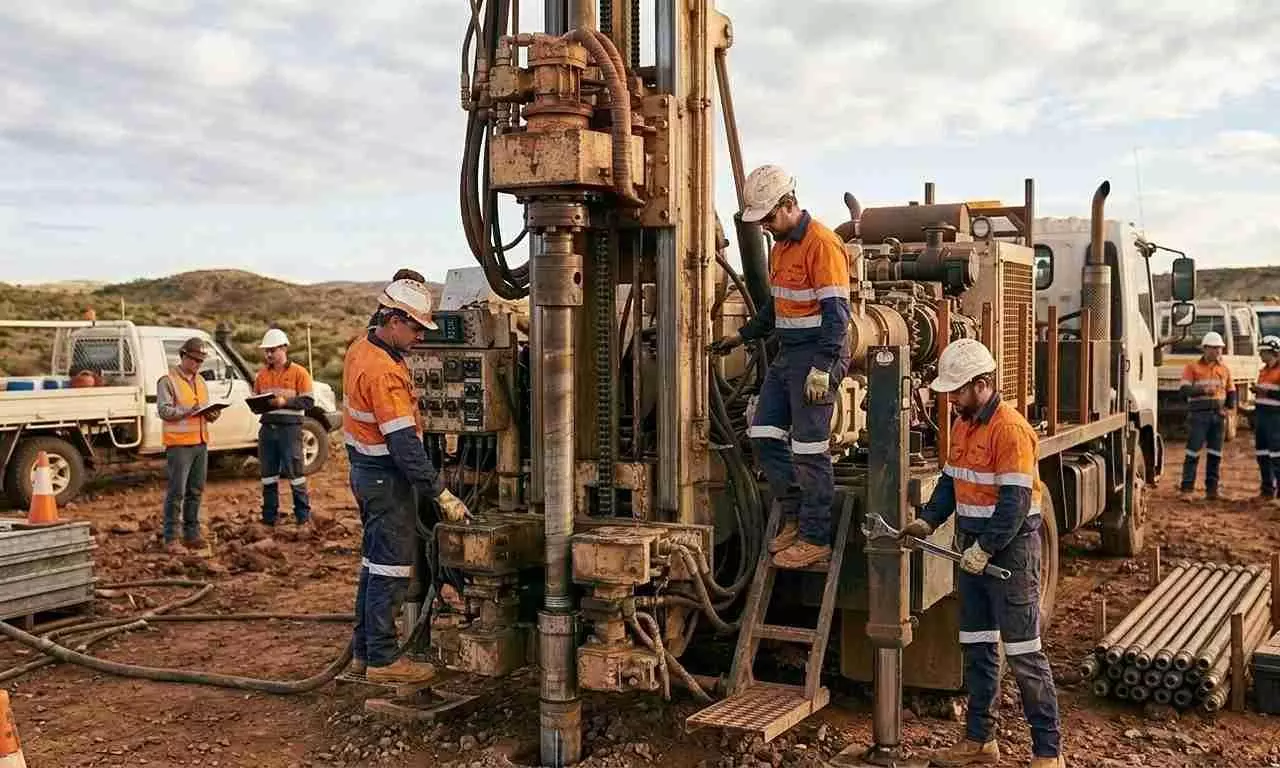
The proposed mine could eventually produce nearly 10,000 tonnes each of nickel and copper annually, although commercial production timelines are yet to be finalised. AI generated image for representative purpose
Why nickel breakthrough in Chhattisgarh could boost India’s EV supply chain
India currently imports a substantial portion of its critical mineral requirements, making domestic exploration strategically important for long-term energy security

Amid India’s growing focus on mineral self-reliance, Deccan Gold Mines Limited has announced the discovery of nickel, copper and platinum group element (PGE) mineralisation at its Bhalukona project in Chhattisgarh, a development that could potentially lead to India’s first integrated nickel-copper-PGE mine.
The discovery comes at a time when India is aggressively trying to reduce its dependence on imported critical minerals required for electric vehicles, battery manufacturing, renewable energy systems and advanced electronics.
What was discovered
According to Deccan Gold, the very first drill hole at the Bhalukona-Jamnidih composite licence area intersected three mineralised gabbro layers with a combined width of more than 60 metres.
Also read: India’s rare earth push targets China reliance, but scale, capacity pose challenges
Deccan Gold reported nearly 30 metres of potentially economic sulphide mineralisation grading above 0.2 per cent nickel equivalent, averaging around 0.4 per cent nickel equivalent. One of the most significant intersections included 2.6 metres containing 1.01 per cent nickel along with copper and palladium mineralisation.
The company said the findings indicate strong commercial potential for a large-scale polymetallic deposit.
So far, around 1,200 metres of drilling has been completed across seven drill holes covering a strike length of nearly 1.3 kilometres.
About the project
The Bhalukona nickel block is spread across nearly 30 square kilometres in Chhattisgarh’s Mahasamund district. The exploration licence was granted to Deccan Gold in April 2025, making it one of the earliest private sector licences issued for nickel-copper-PGE exploration in India.
Also read: US, India close to sealing critical minerals pact: Ambassador Sergio Gor
The project forms part of India’s broader National Critical Mineral Mission, launched to secure domestic supplies of strategic minerals essential for clean energy, defence and high-technology manufacturing sectors.
Deccan Gold Managing Director Hanuma Prasad Modali said, “the discovery validates the geological potential of the region and strengthens India’s emerging critical minerals ecosystem.”
The company now plans to accelerate drilling operations, define a mineable resource and fast-track mining lease approvals.
Why nickel is important
Nickel, copper, platinum and palladium are categorised as critical minerals because of their importance in lithium-ion batteries, EV manufacturing, fuel cells, electronics and industrial catalysts.
India currently imports a substantial portion of its critical mineral requirements, making domestic exploration strategically important for long-term energy and industrial security.
Also read: India joins US-led Pax Silica to strengthen critical minerals and AI supply chains
According to the company, the proposed mine could eventually produce nearly 10,000 tonnes each of nickel and copper annually, although commercial production timelines are yet to be finalised.
Linked projects
Deccan Gold is also associated with the Jonnagiri Gold Project in Andhra Pradesh, considered India’s first private gold mining project in decades.
The Jonnagiri Gold Fields, spread across nearly 598 hectares covering the villages of Jonnagiri, Erragudi and Pagidirayi in Kurnool district, quietly began commercial operations in early May 2026, becoming India's first large-scale private gold mine since Independence.
Also read: Jonnagiri gold mine rises as India battles a growing forex crunch
The Bhalukona discovery is now being viewed as an important early step in India’s attempt to build domestic supply chains for strategically important minerals amid rising global competition for resources.