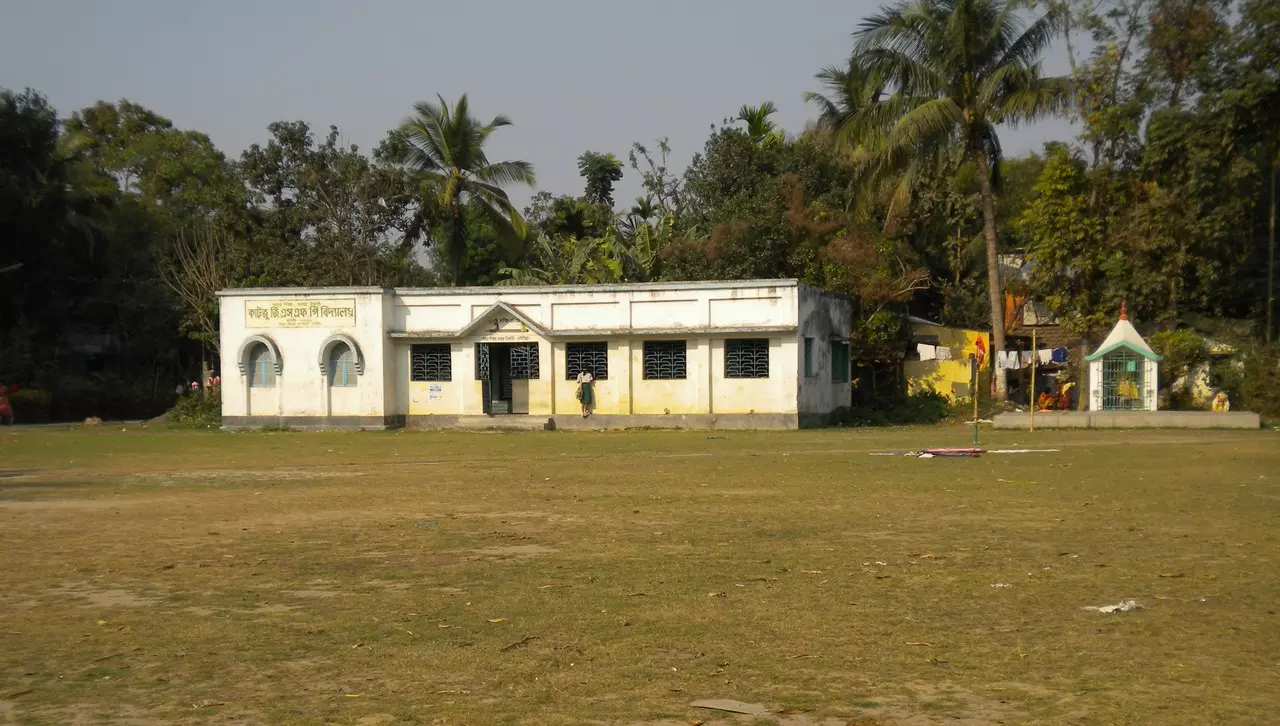
933 schools, one big fear: Is Bengal opening doors to PPP in govt schools?
Officials call it an asset reshuffle for zero-enrolment schools, but a government communique has people wondering if it's back-door privatisation

Are empty classrooms paving the way for privatisation?
That’s the burning question in West Bengal after the state government swooped in to take over the assets of 933 shuttered, zero-enrolment schools. While the government insists it's just putting unused bricks and mortar to work, critics smell a much bigger agenda.
School Education Minister Dipak Barman says the assets will be handed over to the government and examined for possible inter-departmental use. But his department’s September 18 order suggests other plans — it hints at the use or revival of those assets under the public-private partnership (PPP) model.
Perusal by committees
The Suvendu Adhikari-led BJP government in the state is setting up district-level committees headed by district magistrates to decide the future of schools that have recorded zero enrolment. Each committee will include the district education officer, a school inspector and a representative nominated by the district magistrate.
Also read: EC dissent row: How Bengal’s SIR concerns went unheeded
The committees have been asked to inspect the schools, check their land records and infrastructure, and assess whether they can be revived or their properties put to other public uses, including under the PPP model.
Per the order, it is learnt, if revival is not feasible, the authorities may consider using the properties for public service facilities such as health centres or training centres under the PPP model, depending on local requirements.
“Instead of strengthening these schools, the government appears to be looking at ways of putting their assets to other uses,” a teacher representative told The Federal, arguing that the PPP route could eventually take public school infrastructure out of direct government control.
Protest over govt’s move
The concerns are now set to spill onto the streets, with a leading student organisation calling for a “Save Government Schools Campaign” on September 26 to protest the move.
Announcing its protest programme, All India Democratic Students’ Organisation (AIDSO) state secretary Biswajit Roy said the schools had deteriorated because of government neglect and that government property is now being handed over to private hands under a PPP model.
Also read: Fresh trouble for Mamata’s TMC and Abhishek as CID probes Salboni land case
Education Minister Barman, however, sought to cushion the blow, saying there is no decision yet on the PPP model. “No school has joined the PPP model. We have not thought about introducing the model,” he said.
Nevertheless, the government communique mentioning the PPP model has triggered a political row, particularly since BJP-led governments across India have repeatedly been accused by their opponents of favouring greater private participation in education.
Previous govt’s plan
The concerns also stem from an earlier PPP proposal in Bengal. In 2022, the then Trinamool Congress (TMC) government had proposed a policy under which the state would provide land, buildings and infrastructure to private investors to establish schools.
The proposal was put on hold following strong criticism from Left organisations saying it was an attempt to privatise and corporatise school education. Four years later, the debate is again on.
Watch | IIT-Bombay suicide: Is student pressure being overlooked?
The Suvendu government maintains that the current plan is fundamentally different from the then Mamata Banerjee government’s 2022 move. Barman stressed that the 933 schools in question had already stopped operating over the years because they failed to attract enough students, rather than being shut down by the BJP government.
“We will hand over the assets of these schools to the government. Let the government decide,” he said. He added that the immediate focus would be on exploring an “inter-departmental exchange” of unused infrastructure.
Parental preference
Sources in the education department told The Federal that many of the 933 schools were in urban areas, including Kolkata, where parents increasingly prefer private English-medium schools.
That argument again raises a concern: Shouldn't the state government prioritise making these schools viable again, rather than looking for alternative uses of their land and infrastructure?
“If these schools have ended up with zero enrolment because of a shortage of good teachers or poor infrastructure, those problems need to be addressed,” the headmaster of a government-aided school told The Federal. “Using their assets for other purposes could send a wrong message about the future of publicly funded education.”
What UDISE+ report says
Krishnanshu Mishra, secretary of the West Bengal Head Masters’ Association, suggested that the government could respond to the shift towards private schools by recruiting qualified teachers and improving the quality of state-run schools.
“The absence of a clear plan to revive these schools has led to speculation that the 933 institutions could eventually be considered for projects under the PPP model,” he said.
According to the Unified District Information System for Education Plus (UDISE+) 2025-26 report, West Bengal has 4,133 schools with zero enrolment, accounting for nearly 73 per cent of the 5,663 such schools across India. The data also shows that 19,502 teachers are posted at these schools.
The UDISE+ figure, however, is much higher than the 933 schools identified by the state government for the current exercise. The difference is due to the presence of private schools in the UDISE+ database that have reported zero enrolment, department sources said.