








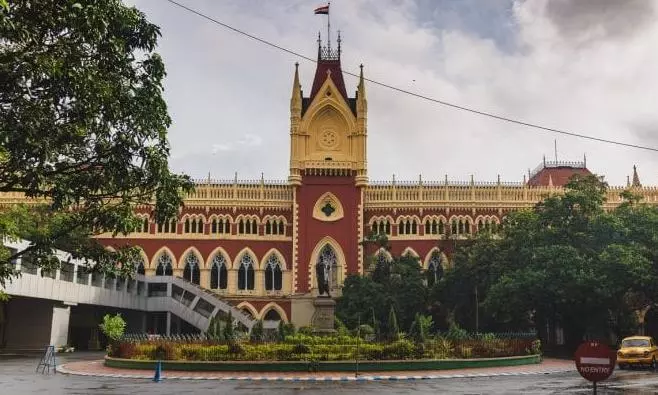
Calcutta HC moots phased compensation to curb fake sexual assault cases
Calcutta High Court recommends phased victim compensation framework to prevent fake cases, capping the initial payout before conviction at 25 per cent

Observing a concerning trend of false complaints in sexual assault cases driven by financial motives, the Calcutta High Court has recommended a phased disbursement framework for victim compensation. The landmark policy proposal aims to prevent the weaponization of legal protections while preserving genuine rehabilitation mechanisms for survivors.
"While the victim compensation scheme is a noble instrument for rehabilitation, the court observes a concerning trend where the prospect of financial gain incentivises unscrupulous individuals to lodge false complaints," a division bench comprising Justice Arijit Banerjee and Justice Apurba Sinha Ray observed. "To balance the necessity of victim support with the protection of innocent citizens, a more rigorous disbursement structure is required."
The proposed framework
The division bench outlined a structured system designed to significantly curtail fraudulent litigation. Under the proposed rules, the initial payout to a victim would be limited to 25 per cent. The remaining 75 per cent would be placed in a savings account under the victim or their family's name only if the accused is found guilty by the trial court. This remaining money will be held and only released after all higher court appeals are completely resolved.
Also Read: Coimbatore girl’s sexual assault and murder spark outrage in TN; two arrested
The court has formally directed the principal secretary of the state’s Judicial Department and the secretary of the West Bengal State Legal Services Authority to review the Pratap Digal vs The State of West Bengal case record and implement the recommended changes across the state framework.
Wrongful incarceration
The policy directives were issued alongside the absolute acquittal of Pratap Digal, a professor at Serampore College in Hooghly district. Digal had been sentenced to 20 years in prison by a special court in 2024 and endured more than four years of wrongful incarceration following a 2022 complaint.
The high court set aside the trial court order, directing the state government to remit Rs 10 lakh directly to Digal’s account within three months as compensation for the avoidable agony and irreparable damage caused to his reputation.
"This prolonged deprivation of liberty was directly precipitated by the gross incompetence of the Investigating Officer, SI Nibedita Koley, and the antagonistic, ethically deficient conduct of the Special Public Prosecutor, Joydeep Mukherjee," the bench stated, holding that the trial judge had allowed a clear miscarriage of justice.
Disciplinary directives in the Digal case
The division bench directed the Director General of Police and the Chairman of the Bar Council of West Bengal to consider initiating formal disciplinary proceedings against the investigating officer and the special public prosecutor for their biased roles in securing the wrongful conviction.
Also Read: SC questions sexual assault charge in long-term consensual live-In relationship case
The court found that the special public prosecutor operated under a severe conflict of interest, having previously represented Digal’s estranged wife in hostile domestic violence proceedings. The cross-examination of prosecution witnesses completely demolished the state’s case, which relied on unverified medical evidence and unreliable, biased testimonies from the estranged family.
"While children are indeed 'supremely important national assets', the stringent provisions of the POCSO Act cannot be weaponised to settle personal scores," the bench observed. Under Section 9(5) of the NALSA Compensation Scheme, the state government retains the liberty to recover the Rs 10 lakh compensation amount directly from the delinquent officials.