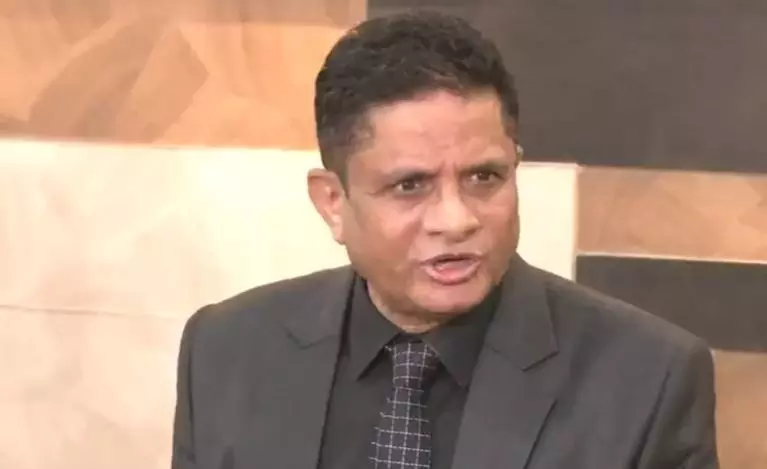
Bengal DGP appointment row: CAT steps in, sets deadlines for govt, UPSC
In an interim order, the tribunal directed the West Bengal government to send a fresh proposal for the DGP empanelment to the UPSC within 48 hours, state government sources informed

The Central Administrative Tribunal (CAT) has stepped in to break a prolonged deadlock over the appointment of West Bengal’s next Director General of Police (DGP).
The tribunal has ordered the state government to immediately restart the stalled selection process and fixed firm deadlines for both the state and the Union Public Service Commission (UPSC) to complete the exercise.
What interim order says
In an interim order, the tribunal directed the West Bengal government to send a fresh proposal for the DGP empanelment to the UPSC within 48 hours, state government sources informed.
Also read: Army seeks Bengal Governor’s intervention over Mamata’s Fort William and SIR claim
It also instructed the commission to convene its empanelment committee by January 28 and forward a panel of three eligible senior Indian Police Service (IPS) officers to the state by January 29.
The ruling comes after months of uncertainty over the leadership of the state police force and ahead of Assembly elections due in March-April.
The delay has raised concerns over administrative continuity and compliance with Supreme Court guidelines on police reforms.
Post vacant since December 2023
The dispute centres on the vacancy that arose on December 27, 2023 following the retirement of Manoj Malviya, the last permanent DGP of West Bengal.
Under the SC’s landmark Prakash Singh judgment, state governments are required to initiate the DGP selection process at least three months before a vacancy arises.
Also read: Mamata Banerjee urges CJI to protect Constitution, democracy amid I-PAC raid row
The aim is to ensure stability, transparency and a minimum fixed tenure for the police chief.
West Bengal, however, sent its proposal to the UPSC only on July 16 last year, well over a year after the vacancy occurred. The delay triggered objections from the commission, which said the proposal did not meet the prescribed timeline and raised procedural concerns.
After reviewing the submission, the UPSC returned the proposal to the state government on December 31. It said that such a delayed reference should have been accompanied by prior approval from the SC.
Commission’s warning
The commission also warned that proceeding without legal clarity could expose it to contempt proceedings.
The tribunal’s intervention followed a petition filed by Rajesh Kumar, a 1990-batch IPS officer currently holding a senior administrative position in the state government.
Kumar argued that he met all eligibility criteria for consideration as DGP when the vacancy arose but was denied a fair opportunity due to administrative delays.
During the hearing, the tribunal agreed that the “right to consideration” of eligible officers could not be compromised by procedural lapses.
It said that administrative inefficiencies or inter-institutional disagreements cannot be allowed to prejudice individual officers.
The tribunal also ruled that once an empanelment process has been initiated, authorities cannot alter the rules or introduce new interpretations midway.
Any such change, it said, would undermine fairness and legal certainty.
Acting DGP
At the same time, the tribunal clarified that the delay in initiating the process was attributable to the state government, not the UPSC. However, it stressed that officers should not suffer the consequences of that delay.
The order has immediate implications for West Bengal’s police leadership.
The state is currently headed by an acting DGP, Rajeev Kumar, who is due to retire from that post on January 31.
The absence of a permanent police chief has prompted speculation that the government may once again rely on an interim arrangement if the process is not completed in time.
The issue has also drawn political attention. Opposition leaders have accused the ruling Trinamool Congress government of deliberately delaying the process to retain control over police leadership.
The state government has rejected the allegation but has offered a limited public explanation for the delay.
What legal experts say
Legal experts say the tribunal’s deadlines leave little room for further postponement. Failure to comply could expose both the state government and the UPSC to further judicial scrutiny.
Under existing rules, the UPSC prepares a panel of three senior IPS officers after assessing eligibility, service records, and integrity.
The state government must then select one name from the panel for appointment as DGP. The process is meant to shield police leadership from political interference and ensure continuity in law enforcement.
The tribunal has scheduled the next hearing in the case for March 11. Until then, it expects strict adherence to the timeline it has laid down.