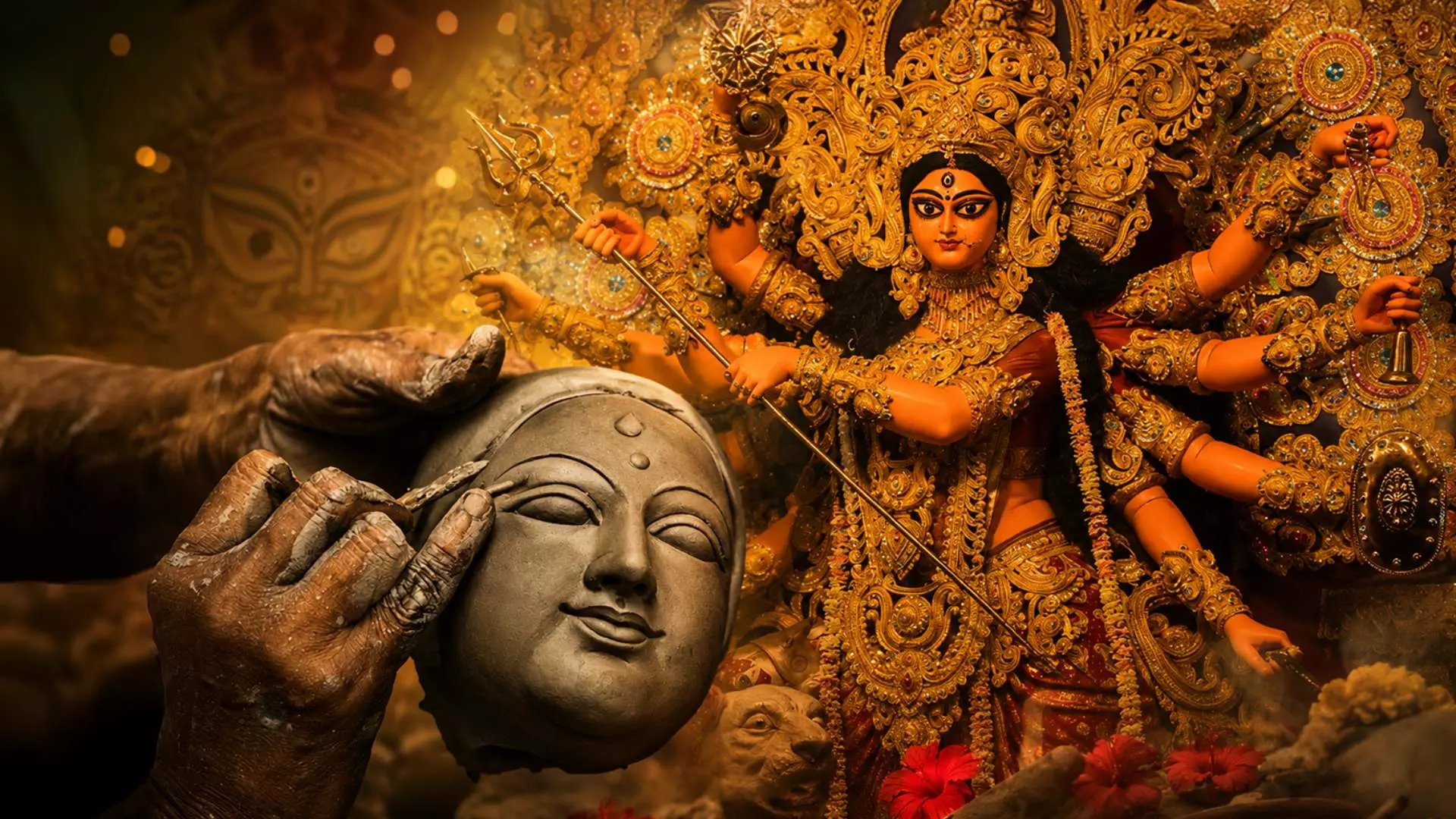
How Kumartuli clay crisis has cast a shadow on Durga Puja tradition and economy
With Puja less than 5 months away, restrictions on clay extraction have left Kumartuli's idol makers worried about their future. Will a solution arrive in time?

Kolkata's iconic Kumartuli, the centuries-old hub of idol-making, is facing an unprecedented crisis ahead of Durga Puja 2026. With less than five months left for Bengal's biggest festival, artisans say the supply of essential clay used to make Durga idols has nearly stopped, threatening production schedules and the livelihoods of thousands who depend on the annual celebration.
For generations, idol makers in Kumartuli have relied on a special type of sticky black clay known as entel maati. Mixed with Ganga maati, the sacred silt collected from the Hooghly river, it forms the foundation of traditional Durga idols. Without it, artisans say, the idols cannot be crafted in the manner that has been followed for centuries.
The shortage comes at a crucial time, as workshops usually begin preparations months in advance to meet domestic and international orders before the festival season.
Clay shortage
According to artisans, the disruption began after the new BJP government in West Bengal launched a crackdown on illegal sand and soil mining following the 2026 Assembly elections.
Also read: Durga Puja politics: BJP faces test in dismantling TMC’s festival grip
The government, led by Chief Minister Suvendu Adhikari, reportedly tightened restrictions on clay extraction from riverbanks in a bid to curb environmental damage and illegal mining activities.
While the move was intended to regulate extraction and protect river ecosystems, artisans say it has also disrupted the traditional supply chain that Kumartuli depends on. Many clay suppliers who had been collecting soil from riverbanks for generations reportedly do not possess formal licences and are now unable to continue their work.
Artisans worried
Speaking to The Federal, artisan Prasanta Gopal, who runs Shilpo Kendra, one of Kumartuli's prominent idol-making workshops, described the situation as alarming.
"Nauka maati (clay supplied by boat) has already stopped arriving. Now even the lorries carrying clay are not coming," he said.
He warned that the issue extends beyond delayed idol production.
Also read: Bengal's Durga Puja economy hits record Rs 65,000 crore amid rains, GST pause
"It is about the artisans' livelihoods. It is difficult to pay them if there is less or no work at all."
Artisans also point out that idols need to be dried during the monsoon months so they are ready before the festival. Any delay in obtaining clay could significantly affect production timelines.
The situation has been compounded by rising clay prices, increasing production costs for workshops that are already operating on thin margins.
Wider impact
The consequences of the shortage extend far beyond idol sculptors.
A large ecosystem of workers, including bamboo suppliers, straw workers, painters, transporters, packers and small traders, depends on Durga Puja-related activities. Thousands of families earn a substantial portion of their annual income during the festival season.
Also read: Durga Puja 2025: Bengal’s economy rebounds, likely to touch Rs 50,000 cr
For many of these workers, Durga Puja is not merely a cultural celebration but an economic lifeline that supports households throughout the year.
Industry representatives fear that prolonged disruption could affect the entire festival economy associated with Bengal's biggest annual event.
Appeals made
Alarmed by the situation, two major idol-makers' organisations have already appealed to the state government.
The Kumartuli Mrit Shilpi Sanskriti Samiti and the Canal East Road Mrit Shilpi Samiti have both urged the government to intervene before the situation worsens.
A delegation of artisans, led by veteran sculptor and Padma awardee Sanatan Rudrapal, also met BJP leader Swapan Dasgupta and sought his assistance in resolving the issue. Dasgupta subsequently appealed to the chief minister to address the matter urgently.
Tradition at stake
Artisans warn that if the clay shortage continues, many workshops may be forced to shift to alternative materials such as fibre or fibreglass.
While such substitutes may allow idols to be produced, craftsmen argue that they cannot replace the traditional clay idols that have been central to Durga Puja for generations.
Also read: At Kolkata’s Kumartuli, Durga is non-conformist, unconventional
For them, clay carries cultural, religious, and emotional significance. It is sourced from Bengal's rivers, shaped by hand, and forms an integral part of the festival's identity.
As Durga Puja draws closer, artisans say time is running out. They hope the government can find a solution that balances environmental protection with the needs of the craftsmen whose livelihoods depend on the annual festival.
For Bengal, the issue is about more than just clay. It is about preserving a tradition, sustaining an economy, and protecting a cultural identity that has endured for centuries.
(The content above has been transcribed from video using a fine-tuned AI model. To ensure accuracy, quality, and editorial integrity, we employ a Human-In-The-Loop (HITL) process. While AI assists in creating the initial draft, our experienced editorial team carefully reviews, edits, and refines the content before publication. At The Federal, we combine the efficiency of AI with the expertise of human editors to deliver reliable and insightful journalism.)