Gangasagar mela 2026
Gangasagar Mela 2026: How lakhs of pilgrims journeyed to the sea on Makar Sankranti
At the confluence of the Ganga and the Bay of Bengal, lakhs gathered on Makar Sankranti for a once-in-a-lifetime holy dip

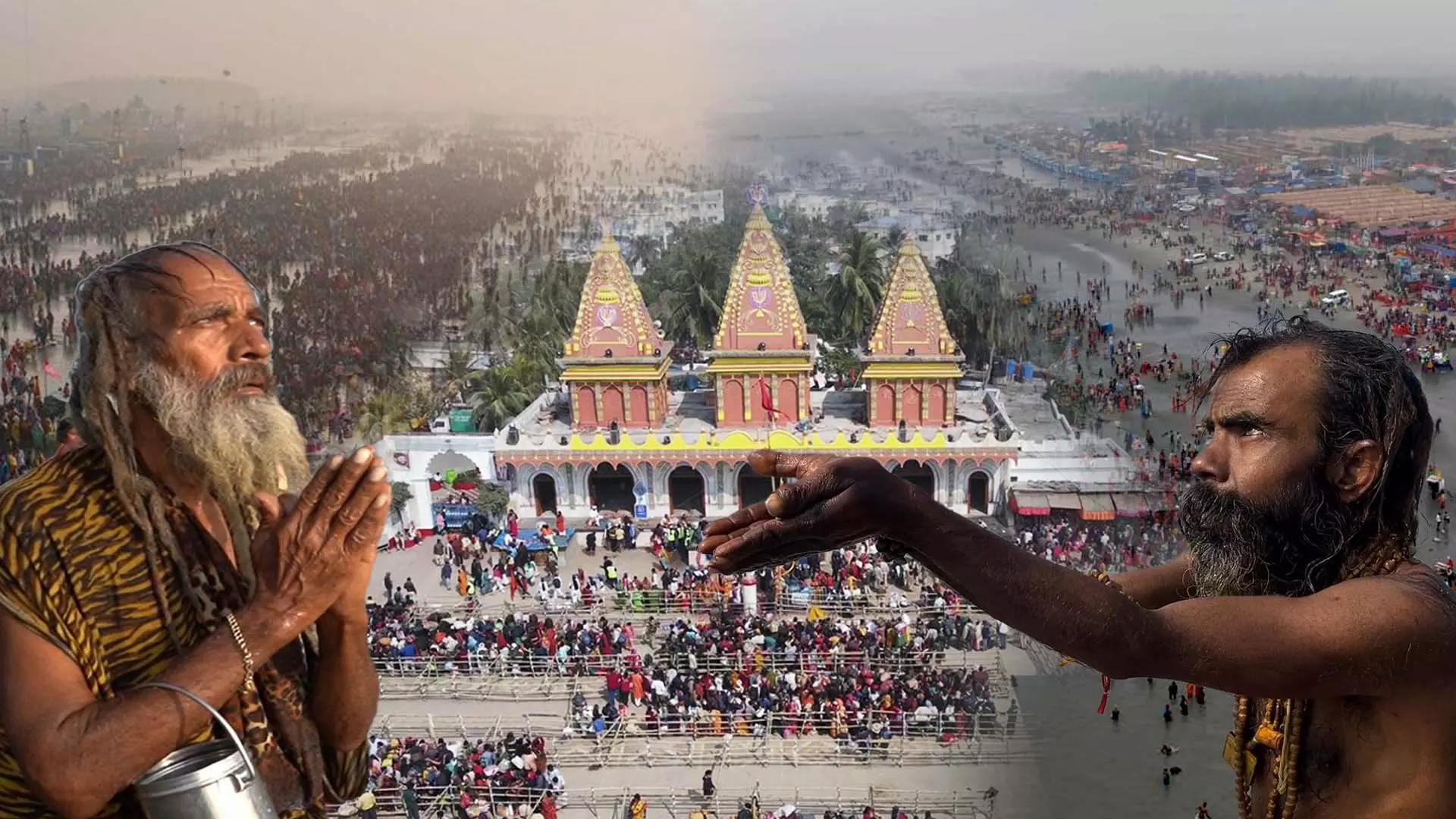
As the sun rises on Makar Sankranti, Sagar Island, around 130 km from Kolkata, transforms into a vast expanse of devotion. Lakhs of pilgrims gather at Gangasagar, where the sacred River Ganga meets the Bay of Bengal, drawn by faith that has endured for centuries.
Wrapped in shawls against the winter chill, devotees arrive before dawn, carrying belongings, prayers, and belief. For many, the journey itself is an act of endurance. The destination is the same: the water’s edge, where a holy dip is believed to cleanse sins and open the path to salvation.
This annual pilgrimage, one of the largest religious gatherings in eastern India, unfolds across rituals, processions, cultural performances, and quiet moments of reflection, turning the island into a living tapestry of faith.
The holy dip
From the early hours, long queues form along the riverbank. Men, women, and children move steadily toward the water, hands folded and eyes closed.
The act of stepping into the cold waters is central to the Gangasagar mela. Devotees believe that bathing at this confluence on Makar Sankranti holds special spiritual significance, offering purification and spiritual merit.
For many pilgrims, the moment is deeply personal, marked by silent prayers rather than spectacle.
Journeys of faith
Pilgrims travel from Bihar, Jharkhand, Uttar Pradesh, Odisha, Rajasthan, and other parts of the country. Some take days to reach Sagar Island, navigating trains, buses, ferries, and long walks.
Temporary tents line the island, sheltering families who have made the journey together. The crowd is diverse in age, language, and background, united by shared belief.
Sadhus with ash-smeared bodies move among the devotees, some offering blessings, others lost in prayer or playing simple instruments like the duggi.
Sacred beliefs
Gangasagar’s significance is rooted in ancient belief. Scriptures associate the site with Maharishi Kapil, who is believed to have meditated here.
According to legend, the souls of King Sagar’s sons attained liberation after the descent of the Ganga at this very spot. The saying “Sab Tirtha Bar Bar, Gangasagar Ek Bar” reflects the belief that a single visit here equals many pilgrimages elsewhere.
Women exchange vermilion after the holy dip, while sadhus offer prayers to the Sun God along the riverbank.
Toward Kapil Muni
As the day progresses, large processions move along the beach toward the Kapil Muni Temple, the spiritual centre of Gangasagar.
Statues of Goddess Ganga are carried through the crowds, while volunteers and authorities guide pilgrims in disciplined queues. Drone shots reveal the scale of the movement, with streams of people converging on the temple.
Despite the sheer numbers, the atmosphere remains largely orderly, shaped by shared purpose and devotion.
Culture on sands
Beyond ritual, the mela becomes a celebration of culture and folklore. Organised performances accompany the Ganga Aarti, blending devotion with dance and music.
Characters from popular culture and mythology appear among the crowds, including devotees dressed as Shiva and performers portraying Gopal Bhar. These moments add colour and familiarity to the spiritual gathering.
The sands of Sagar become a space where mythology, tradition, and contemporary life intersect.
Night prayers
As night falls, Gangasagar takes on a quieter rhythm. The Kapil Muni Temple glows under decorative lights, while lamps flicker across the island.
Pilgrims rest near tents, sharing meals and conversations after a long day. Prayers continue, softer now, carried by the sound of waves and the hum of devotion.
The island remains awake well into the night, sustained by belief rather than movement.
Voices of pilgrims
Pilgrims speak of faith, fulfilment, and perseverance. Kavita Saha, a housewife from Kolkata, describes the journey as spiritually rewarding despite physical hardship. Ranjana Devi, a teacher from Jharkhand, speaks of returning year after year as an act of devotion.
Nilam Gupta from Patna, Bihar, reflects on the belief passed down through generations. Parthapratim Guha, a former government official from Kolkata, calls Gangasagar a reminder of India’s enduring spiritual traditions.
Their voices reflect a shared sentiment: the journey is as meaningful as the destination.
Eternal flow
As tides rise and fall, pilgrims continue to gather at the river’s edge. The waters move on, but Gangasagar remains a timeless witness to belief that flows deep within India’s spiritual landscape.
Each year, faith brings people back to this confluence, where ritual, memory, and devotion meet the sea.
The content above has been transcribed from video using a fine-tuned AI model. To ensure accuracy, quality, and editorial integrity, we employ a Human-In-The-Loop (HITL) process. While AI assists in creating the initial draft, our experienced editorial team carefully reviews, edits, and refines the content before publication. At The Federal, we combine the efficiency of AI with the expertise of human editors to deliver reliable and insightful journalism.