VB-G RAM G sputtering in Bengal despite BJP's double-engine sarkar
Over 85 pc of gram panchayats report zero expenditure months into the revamped 125-day wage programme, trapping millions of rural households in limbo

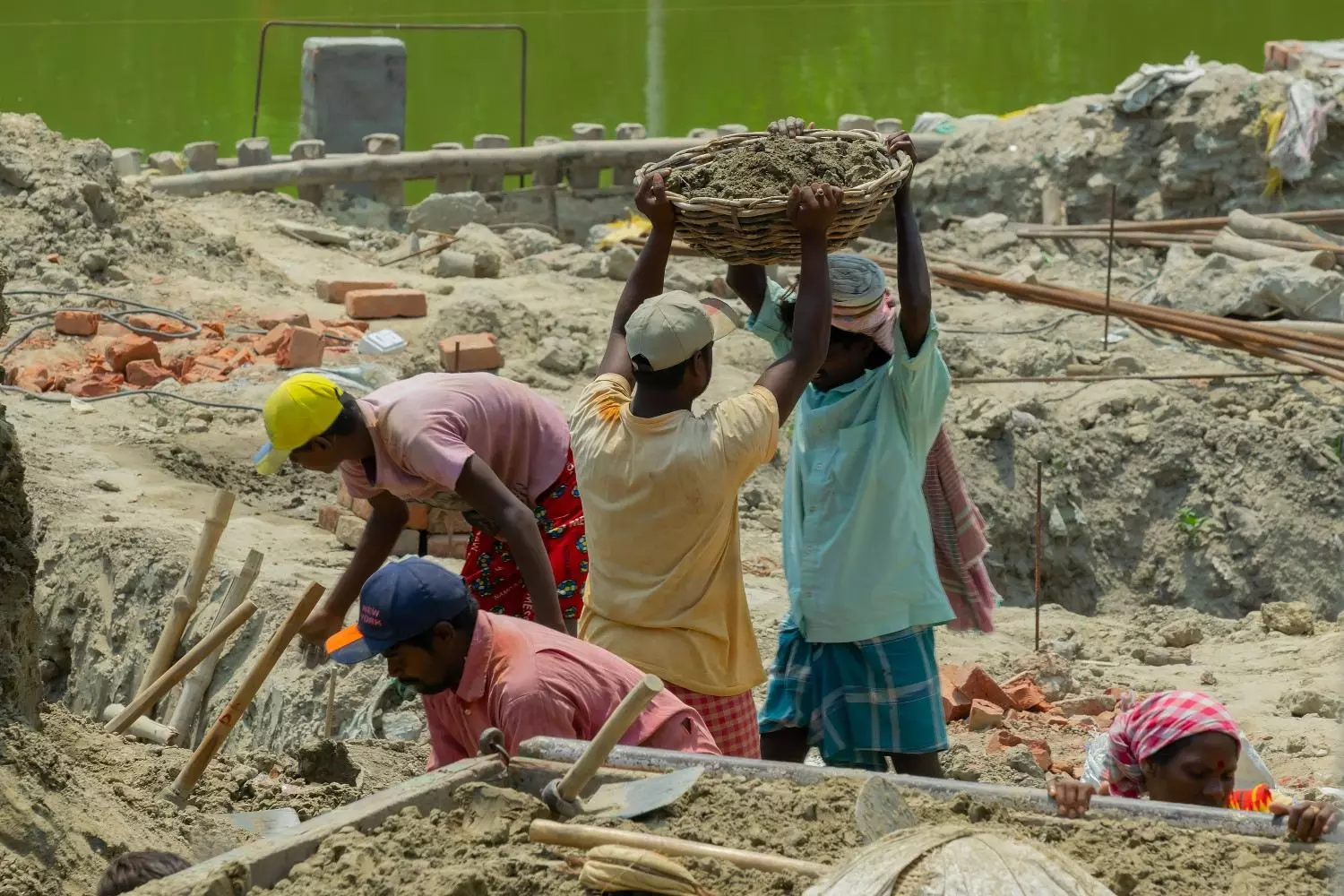
In Kachukhali gram panchayat under Gosaba block in South 24 Parganas, the Centre’s new 125-day rural employment scheme has barely moved beyond paper more than two months after its launch.
Of the panchayat’s 13 booths, work has begun in only three, that too without the full strength of workers, according to panchayat sources. So far, they said, the only work undertaken has been tree plantation.
Kachukhali’s experience reflects a wider problem confronting West Bengal’s BJP government as it tries to revive rural employment after the long suspension of the earlier MGNREGA scheme.
The nil expenditure crisis
Official figures show that the new rural jobs programme had barely translated into spending across much of the state’s gram panchayats by early September.
Also read: 50 pc drop in VB-G RAM G: ‘Financial stress on states, pause option to blame’
Government sources citing Central data said that 2,845 of the state’s 3,339 gram panchayats had not recorded any expenditure under Viksit Bharat – Guarantee for Rozgar & Ajeevika Mission (Gramin) (VB-G RAM G) more than two months after the scheme was launched on July 1.
In effect, only about 15 per cent of the state’s panchayats had reported spending under the new rural employment programme.
The new VB-G RAM G scheme was notified nationally from 1 July 2026, replacing MGNREGA and increasing the statutory employment guarantee from 100 to 125 days.
The gap was considerably wider than the national picture. Government sources, citing the same Central data, said 66,061 of the country’s 2,69,521 gram panchayats had reported nil expenditure, accounting for 24.51 per cent of all panchayats.
Political implication
The slow rollout assumes political significance because the BJP government had projected the restoration of rural employment as one of the benefits of a “double-engine” government, after the Centre stopped releasing MGNREGA funds to the then Trinamool Congress (TMC) government from 9 March 2022, despite a subsequent court directive to resume the scheme.
Also read: Congress calls VB G RAM G another assault on 'fragile fabric of federalism'
The new VB-G RAM G scheme was notified nationally from 1 July 2026, replacing MGNREGA and increasing the statutory employment guarantee from 100 to 125 days.
West Bengal’s new BJP government had identified around 2.56 crore job-card holders for the 125-day guarantee before the launch.
The poor implementation is also reflected in the pace of employment generation. A recent state government’s assessment showed that only 38,792 person-days were being generated each day, against an internal target of around 80,000 to one lakh. The figure rose to 52,499 by last week, but remained well below the target.
What state government says
The data suggest that even where work had begun, the scale of employment generation was still limited.
The state government attributed the slow start to a combination of factors. Officials pointed to the transition from the old 100-day scheme to the new 125-day programme and the short interval between the resumption of rural employment and the introduction of VB-G RAM G as reasons for the patchy rollout.
They have also cited prolonged monsoon rains and waterlogging, the verification and removal of ineligible beneficiaries, and the migration of rural workers who had left Bengal during the long suspension of MGNREGA.
Also read: IPS officer Bushra Bano’s sudden transfer sparks row over faith-linked video
The absence or non-functioning of elected panchayat leadership after the change of government has also complicated implementation, according to state government sources.
The government has curtailed the financial powers of panchayat pradhans and brought in provisions for appointing administrators in gram panchayats, but officials acknowledge that restoring the administrative machinery at the grassroots has taken time.
Strengthening mechanisms
A slew of recent orders issued by the Panchayat and Rural Development department on implementation of the scheme suggests that the administration is still strengthening its digital, planning and payment mechanisms, rather than translating sanctioned works into actual employment and expenditure.
In Sonamukhi block in Bankura, recent official notices show that tenders were being issued for supplying materials for VB-G RAM G works, indicating that at least some panchayats had progressed to the execution stage.
For instance, an order issued earlier this month called for the expeditious completion of pending digital-signature enrolment and de-enrolment, along with the generation and digital signing of XML (Extensible Markup Language) files required for processing scheme transactions.
Another order issued around the same time dealt with the verification of job-card holders for employment linked to rural housing, as well as procedures for worker identification, attendance, wage payments and the preparation of gram panchayat plans.
These orders suggest that the employment scheme is still struggling to settle into an effective administrative rhythm, even as the government seeks to accelerate implementation on the ground.
Meanwhile, Panchayat Minister of State Shantanu Pramanik expressed confidence that the pace will accelerate. “Special meetings have begun with the blocks that are lagging behind. We are also visiting districts and carrying out reviews and monitoring to take steps to accelerate the work. Overall, work will progress rapidly after the Puja. We are confident,” he told The Federal.
Migrant workers identification
The officials said in some areas the scheme implementation is by and large satisfactory.
In Nadia, for instance, work has begun in several gram panchayats, with some projects completed and others delayed by rain, they claimed.
In Sonamukhi block in Bankura, recent official notices show that tenders were being issued for supplying materials for VB-G RAM G works, indicating that at least some panchayats had progressed to the execution stage.
The state government has also tried to increase the pool of potential beneficiaries by launching a drive to identify more than 22 lakh migrant workers and bring eligible workers back into the rural employment system.
The limited progress in some areas, however, did not offset the wider shortfall in employment generation and expenditure across the state. With much of the scheme implementation still stuck in administrative processes, the government needs to speed up work at the panchayat level and ensure that the promised jobs actually reach rural workers.