West Bengal Census: Fearing welfare cuts, households undercount assets
Amid tight verification of welfare schemes under BJP govt, residents fear they would lose access to benefits if they reveal full assets, living standards and income to census enumerators

West Bengal’s ongoing census exercise has run into an unusual problem, with many households allegedly understating their assets, income and living conditions amid fears that disclosure could affect access to welfare schemes.
The curious trend appears to stem from misgivings that information disclosed to census enumerators could eventually be used to assess eligibility for government benefits, amid tighter verification of welfare schemes under the BJP government.
‘People hiding standard of living’
Census workers from across districts have reported that during the survey households allegedly concealed ownership of cars, motorcycles, tractors and agricultural machinery.
Also read: Phase 2 of Census: Centre sets 40 questions; caste, COVID details to be sought
Some are also said to be understating the size and quality of their homes or portraying members of joint families as separate households.
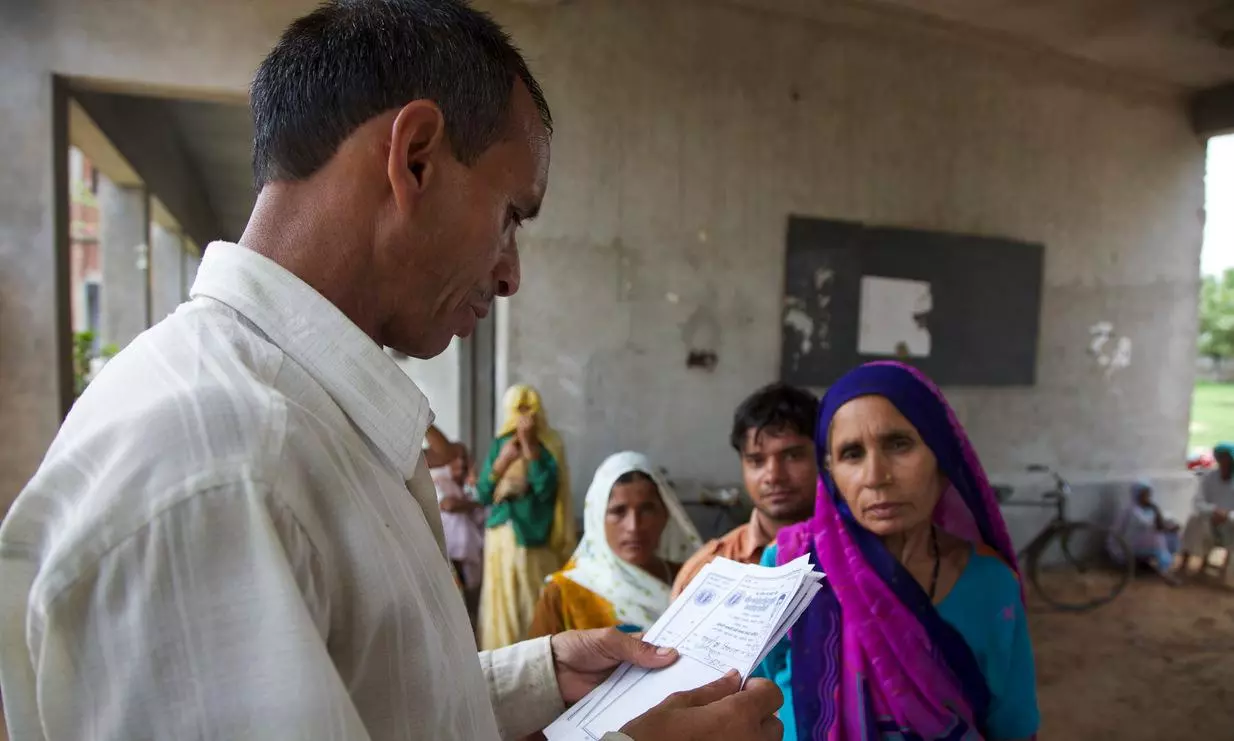
A census enumerator in North 24 Parganas’ Habra II block, Ram Prasad Das, told The Federal that several cases of concealment and understatement of assets came to light during the exercise and were reported to higher authorities.
“Despite having many things right in front of our eyes, the answer to the questions is simply ‘No, no, no, no’,” another enumerator said.
“TVs and bikes are visible in almost every household, yet people still say ‘No’,” the enumerator said, adding that the number of motorcycles reported in the survey was surprisingly low compared with what field workers saw during visits.
Why accurate data is essential
The enumerator also said some households were allegedly understating the quality of their homes.
“There is a proper concrete roof over the house, yet people say it is made of tiles, tin or asbestos,” the worker said.
In some cases, residents allegedly showed a kitchen as their house instead of the larger, better-built structure on the property.
Also read: Kharge, Rahul slam census format, warn of ‘misleading’ caste data
The consequences of such concealment are significant, as accurate Census data are crucial for government planning and resource allocation, according to government officials.
“They help authorities assess demand for housing, water, sanitation, healthcare, education, transport and other infrastructure, while providing a detailed picture of living conditions across regions. Concealing assets or understating household conditions could distort the data and lead to flawed planning and resource allocation,” one of them said.
Residents link census with schemes
Many residents, however, are wrongly linking the exercise to access to state government welfare schemes, amid the expansive eligibility criteria and stringent verification processes introduced by the new BJP government for most welfare schemes.
Several enumerators said residents have also asked why they are not receiving benefits under schemes such as Annapurna, prompting workers to explain that the census is a separate exercise and does not determine eligibility for welfare benefits.
Also read: Data glitches, outdated maps: Why India’s census is stumbling on the ground
The concern stems from the fact that eligibility rules for several welfare schemes involve household circumstances that overlap with information census workers collect, including income, housing conditions, landholdings and ownership of vehicles and agricultural equipment.
Under the Annapurna scheme, women are eligible for Rs 3,000 a month only if they meet prescribed economic and social conditions. The criteria include a monthly income of no more than Rs 10,000 and total family income of no more than Rs 12 lakh a year.
Why beneficiaries fear details
The scheme also has asset-related restrictions. Women owning more than 50 decimals of land in municipal corporation areas are excluded, while families living in larger three-room or pucca houses in rural areas are also outside the scheme.
These conditions are making some families hesitant to give census enumerators complete information about their income, house and assets, enumerators pointed out.
The state government has so far extended Annapurna benefits to 1.45 crore beneficiaries, as against 2.42 crore beneficiaries under the Trinamool Congress’s Lakshmir Bhandar scheme, which was largely universal.
Also read: Census, delimitation a 'single spectrum test' for democracy: GN Devy
The same eligibility concern applies to health benefits. West Bengal has joined Ayushman Bharat PM-JAY, which has income, housing and asset-related conditions for identifying eligible families.
Households owning a motorised vehicle or living in a pucca house with more than one room can be excluded. Families with a member earning above the prescribed limit or paying income tax can also be excluded.
Housing assistance under Pradhan Mantri Awas Yojana-Gramin too has direct asset-related exclusions. A household can be excluded if it owns a pucca house or a house with more than two rooms, a motorised three- or four-wheeler or mechanised agricultural equipment.
Wary residents disown vehicles
“The shift towards tighter verification and more targeted eligibility has therefore created a direct connection in the minds of some people between the information sought by census workers and the criteria required to get government assistance,” said veteran journalist and author Amal Sarkar.
Also read: How Census 2027 could alter India's political landscape
For residents, ownership of a motorcycle or car, a tractor or threshing machine, the number of rooms in a house, its construction quality and household income can all be viewed as sensitive information, as reflected in field reports from different districts.
In West Midnapore’s Garhbeta III block, census workers recently tried to record a car parked outside a house. The family allegedly insisted that the vehicle did not belong to them, prompting administrative intervention to resolve the issue.
Garhbeta III BDO Dipanjan Bhattacharya acknowledged the incident but declined to comment further.
In rural areas, census workers said, families with tractors, paddy-threshing machines, motorcycles and cars were describing some of those assets as belonging to relatives or friends.
Some households with more than two rooms were also allegedly trying to conceal this information.
Challenge for census workers
In some cases, people have allegedly tried to avoid enumeration altogether, even resorting to threats when census workers reached out to them.
Jeba Nasrin, an enumerator in East Burdwan district, was threatened and verbally abused over the phone after trying to contact a family for census enumeration, The Federal reliably learnt.
Nasrin found the house locked when she visited and left her personal phone number, asking the family to contact her. The person later called and allegedly threatened her. Nasrin informed her supervisor about the incident and expressed concern about her security while carrying out her census duties.
Also read: Census 2027: Online self-reporting, mobile apps, and what it means for households
For enumerators, the difficulty is that they must record the information households provide and are not generally expected to independently verify it.
West Bengal’s house-listing phase of the exercise began on August 16 and is scheduled to continue until September 14. The exercise involves enumerators visiting households and collecting prescribed information, according to state Director of Census Operations Nikhil Pawan Kalyan.
The first stage saw more than 53 lakh households complete self-enumeration, accounting for nearly one-fourth of the estimated households in the state.