



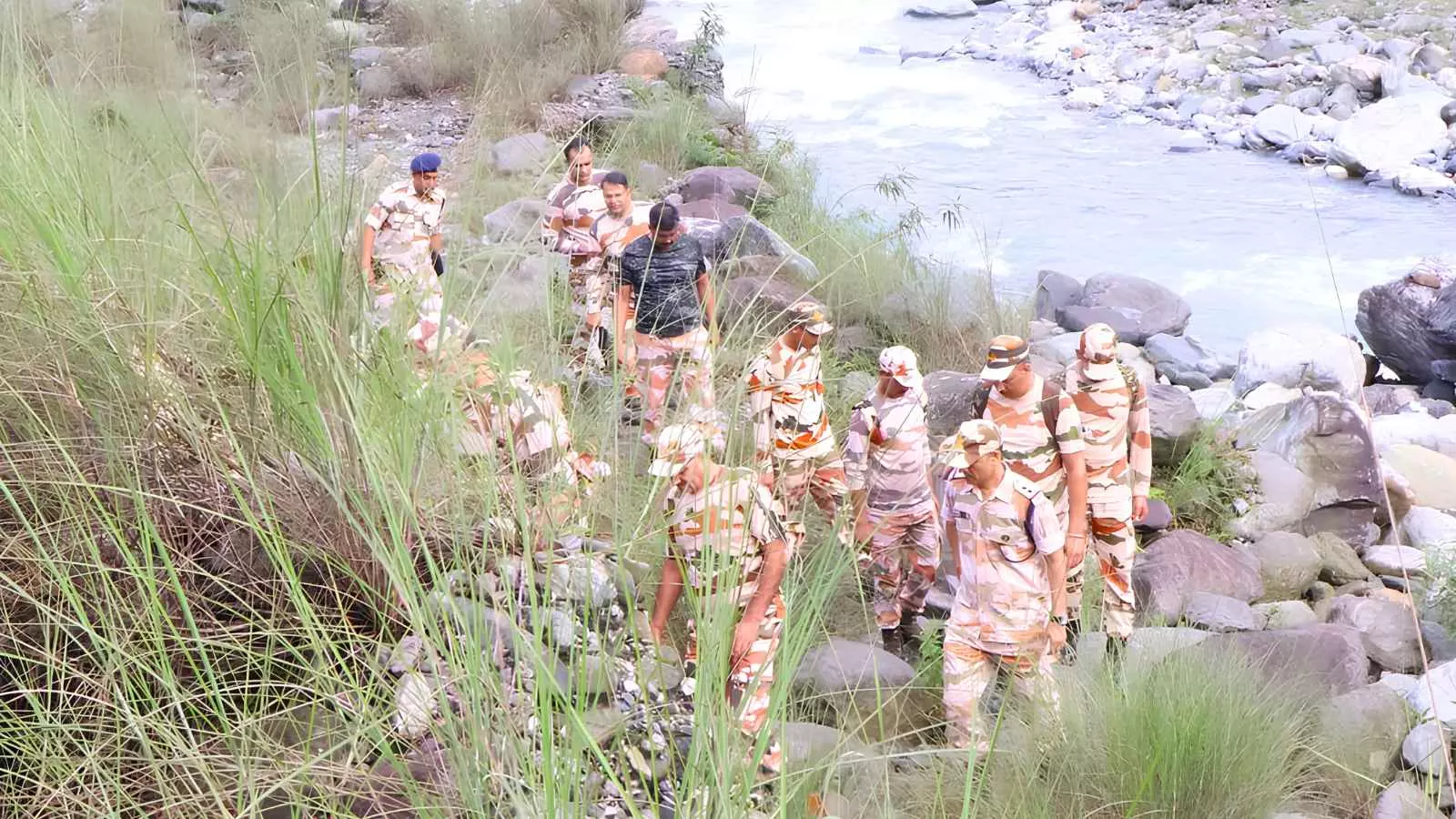
ITBP Arunachal row: Face-offs on unmarked border not unusual, says China expert
As long as encounters don't escalate into physical clashes and injuries, they need not be seen as worrisome, says Alka Acharya of Institute of Chinese Studies

Reports of Chinese incursions along the Arunachal Pradesh border are not new. The government has occasionally denied or ignored such reports because they came from unofficial sources, even as villagers in border areas often raise the alarm. Locals have reported Chinese incursions near Taksing in Arunachal Pradesh's Upper Subansiri district since August, but government sources have not confirmed them.
But late Thursday (October 22), Shatrujeet Kapur, Director General of the Indo-Tibetan Border Police (ITBP), spoke publicly about continuing face-offs between the People’s Liberation Army (PLA) and Indian troops in Arunachal Pradesh and used the word "ongoing.’’
Also Read: Congress slams PM Modi on reported Arunachal 'face-offs' with Chinese Army
More significantly, he said such incidents of incursions and "confrontations’’ occurred even during Chinese President Xi Jinping’s visit to Delhi for the BRICS summit in September, bringing the border issue into sharper public focus.
What expert said
China expert Alka Acharya, director of the Delhi-based Institute of Chinese Studies (ICS), however, downplayed the remark's significance.
"Confrontations" between armies on an undemarcated border were nothing unusual. Pointing out that face-offs are not unusual when troops from both sides patrol an unmarked border. As long as these encounters do not escalate into physical clashes resulting in injuries, they need not be seen as a major incident, she told The Federal.
Also Read: Only stable LAC can normalise India’s ties with China, says Jaishankar
The 3,488-km, largely undemarcated border between India and China remains at the heart of the dispute between the two Asian giants. The two countries fought a brief but bitter war in 1962. Relations deteriorated sharply again in the summer of 2020, when a military stand-off in Ladakh following Chinese incursions brought bilateral ties to their lowest point in decades. The Galwan clashes led to the death of 20 Indian soldiers, including an officer, and led to a deep freeze in ties.
Border dispute remains unresolved despite talks
Diplomatic efforts to resolve the boundary question have continued. The 25th round of Special Representatives’ talks took place in Beijing in August, between India’s National Security Adviser Ajit Doval and Chinese Foreign Minister Wang Yi. But there has been no breakthrough on the larger boundary dispute.
The opposition Congress has seized on the ITBP chief’s remarks to question the government’s handling of China. "While the self-styled Vishwaguru’s calibrated concessions to China continue, the DG, ITBP, has lauded—and rightly so—its performance in recent face-offs with the PLA in Arunachal Pradesh, on which there has been a deafening silence from the PM and his establishment,” Congress leader Jairam Ramesh said.
Congress questions government's China policy
Congress president Mallikarjun Kharge, in a statement, said: "The ITBP DG's confirmation of continuing PLA face-offs in Arunachal Pradesh is deeply alarming. After Doklam and Galwan, is another serious confrontation unfolding?"
He went on to add that India continued to do business with China, even after Galwan. While Chinese imports surged 102%, India’s trade deficit has ballooned to $112.6 billion. He questioned the government's decision to ease Chinese investments to India.
Also Read: Back to cartographic tussle: China’s Ladakh claims cloud normalisation
"Have India's pre-May 2020 patrolling rights been fully restored? Our Armed Forces have our complete confidence. But National security demands accountability, not diplomatic photo opportunities & Hugplomacy! Instead of attacking the Opposition, PM Modi must take Parliament and the Nation into confidence,’’ Kharge said.
For now, the episode is merely fueling domestic political debate rather than having any immediate repercussions for India-China relations. The larger concern remains the absence of a clearly demarcated boundary, which leaves both sides vulnerable to recurring confrontations despite efforts to stabilise ties.