Delhi's outdated, fragmented sewage network triggers systemic water contamination
Analysis of Delhi Jal Board reports reveals contamination in Nangloi and Dwarka zones as experts warn of ageing pipelines and poor water testing infrastructure

As Indore reels from a major drinking water contamination crisis, official data from Delhi reveals a disturbing parallel.
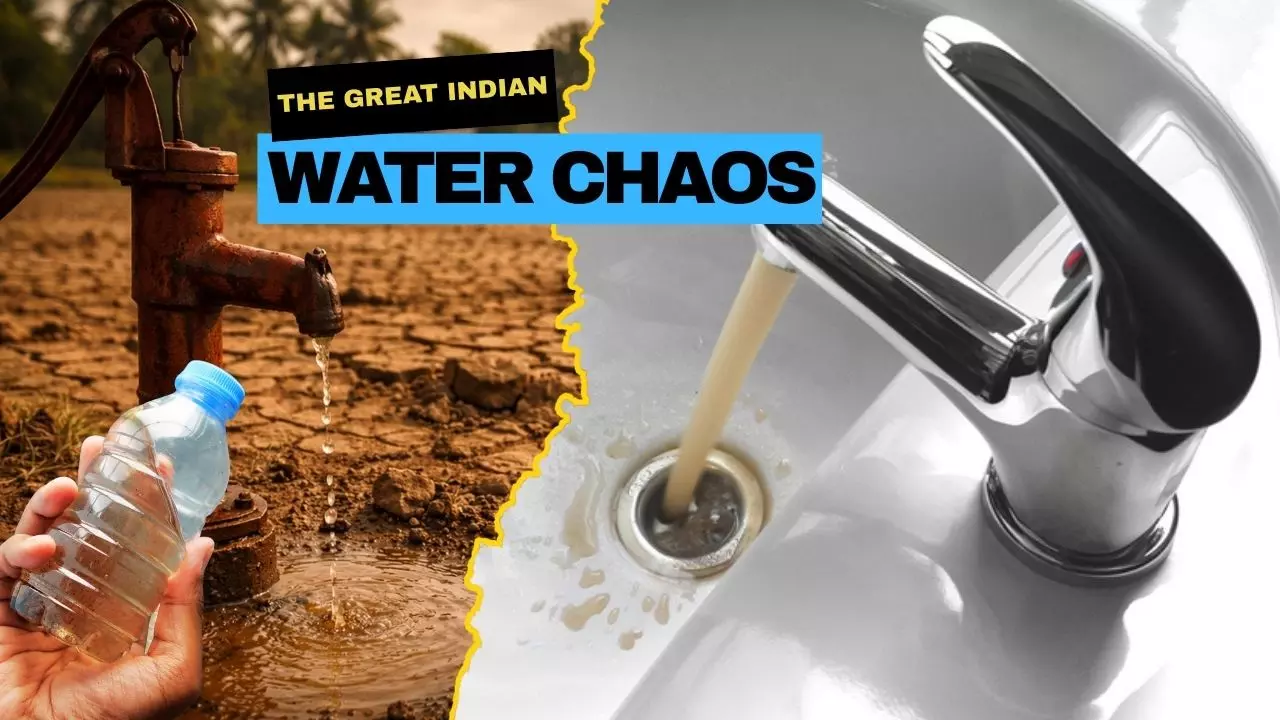
An analysis of Delhi Jal Board (DJB) water quality reports accessed by The Federal shows that sewage has mixed with drinking water in more than 90 samples collected across the national capital over the past three months.
As per data available on the DJB website through its daily water quality surveillance reports, a total of 92 samples between October 1 and December 11 were found contaminated by sewage water.
The analysis of these reports by The Federal shows that a majority of the contaminated samples were from the Nangloi Zone, including areas such as Vikaspuri, Janakpuri and Uttam Nagar. Additional samples were recorded from the Dwarka zone, while one contaminated sample was reported from the Greater Kailash zone.
Apart from this, several other samples too were found “turbid” or “hazy”, as per the reports, although the cause of the traits are not clear. The reports did not mention the reason.
Also read: Indore renews fear in Delhi as smelly ‘black’ water flows into homes for years
The DJB was in the docks in 2025 as well.
In July last year, the Central Pollution Control Board informed the National Green Tribunal (NGT) that five out of six water samples collected from Janakpuri’s A block in west Delhi were contaminated with Total Coliform and E. coli, indicating the presence of sewage and faecal matter in the water supply.
This was the situation even though the NGT had asked the DJB earlier in the year to ensure safe tap water.
Similar to Indore crisis
The findings echo the structural failures exposed by the Indore crisis, where old pipelines and the mixing of sewage and drinking water lines triggered widespread contamination.
According to the DJB, nearly 18 per cent of the capital’s water pipes are 30 years old. Environmentalists warned that Delhi’s infrastructure places the city at a similar risk as Indore.
Also read: Indore water contamination: Guillain-Barré syndrome-like symptoms in woman?
Environmental activist Pankaj Kumar of Earth Warrior NGO said the DJB’s own disclosures raise serious concerns about water safety and transparency. “There is no clarity on what is even being tested in these reports. The Jal Jeevan Mission spoke at length about safe tap water, yet we are now confronting sewage in drinking water in the national capital,” he told The Federal.
Lack of water testing facilities
Kumar cited DJB data to state that between December 1 and December 15 last year, the body had received more than 300 citizen complaints on the quality of drinking water.
In fact, despite being the national capital, out of the 25 public water testing labs under the Delhi government, only two currently have accreditation from the National Accreditation Board for Testing and Calibration Laboratories (NABL).
Kumar wrote to the Chief Executive Officer of the Delhi Jal Board on December 29, highlighting the severe lack of credible water testing facilities in Delhi. In his letter, he noted that the capital ranks at the bottom among the states and Union territories in terms of accreditation of public water and wastewater testing laboratories.
“This abysmal record is a national embarrassment for the capital city, where water quality issues are already rampant due to pollution, ageing infrastructure, and industrial effluents,” he wrote.
Also read: Bengal, with its twin water threats, heightens watch after Indore crisis
“Drinking water must be rigorously analysed for a wide array of parameters, including chemical contaminants (e.g., heavy metals like arsenic, lead, and fluoride), bacteriological purity (e.g. coliform bacteria and pathogens), physical properties (e.g. turbidity and pH), and compliance with Bureau of Indian Standards (BIS) 10500 for potable water. Without accreditation, test results are susceptible to errors, biases, or inconsistencies, potentially failing to detect life-threatening hazards such as microbial contamination leading to waterborne diseases like cholera, typhoid, or hepatitis, or chronic exposures to toxins causing cancer, neurological disorders, or developmental issues in children,” he further wrote.
Persistent issue
Doubts over monitoring accuracy have also been raised by official and independent assessments. A report by The Energy and Resources Institute (TERI), sanctioned by the Delhi government on Yamuna frothing, made public in December 2025, recorded ammonia concentrations far higher than those reflected in DJB data.
Samples collected in December 2024 showed ammonia levels above 27 mg per litre upstream of Wazirabad and over 30 mg per litre downstream, during the same period the city faced an acute ammonia spike. In comparison, DJB data for that month reported significantly lower ammonia levels in the same stretch, the report noted.
Environmental activist Vimlendu Jha said the situation in Delhi reflects a deeper, systemic problem rather than isolated failures. “We keep looking at these incidents like in Indore as accidents, but this is not an isolated event at all. This is the kind of infrastructure we have created across the country,” he said.
Also read: Water crisis threatens shutdown of three South Delhi malls; Diwali sales to be hit
Jha said the seepage between sewage and drinking water lines in Delhi has been documented for years. “The fact is that sewage lines and water supply lines getting connected is a known issue. We have been slightly lucky that we have not yet seen a sudden collapse leading to deaths,” he said.
“In Delhi, we have repeatedly seen ammonia levels rise, and when that happens, water treatment plants often do not function properly,” he added.
Jha said the city’s drainage and sewage systems are outdated and fragmented. “Our entire drainage plan is very old, and the sewage management plan is fractured, old and rotten,” he said.