








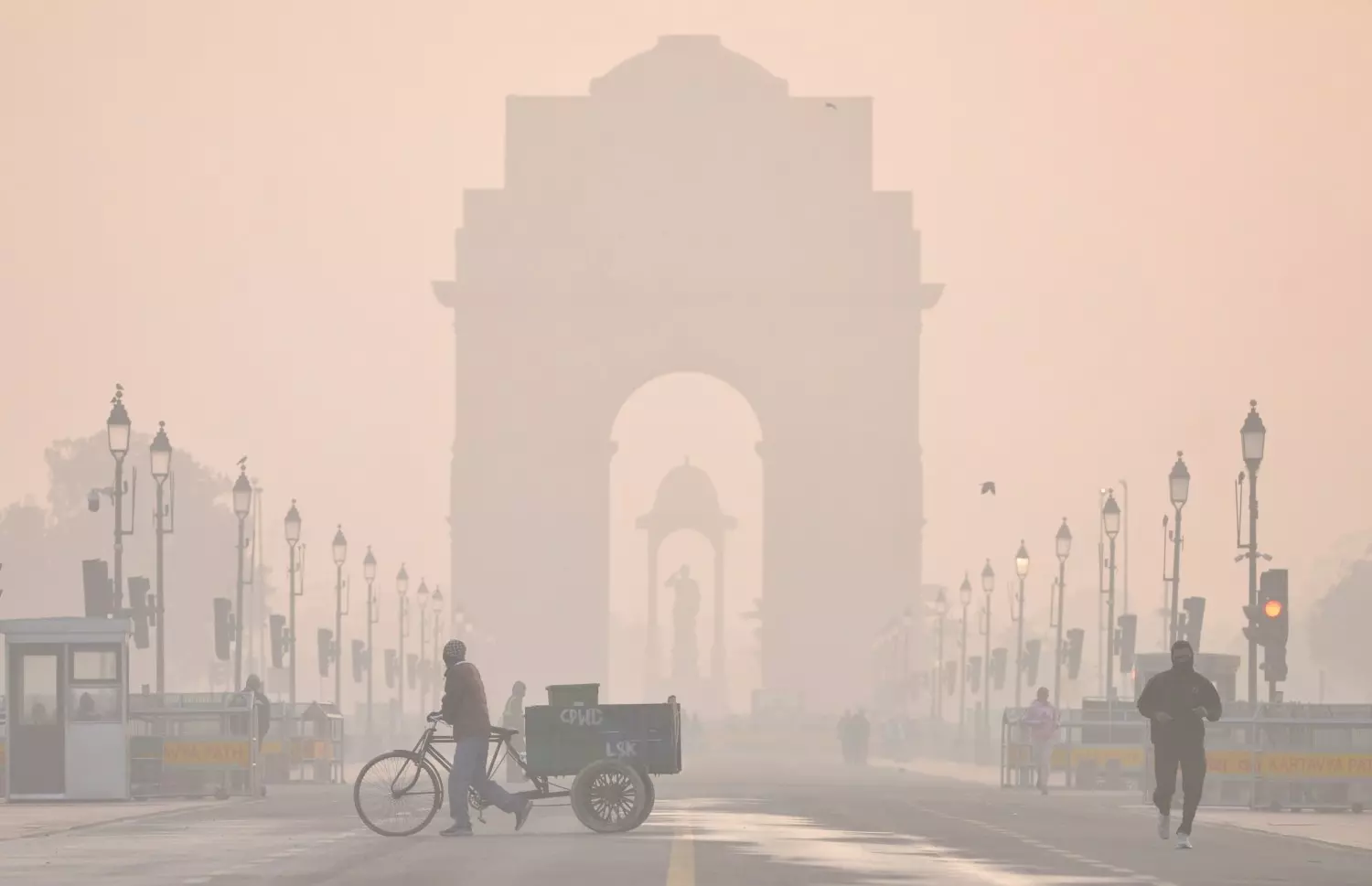
India Gate: PTI
Delhi govt mulls resuming shared cab rides to curb air pollution
Officials meet ride-hailing firms to discuss restarting pool services, boosting women drivers, and expanding automated fitness-testing centres

In an effort to reduce the national capital’s severe air pollution, the Delhi government is contemplating the reintroduction of shared rides offered by ride-hailing services that were halted during the COVID-19 pandemic, officials said on Friday (December 26).
Additionally, the government is expanding the number of automated fitness-testing centres for commercial vehicles to guarantee that no vehicle in the capital adds to pollution, an official statement said.
Govt meeting with transport firms soon
A meeting will soon be convened between the government and transportation network companies to enhance passenger services in the capital.
Also read: Two days in Delhi and I fall ill, says Gadkari on pollution
The statement added that shared taxi services, which were previously operational in Delhi prior to the pandemic but were stopped, are now under consideration for resumption, to offer affordable and convenient transportation alternatives to commuters.
Govt eyes less vehicles on streets: CM
Delhi Chief Minister Rekha Gupta said the core objective of the state government's transport policy is to bring the number of vehicles on the roads down, while ensuring that passengers do not face any inconvenience in their daily commute.
The government is engaged in ongoing discussions with transportation network companies such as Ola and Uber, and expects that they will prioritise shared rides, enhance the involvement of women drivers, and advocate for environmentally friendly services, she stated.
According to the CM, the upcoming meeting with transportation network companies will deliberate on restarting shared taxi services, increasing the number of women drivers, and exploring the integration of private electric vehicles into taxi services.
Also read: Delhi pollution: Eye drops, masks and nebulisers fly off the shleves
She said the government is seriously deliberating on ways to ensure that fewer vehicles can safely, conveniently and affordably transport a larger number of passengers, thereby reducing road congestion and pollution levels.
Gupta said the policy is not only a response to present-day traffic challenges but also an important step towards a long-term, sustainable and environment-friendly transport model for the national capital.
She said the government also aims to increase the number of women drivers in the city’s taxi services to provide women passengers with safer and more reliable travel options.
Fitness-testing stations
In its effort to ensure that every vehicle that plies on the streets of the national capital is pollution-free, the Delhi Government is ensuring the quick establishment of the fitness-testing centres.
The fitness centre at Jhuljhuli in South West Delhi district is already operational and is testing around 70,000 vehicles annually, while the fitness centre at Burari in Central Delhi district is being upgraded, Gupta said.
Two similar centres at Nand Nagri (administrative headquarters of both the North East Delhi district and Shahdara district) and Tehkhand in the South East district are expected to become operational by next March, she said, adding that these four centres, collectively, will be able to conduct fitness tests for approximately 2.5 to 3 lakh commercial vehicles annually.
Also read: Why isn’t Delhi’s air pollution a Lok Sabha priority?
The government has decided to install five additional automated vehicle fitness testing stations at various DTC (Delhi Transport Corporation) depots, all of which have received the necessary approvals. These stations will be established at Bawana, Ghazipur, Savda Ghevra, GTK Depot and Dichau Kalan.
Various research reports have clearly established vehicular emissions as a major contributor to air pollution, Gupta said.
Certain corridors of Delhi Metro Phase-5A have received in-principle approval from the Central government, enabling further expansion of the metro network. This expansion will reduce pressure on road traffic and provide a sustainable solution to pollution control.
(With Agency inputs)