








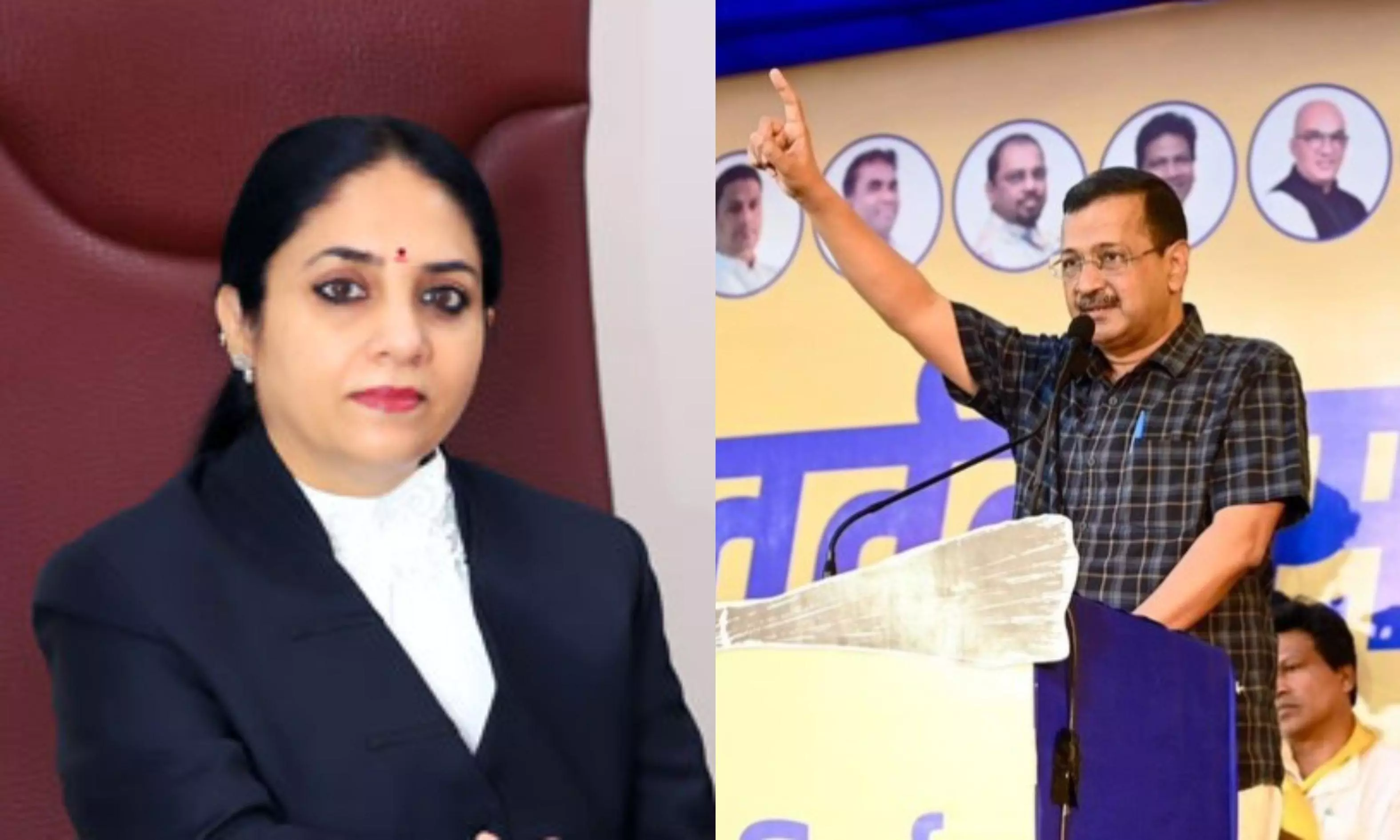
'Attack on institution': Jolt to Kejriwal as Delhi HC judge refuses to recuse
Justice Swarana Kanta Sharma warns against “aspersions and insinuations,” says yielding to such claims would undermine judicial independence and set a troubling precedent

Delhi High Court judge Swarana Kanta Sharma on Monday (April 20) observed that a mere apprehension of not receiving relief from a court cannot be a valid ground for a judge’s recusal.
She made the remarks while reading out her order, though the final verdict is yet to be delivered, on whether she would recuse herself from the Delhi liquor policy case involving AAP chief Arvind Kejriwal and others who have raised concerns about “apprehension of bias.”
Also read | ‘Might be sympathetic to ideology’: What Kejriwal told HC seeking judge’s recusal
While reading from the judgment, Justice Sharma stressed that a judge “cannot abdicate judicial responsibility in the face of allegations,” adding that personal attacks on a judge effectively amount to “attacks on the institution itself.”
Judge slams bias allegations
“In this case, the file seeking recusal did not arrive with evidence but it arrived on my table with aspersions, insinuations and doubts cast on my integrity,” she said as quoted by Hindustan Times.“Judges are bound by the discipline of their office, and if they bow down to such vilification, it would not only be an attack on the individual judge but on the institution. Today it is this court; tomorrow it will be another court,” the judge said.
She added, “Recusal would lead the public to believe that a judge is inclined towards a particular party or ideology. Judicial integrity cannot be put to trial by a litigant. A litigant cannot judge a judge without any material. Urging this court to withdraw solely on the basis of perceived bias and if i would accept this, it would settle a disturbing precedent."
Further, she said, "Today it is not a dispute between two litigants but between myself and the litigant. Allegations and insinuations though persistent and loud cannot replace the proof required for recusal. In case recusal is allowed, the judicial process will not remain independent but vulnerable to allegations.”
On Kejriwal’s argument that there was apprehension of bias on the ground that the judge had attended four programmes of the Akhil Bharatiya Adhivakta Parishad (ABAP) — an organisation he said is aligned with the RSS and follows a “particular ideology opposed to that of the Aam Aadmi Party (AAP)” — she said ABAP events are professional gatherings of lawyers, not political functions, and noted that several judges have attended such programmes in the past.
Multiple pleas seek recusal
Kejriwal had raised several objections against the judge hearing the CBI's plea against his discharge in the liquor-policy case, including that she had earlier denied him relief on his petition challenging his arrest and refused to grant relief on the bail pleas of other accused, including Manish Sisodia and K Kavitha.
Also read | Kejriwal seeks recusal of Delhi HC judge in excise policy case, cites apprehension of bias
Besides Kejriwal, the applications for the judge's recusal were also filed by Aam Aadmi Party (AAP) leaders Sisodia and Durgesh Pathak. Other respondents, including Vijay Nair and Arun Ramchandra Pillai, had also sought her recusal.
Solicitor General Tushar Mehta appeared in the court for the CBI and opposed the plea. He had earlier urged Justice Sharma to initiate contempt action against Kejriwal and the others for seeking her recusal.
On February 27, the trial court discharged Kejriwal, Sisodia and others in the Delhi liquor-policy case, saying the CBI's case was wholly unable to survive judicial scrutiny and stood discredited in its entirety.