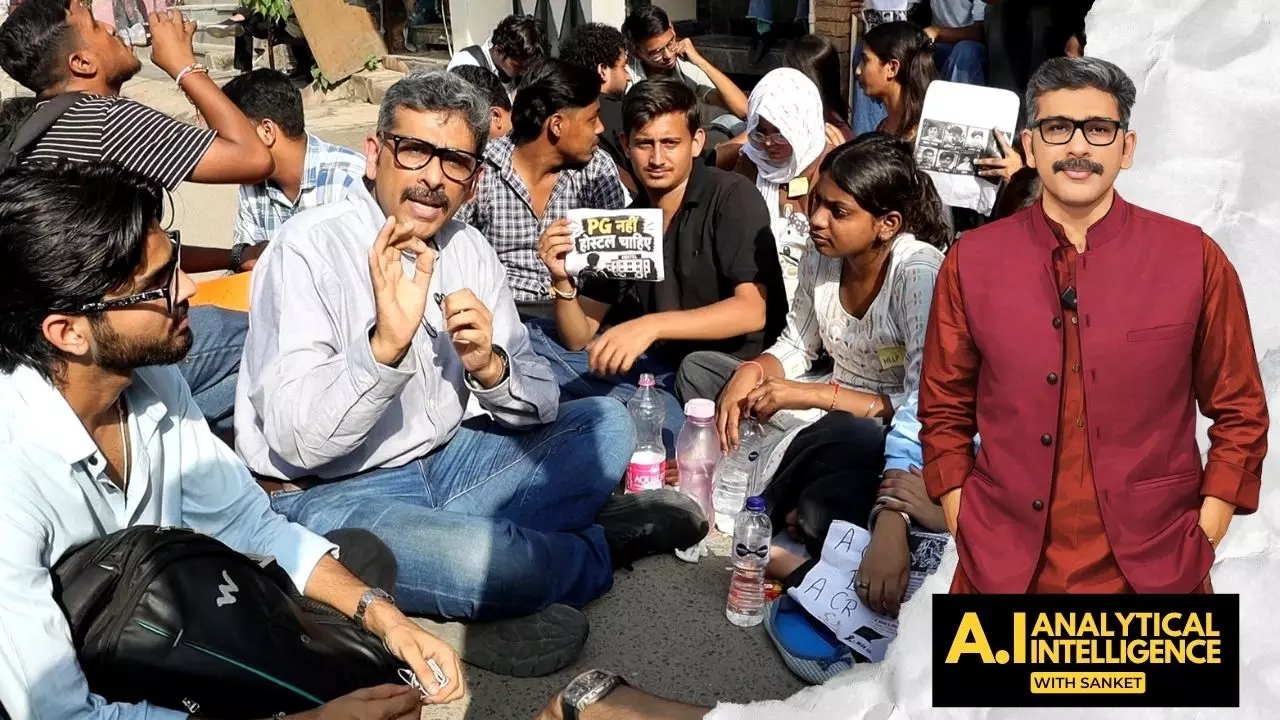
‘Not accident, murder’: What DU students protesting at PG collapse site want | Ground report
Protesting DU students decry unsafe PGs, sky‑high rents and exploitative contracts; demand audits, refunds, more hostels and rental law to regulate PG housing

A payment of at least Rs 15,000–16,000 every month for a single bed in squalid, unsafe conditions, an advance payment of two months’ rent as security deposit, and a contract of 11 months breaking which would ensure the loss of that deposit.
If you wondered why the students who lived—some of whom perished—in the PG building that collapsed in south Delhi’s Satya Niketan on Sunday (September 6) did not vacate it despite its pathetic condition, protesting students at the spot on Tuesday had all the answers.
Not accident but murder
As The Federal caught up with them at Satya Niketan, the students said say the lack of adequate Delhi University hostels is at the root of the accommodation crisis that leaves thousands dependent on expensive private paying guest (PG) facilities.
Also read: Satya Niketan PG collapse: Contractor held; CM meets injured, announces aid
The students, who spoke to The Federal amid their sit-in, said they want the focus to remain on the accommodation problem rather than political parties, student organisations, or VIP visits following the building collapse.
“Yeh haadsa nahi, hatya hai” (This is not an accident, it is murder), the protestors argued through their slogan, highlighting that the incident reveals deeper failures in student accommodation, building safety and accountability.
Hostel shortage
The students said Delhi University’s limited hostel capacity forces students from different parts of the country to depend on private PG accommodations, many of which are located close to the university’s colleges.
“DU should at least provide hostels. If they provided hostels, the colleges would at least take accountability if something happened,” argued student Prachi Saini.
Also read: Ground Report | Satya Niketan tragedy: Life in Delhi's PGs, one collapse away from disaster
According to the students, PG accommodation can cost around Rs 15,000 to Rs 16,000 per bed every month, even for small shared rooms. They said some PGs charge as much as Rs 21,000 a month, while rooms may have two or even three beds.
The students also said that the lack of accommodation gives PG owners an opportunity to exploit students because they have limited alternatives, particularly when they need to stay close to their colleges.
Costly PGs
One student said Delhi University has 91 colleges but only around 20 have hostels, leaving a large section of students dependent on private accommodation. The students also said that even where hostels exist, the number of beds available is insufficient.
“We also have to pay two months’ security first,” the student said, while others added that security deposits have increased, adding to the financial burden on families.
Also read: Delhi PG collapse: An IAS dream crushed, a gift of sight amid tragedy
The protesters said the situation becomes more difficult because many PG agreements run for 11 months. According to them, even students who realise that a building or accommodation is unsafe may hesitate to leave because of the contractual and financial implications.
Students’ demands
The protesters said their demands include compensation for those affected, audits of PG accommodations, refunds of security deposits, more hostel facilities, and a rental law to regulate rents.
The students said the proposed rental regulation should address rising rents, including annual increases. They cited an increase of around 10 per cent every year and argued that there needs to be greater control over how much PG operators can charge.
They also said the growing security deposits can trap students in unsafe accommodation because those who cannot afford to lose the money may feel compelled to remain in poor living conditions.
A wider crisis
The students said the problem is not limited to Satya Niketan. They described the area around Delhi University as a major student hub where young people from across India come expecting access to an established university system, but often struggle to find affordable accommodation.
“Delhi University is ranked number one. Why are these girls and boys sitting here with me? Because they trust Delhi University. Delhi University called them on their admission. Now when they come here, they find there are no available hostels for them,” a student said.
Also read: Satya Niketan building collapse: Latest student hub tragedy where safety went for a toss
The protesters said they are seeking direct engagement with university authorities. They appealed to Prof. Rajni Abbi, Director of South Campus, University of Delhi, to meet them and hear their concerns. The university officially lists Prof. Abbi as Director, South Campus.
The Satya Niketan protest has thus put the spotlight on a question that goes beyond one building collapse: If students have to depend on private PGs because university hostels are inadequate, who is ultimately responsible for their safety and living conditions?