








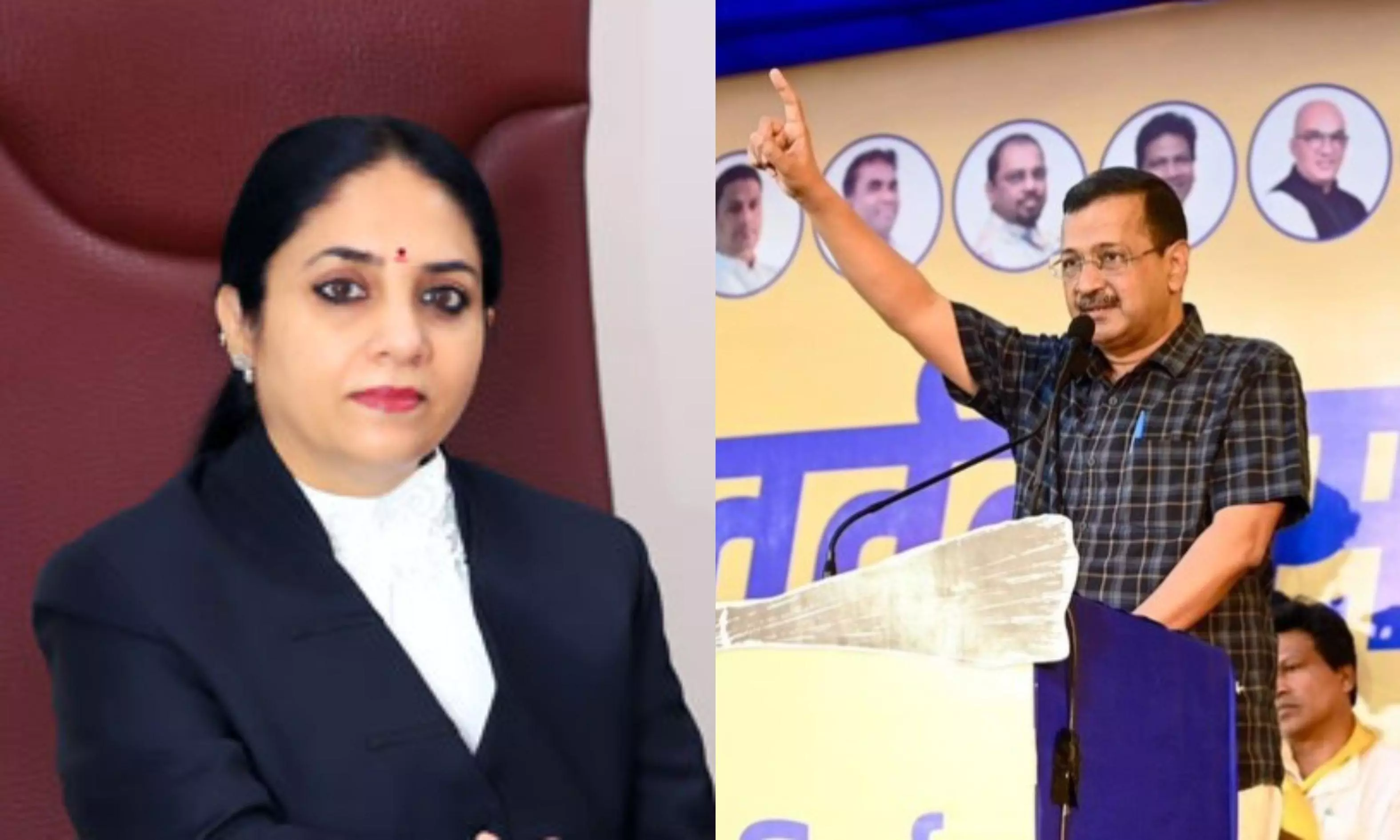
‘Might be sympathetic to ideology’: What Kejriwal told HC seeking judge’s recusal
Former Delhi CM cites judge's attendance of RSS-affiliated lawyers' events as grounds for bias in hearing the CBI's challenge to his discharge

The Delhi High Court on Monday (April 13) heard former Delhi chief minister Arvind Kejriwal’s plea for the recusal of Justice Swarana Kanta Sharma from hearing the CBI’s appeal against his acquittal by a trial court in the Delhi excise policy case.
Justice Sharma, while reserving its judgement, made some candid observations, commenting light-heartedly that this was the first time someone had asked her to recuse and that she had “learnt a lot about recusal jurisprudence” during the hearing. Here are snippets from the judge’s direct and candid exchange with AAP chief Kejriwal in the courtroom.
The exchange in the courtroom
Kejriwal: “Your honour has been attending the programmes of a particular ideology. So, ek mere mann mein yeh bias paida hota hai (I feel a bias), there is a reasonable bias in the mind of this honourable court.”
Justice Sharma: “That I follow their ideology?”
Kejriwal: “Do you?”
Justice Sharma: “No, you are saying that.”
Kejriwal: “No, I am not saying that. All I am saying is that you might be sympathetic, because you have attended their programme four times, you might be sympathetic to that ideology.”
Also Read: Kejriwal seeks recusal of Delhi HC judge in excise policy case, cites apprehension of bias
Justice Sharma (to court stenographer): “He also states that this court has attended some programmes organised by Adhivakta Parishad, which follows a particular ideology. He hasn't defined the ideology.”
Kejriwal: “I have mentioned my argument. What is my argument? As I said, it has to be the mind of the litigant. You attending their programme four times gives me the impression, that by attending the programmes of that ideology four times, since I believe in the opposite ideology, will I get justice?”
CBI pushes back firmly
Solicitor General Tushar Mehta, appearing for the CBI, strongly opposed the recusal applications. He argued that attending a legal seminar organised by a bar association was no grounds for recusal, noting that sitting Supreme Court and High Court judges had also attended such events. He called the aspersions “unscrupulous and sweeping” and said they amounted to contempt.
Also Read: How Arvind Kejriwal has succeeded despite having no ‘ideology’?
Mehta argued that a mere apprehension of bias, especially one he described as fanciful, could not be the basis for a judge stepping aside. “What is the threshold of a person’s apprehension? An apprehensive man can apprehend anything… or apprehension can be a tactic,” he said. He further warned that if judges were to recuse themselves based on such allegations, litigants could effectively choose their bench, undermining the judiciary.
He asked the court to dismiss the recusal plea with costs and initiate contempt action.
Order reserved, court reflects
However, Kejriwal also pointed to the April 6 hearing, where he said the trial court’s discharge order, passed after over three months of proceedings, was declared erroneous within five minutes. “I was really shocked and I started having doubts, serious apprehensions whether the court is biased and whether I will get justice here,” he told the court.
After hearing arguments from all sides, Justice Sharma reserved her order. In a candid closing remark, she said: “Learnt a lot about recusal jurisprudence. In my life for the first time somebody has asked me to recuse. But I learnt a lot about it. I hope I can give a good judgment.”
Also read: Excise policy case: Delhi HC seeks Kejriwal's response on ED challenge to acquittal
What recusal means in law
Recusal is when a judge voluntarily withdraws from a case to prevent any perception of bias or conflict of interest. In India, there is no statutory framework governing it; the practice is guided by Supreme Court judgments and is ultimately left to the judge's own conscience and discretion. If a judge recuses, the Chief Justice allots the matter to a fresh bench.
Why Kejriwal sought Justice Sharma’s recusal
On February 27, a trial court discharged Kejriwal, Manish Sisodia, and 21 others in the Delhi liquor policy case, criticising the CBI for building a weak case. The agency did not accept the verdict. On March 9, Justice Sharma issued notices to them on the CBI’s petition challenging the discharge order.
However, Kejriwal and five others filed a recusal application, asking Justice Sharma to step away from the matter. Their argument: the judge had attended events organised by Adhivakta Parishad, a lawyers’ body considered to be affiliated with the RSS. Since Kejriwal holds political views opposed to those of the RSS and the BJP, he argued this created a reasonable apprehension of bias — not necessarily actual bias, but the perception of it.