Punjab: Can Mann’s women cash scheme offset Akal Takht row?
AAP govt launches a women-focused cash scheme as the AAP faces mounting political pressure over its confrontation with the Akal Takht before the Punjab polls

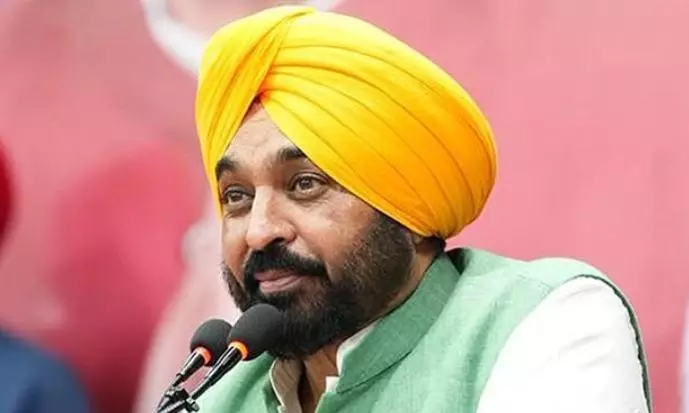
Amid Chief Minister Bhagwant Mann’s escalating confrontation with the Akal Takht, can Punjab’s women voters help the state’s ruling Aam Aadmi Party (AAP) tide over its electoral challenges triggered by matters of faith eight months ahead of the Punjab assembly polls?
Cash scheme before polls
On Wednesday (July 1), Mann is set to launch the Mukhya Mantri Mawan Dhiyan Satkar Yojana. Under the scheme, which Mann claims will directly help nearly 97 per cent women aged above 18 years (roughly 45 per cent of the state’s total electorate), beneficiaries in the general category will receive financial aid of Rs 1000 per month. For Dalit women, the cash dole has been pegged at Rs 1500 per month.
Also Read: Akal Takht asks Mann govt to address objections on anti-sacrilege law within a month
Though part of the AAP’s “guarantees” during the 2022 poll campaign, the timing of the scheme’s roll-out just eight months ahead of the 2027 elections and with only 39 lakh registered beneficiaries against an intended target of 98 lakh couldn’t be more political.
Faith row deepens
For weeks now, Mann has been embroiled in an intensifying face-off with the Akal Takht over a video that purportedly showed him insulting Sikh Gurus. Mann has stridently rejected these allegations and called the video fabricated while the Akal Takht has asserted that forensic analysis has confirmed that the person seen in the video is, indeed, the Punjab Chief Minister. For the alleged act of sacrilege, the Akal Takht has branded Mann as both a “Guru Dokhi” (betrayer of the Guru) and “Panth Virodhi” (anti-Sikh).
Also Read: Gurdwara apex body SGPC endorses Akal Takht edict against Mann; public meet on July 5
Compounded by the Akal Takht’s call for Mann’s social boycott, the burden that these labels place on Mann, and by extension the AAP, in Sikh-majority Punjab, especially in an election year, can’t be too difficult to fathom. More so when acting tough against sacrilege had been among the main poll promises of the AAP when it won its landslide victory of 92 seats in the 2022 Punjab polls.
Law triggers fresh trouble
Adding to Mann and his party’s pre-poll woes is also the Jaagat Jot Sri Guru Granth Sahib Satkar (Amendment) Act. which the AAP government railroaded through the Punjab Assembly on April 13 this year in the hope of consolidating support among the Sikhs only to, ironically, run afoul of the highest temporal authority in Sikhism.
Also Read: Bhagwant Mann, AAP, used ' fake' forensic report to challenge Akal Takht findings: BJP
In an unprecedented move, 88 Sikh MLAs of the 117-member Punjab Assembly (including eight cabinet ministers and Assembly Speaker Kultar Singh Sandhwan but excluding Mann), were summoned to appear before the Akal Takht to explain their stand on the anti-sacrilege Jaagat Jot Sri Guru Granth Sahib Satkar (Amendment) Act. The 28 non-Sikh MLAs of Punjab had previously been told to give their written submissions on the matter to the Akal Takht.
MLAs face tough questions
Describing what followed at the hearing before the Akal Takht, which was telecast live across Punjabi news channels and cable networks in the state for most part, as embarrassing for the AAP would be a gross understatement.
Also Read: Religious storm brews in Punjab as Akal Takht brands CM Mann ‘Guru Dokhi’
One after the other, AAP ministers and MLAs, including Harpal Singh Cheema, Gurmeet Singh Khudian, Jagroop Singh, Inderbir Singh Nijjar and Kulwant Singh, came in for pointed questioning by Giani Kuldeep Singh Gargajj, the Akal Takht Jathedar, on various aspects of the Act.
It quickly became evident that the Act, which directly concerns matters of the Sikh faith, being drafted and pushed through the Assembly at a special session without any consultations with the Akal Takht or the Shiromani Gurdwara Parbandhak Committee (SGPC), wasn’t the only problem at play, even if it was the most significant lapse on part of the Mann government.
Nehru-Tara Singh Pact
The Nehru-Tara Singh Pact, agreed upon between then Prime Minister Jawaharlal Nehru and then Akali Dal chief Master Tara Singh in April 1959 had established a convention, followed by successive governments till date, of not interfering in religious affairs of the Sikhs and the management of gurudwaras and of detailed discussions between the government, the SGPC and other stakeholders from the Sikh faith on any proposed legislation that could trespass this domain.
Also Read: Bhagwant Mann denies viral video, rejects Akal Takht's allegations
Though AAP sources argue that the Mann government had not violated the Nehru-Tara Singh Pact as the 1959 agreement was “primarily regarding the Sikh Gurdwaras Act and the functioning of the SGPC”, the Akal Takht obviously views the 2026 law as an overreach.
“The AAP should have known better because they had already faced problems back in 2023 when they tried to amend the Sikh Gurdwaras Act (SGA) without consulting the SGPC. While this time they brought a new law which was not about amending the SGA, their anti-sacrilege law is actually a much bigger violation of the Nehru-Tara Singh Pact… it is an attempt to bypass the SGA and interfere in internal matters of the SGPC and worse, it is an infringement into matters that are purely religious such as defining sacrilege,” claims Partap Singh Bajwa, Leader of Opposition in the Punjab Assembly, who was among the MLAs appearing before the Akal Takht on Tuesday.
Opposition's criticism
Bajwa told The Federal, “When they (the AAP government) brought this Bill to the Assembly on April 13, every Opposition leader who spoke during the discussion objected; all of us demanded that the government should discuss with Akal Takht Sahib and the SGPC but in their arrogance, Mann and unfortunately even the Assembly Speaker, did not listen to any of us. The Akal Takht is the most revered body of the Sikhs and not consulting it on a matter as serious as sacrilege is a direct insult to our highest temporal seat. The AAP leadership should have unconditionally apologised to the Akal Takht yesterday but all they did during the hearing was to feign ignorance or mislead the Jathedar Sahib. It is truly unfortunate.”
Also Read: AAP faces Punjab turmoil year before polls as Akal Takht declares Mann ‘anti-Guru’
With the proceedings before the Akal Takht being telecast live (Jathedar Gargajj rejected the request of some AAP MLAs to not allow live telecast), what also became distressingly apparent was how practically none of the ruling party lawmakers had read or understood the Act even after nearly two months of its passing the Assembly. When questioned about certain provisions of the Act, some MLAs replied that they were unaware of the clauses in question, others admitted they voted in favour of the legislation without reading it while some offered explanations that were simply contrary to the actual provisions in the law.
One-month deadline
The Akal Takht has now given the AAP government a month’s time to amend the law. The Akal Takht Jathedar and the SGPC will relay their concerns and suggestions about the law to Sandhwan during the period, who in turn has been directed to transmit these to the government for incorporation in the draft amendment.
Also Read: Operation Bluestar anniversary: Akal Takht Jathedar slams Punjab anti-sacrilege law
For the AAP and particularly for Mann, this fiasco may not end with accommodating the Sikh clergy’s views in the amended version of the law.
Political commentator and former professor at the Guru Nanak Dev University, Jagrup Singh Sekhon, says “hurriedly bulldozing a half-baked (anti-sacrilege) law was a misguided political move by the AAP to begin with” but with the Akal Takht stepping into the issue now at a time when Mann himself stands labelled “Guru Dokhi” and Panth Virodhi”, the risks for the Punjab CM are much higher.
High political stakes
Pointing at the growing tensions between Mann and the Akal Takht and the CM’s “unnecessary and ill-advised” attacks at the Akal Takht Jathedar (Mann has repeatedly accused Gargajj of acting on the instructions of the Akali Dal), Sekhon says, “what if tomorrow the Akal Takht or the SGPC or someone else demands that the Chief Minister should be charged of committing sacrilege under this new law, which says sacrilege can be punished with a sentence ranging from a minimum of seven years to a maximum of life..”
Sekhon says the July 1 launch of Mukhya Mantri Mawan Dhiyan Satkar Yojana, despite Punjab’s spiralling debt burden crisis and “when Punjab government’s data shows not even half of the targeted beneficiaries have been registered for the scheme,” is a sign of Mann clasping at straws to escape the electoral backlash he has set himself up for due to the face-off with the Akal Takht.
Whether Mann’s gamble would pay off may yet be too premature to predict but AAP’s apparent ploy to pit financial security and welfarism against religious sentiments promises to make next year’s poll contest more complex than it already seemed.