








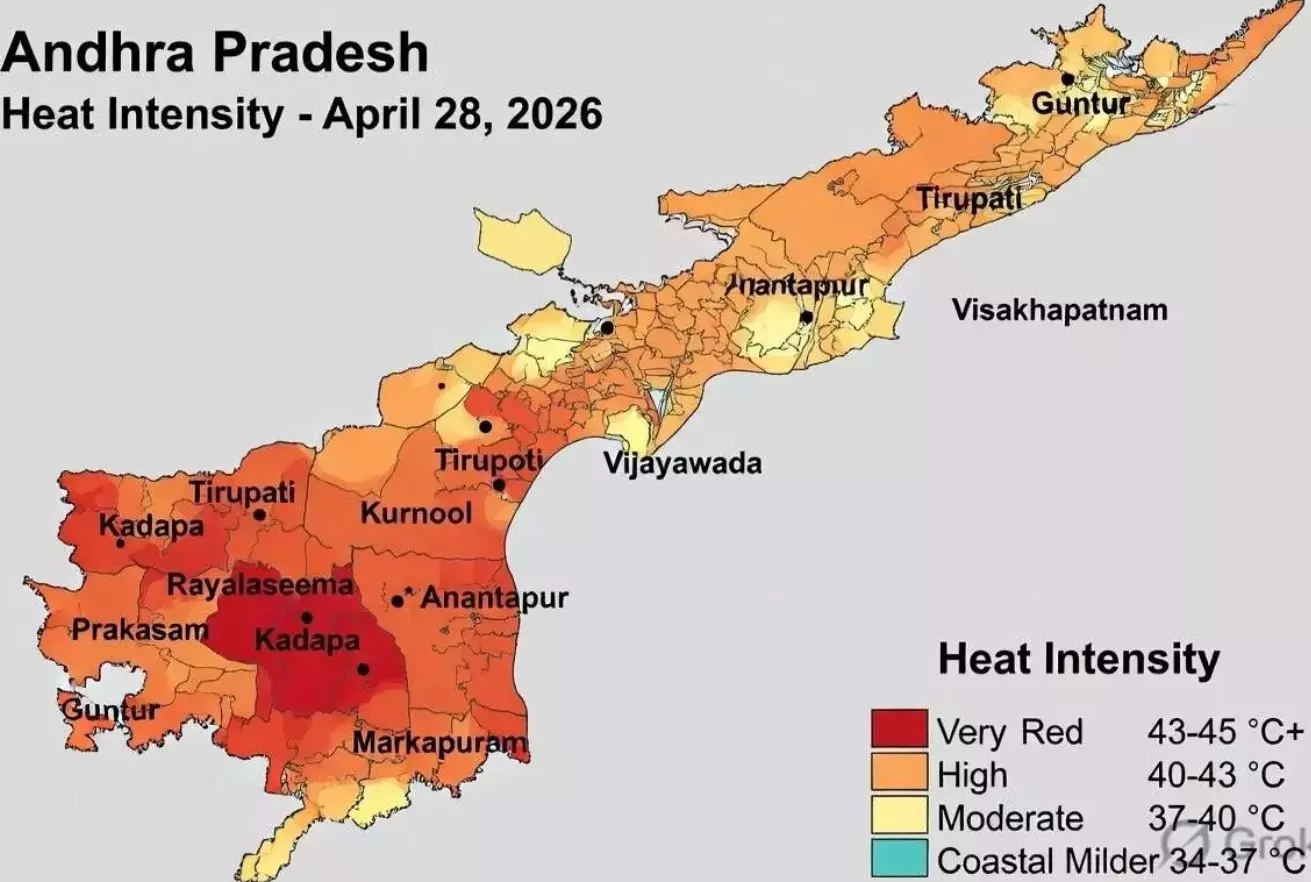
Andhra's Markapur heat surge signals new climate hotspot
With temperatures crossing 45 degrees C, Markapur overtakes Rentachintala as Andhra’s hottest zone, signalling shifting heat patterns and rising climate risks

With temperatures touching 45.01degrees C in Anumalapalli near Markapur, Andhra Pradesh is once again reeling under intense summer heat.
The town has overtaken Rentachintala—long known as the state’s hottest location—in recording extreme temperatures this year.
Across April 2026, temperatures between 44 degrees C and 45 degrees C have become common in Rayalaseema and central coastal regions. According to APSDMA, over 200 mandals recorded above 41 degrees C in the last week of April, with some touching 45 degrees C.
Markapur, Kadapa, Nandyal, Kurnool and Anantapur are among the worst affected.
Heat history
Rentachintala in Guntur district has been Andhra Pradesh’s “heat king” since 1938, consistently recording extreme summer temperatures due to its inland location, dry soils and low humidity.
Major records include 47.3 degrees C in 2013 (state record) and 46.8 degrees C in 2014. In recent years too, temperatures have crossed 46 degrees C in parts of Guntur district. Typically, Rentachintala records 43–45 degrees C, with peaks touching 47 degrees C on extreme days.
Also read: Is 40+ degrees the new early-summer normal in South India as extreme weather intensifies?
However, in 2026, temperatures there have hovered around 43–44 degrees C, while Markapur, Nandyal and Kadapa have crossed 45 degrees C—indicating a clear shift.
Why Markapur?
According to APSDMA's managing director Prakhar Jain, dry westerly winds from northern India, clear skies and low humidity have driven the unusual spike. Markapur shares similar semi-arid conditions with Rentachintala, but this year a shift in heat distribution has made it a new hotspot.
Key causes
Climate change: India’s average temperature has risen by 0.7 degrees C (1901–2018), increasing the frequency and duration of heatwaves. The lingering impact of El Niño has intensified conditions in 2026.
Weather systems: Persistent dry winds and absence of western disturbances have allowed heat to build up, while clear skies maximise solar radiation.
Local factors: Changes in regional heat patterns across Rayalaseema and Prakasam districts have pushed temperatures higher in Markapur.
Heatstroke cases reflect this trend, rising sharply from 833 in 2023 to 5,154 in 2025.
Silent killer
Heatwaves are often termed a “silent killer”. This is because when the body’s core temperature exceeds 40 degrees C, it can lead to heatstroke.
This can trigger organ failure affecting the brain, heart, kidneys and liver, along with cardiovascular stress. Studies show overall mortality rises by 10–30 per cent during heatwave days in India, with thousands of excess deaths reported during extreme events.
In Andhra Pradesh, cases of heatstroke and sunstroke are increasing. Authorities advise avoiding outdoor activity between 11 am and 4 pm, staying hydrated and taking basic precautions.
Warning signs
Experts say this is not just a Markapur issue but a broader warning of climate change. Rayalaseema and central coastal regions are likely to face more such extreme heat events.
Recent data shows 44.3 degrees C recorded in Kambham and Ontimitta, while 140 mandals across 16 districts saw temperatures above 41 degrees C. Severe heatwave conditions are expected to continue in parts of north coastal Andhra.
Weather experts warn the current heatwave may persist until early May. They stress the need for timely implementation of advisories, local awareness measures and heat mitigation plans.
The shift of the “heat king” tag from Rentachintala is more than symbolic—it signals a changing and intensifying climate reality.
(This article was originally published in The Federal Andhra Pradesh)

Next Story